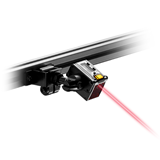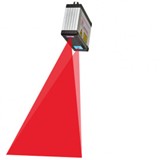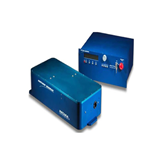

Using facilities provided by the Defence Science and Technology Organisation in Melbourne, researchers have developed and successfully tested a proof-of-concept laser-based sensor in a high-speed wind tunnel.
"One of the problems with current velocity sensors is that they are susceptible to icing in bad weather," said Dr Sean O’Byrne from the School of Engineering and Information Technology.
"Our technology is based on laser light, meaning there are no physical components in the airflow. Instead they are located inside the aircraft where the temperature can be controlled."
Currently used airspeed sensors — known as Pitot tubes — have been considered possible failure points for several fatal aircraft accidents — most recently, Air France flight 447, which crashed into the Atlantic Ocean in June 2009.
Accident investigators suspect a severe storm caused the forward facing pressure holes on the Pitot tube on flight 447 to fill with ice, which prevented the pilots from receiving accurate measurements.
"Pitot tubes are simple and reliable instruments, but when they get obstructed, either by ice, dirt build-up, or by birds or insects flying into them, they don’t tell you your correct speed," Dr O'Byrne said.
"Then you need to rely on backup plans, like GPS, which in storm conditions may not do the job."
"The technology we have developed measures airspeed like a Pitot tube, but doesn’t have something poking out into the air. It has a window, which can be built into a recess in the body of the plane, and which can be heated.
"This also means, in sudden icing situations, it can be kept out of the wind."
While it’s not designed to replace the Pitot tubes entirely, the researchers say it can be used as a low-cost measure to augment the tubes, which will give flight staff more confidence in their readings and help guard against fatal crashes.
O’Byrne says the sensor employs the same technology used in laser computer mice, and measures velocity by using the Doppler shift of the light absorbed by oxygen molecules.
The idea for the sensor was born out of the group’s work on the SCRAMSPACE project.
The next step is to scale down the proof-of-concept into an aircraft-ready design and conduct flight tests.