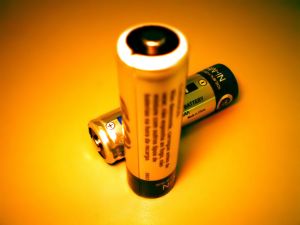
The power generated relative to the energy source size is three to four times greater than what is currently possible with the best lithium-ion batteries.
While on sabbatical from RMIT in 2009 and 2010, Associate Professor Dr Kourosh Kalantar-zadeh, from the School of Electrical and Computer Engineering, joined MIT Associate Professor Michael Strano's nanotechnology research group.
Before he arrived, Strano's laboratory was working on measuring the acceleration of a chemical reaction along a nanotube when they discovered that the reaction generated power.
While at MIT, Dr Kalantar-zadeh joined the researchers and using their combined expertise in chemistry and nanomaterials they further explored this new phenomenon.
Their work titled Nanodynamite: Fuel-coated nanotubes could provide bursts of power to the smallest systems is in the December IEEE Spectrum Magazine, the publication of the IEEE, the world's largest professional technology association.
Associate Professor Kalantar-zadeh said the experimental system, based on one of the materials that have come from nanotechnology - carbon nanotubes - generates power, something researchers had not seen before.
"By coating a nanotube in nitrocellulose fuel and igniting one end, we set off a combustion wave along it and learned that a nanotube is an excellent conductor of heat from burning fuel. Even better, the combustion wave creates a strong electric current," he said.
"This discovery that a thermopower wave works best across these tubes because of their dual conductivity turns conventional thermoelectricity on its head.
"It's the first viable nanoscale approach to power generation that exploits the thermoelectric effect by overcoming the feasibility issues associated with minimising dimensions.
"But there are multiple angles to explore when it comes to taming these exotic waves and, ultimately, finding out if they're the wave of the future."
Researchers at the Massachusetts Institute of Technology (MIT) and RMIT University have made a breakthrough in energy storage and power generation.
Get 3+ quotes so you can compare and choose the supplier that's right for you