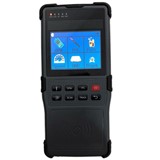
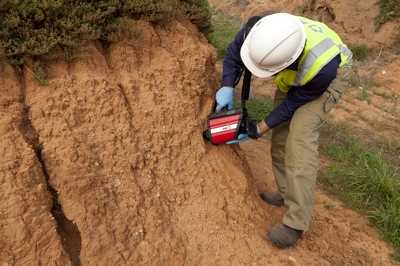
The RemScan device uses an infrared signal to directly measure petroleum hydrocarbons in soil. The user simply pulls the trigger for a result in 15 seconds. The traditional method for measuring petroleum contamination involves sending soil samples to a laboratory and waiting several days for the results.
Petroleum contamination is a wide spread global issue with recent events like the Gulf of Mexico spill attracting attention from communities concerned about the health and environmental impacts of such spills.
RemScan allows users to make quicker and smarter clean up decisions leading to significant cost savings. It also decreases the number of samples that require laboratory analysis, resulting in further cost reductions.
"We now have a way to quickly assess the risks at a spill site," Dr Richard Stewart, Ziltek's managing director said.
South Australian based waste remediation company, Ziltek, has had significant demand from the mining sector where petroleum spills are costly because they divert resources away from the core business. RemScan allows the emergency response team to quickly delineate the spill and validate the clean-up area with increased certainty — all in the same day.
"An average mid-size remediation firm in Australia will spend around A$250,000 on soil petroleum analysis each year," Dr Stewart said.
"RemScan can cut this bill by up to 50 per cent resulting in an annual cost saving of up to A$125,000 per annum."
According to Dr Mike McLaughlin, Science Fellow with CSIRO Land and Water, it's a great example of how CSIRO can work with small business to develop a product that will have real benefits for the community.
"The ability of the technology to rapidly detect the presence of contaminants will provide significant cost savings to industry as well as limit the impact of contamination on the environment," he says.
"It's a great achievement for our research team and CSIRO is pleased to be a partner with Ziltek to make it happen."
The technology is the subject of several global patent applications and has been granted full patent status in Australia.
RemScan is now available for purchase in Australia and New Zealand and is on target to enter the North American market in 2013.
The development of the RemScan was supported through the HazWaste Fund (EPA Victoria), Bio Innovation SA and the Australian government's Enterprise Connect — Researchers in Business grant.
The research was supported by CSIRO Land and Water and the Water for a Healthy Country Flagship.