Featured Services:
Asbestos Removal,
CNC Machining & Milling,
Commercial Electricians,
Crane Hire,
Electronic Design & Engineering,
Fire Safety & Protection ,
Forklift Training & Licences,
HVAC Cleaning,
Industrial Design,
Office Fitouts,
Plumbing,
Road Freight,
Safety Consultants,
Sheetmetal Fabrication,
Structural Engineering,
Warehousing & Distribution,
Welding Services
Feature Article
Ship engine exhaust emissions may threaten environment: researcher
"There is limited knowledge about the emissions from ships in coastal regions and ports in Australia, the effects of these emissions on air quality in the surrounding coastal and portside urban regions, or potential effects on human health."
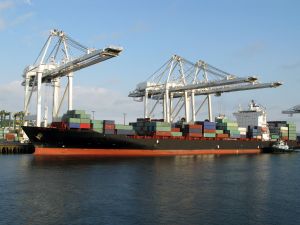
10/09/2012 - Ship engine exhaust emissions make up more than a quarter of nitrogen oxide emissions generated in the Australian region according to a recently-published study by CSIRO and the Australian Maritime College in Launceston.
Find related suppliers
Nitrogen oxide is a non-greenhouse gas, unlike similarly named nitrous oxide.
The remainder comes from road and air transport, energy generation, and industrial processes. Global studies indicate shipping emissions of nitrogen oxide and sulphur contribute to the formation of photochemical smog and particles near land and in ports.
The authors, Dr Ian Galbally from CSIRO Marine and Atmospheric Research, and the Australian Maritime College's Dr Laurie Goldsworthy estimate that approximately 30 per cent of anthropogenic nitrogen oxide emissions and 20 per cent of oxides of sulphur emissions generated in the Australian region may come from shipping.
These are non-greenhouse gases which have the potential to affect the air quality near coastal regions, and have consequences for human health and amenity.
Dr Galbally said around 10 per cent of global shipping freight passes through Australian ports annually.
"Shipping is a major driver in the Australian economy, with 753 Mt of international exports worth $202 billion passing through Australian ports in 2008-2009," Dr Galbally said.
"There is limited knowledge about the emissions from ships in coastal regions and ports in Australia, the effects of these emissions on air quality in the surrounding coastal and portside urban regions, or potential effects on human health," he said.
The ports of Perth, Melbourne, Sydney and Brisbane are located where seasonally-prevailing onshore winds dominate and the pollutants from shipping frequently will be carried into the air-sheds of these major urban population centres.
"We're seeing increasing regulation of land-based emissions but limited regulation of shipping emissions and expect that in the near-future there will be a need to monitor more closely emissions from shipping," Dr Galbally said.
The authors commenced this study with measurements of ship exhaust emissions on the coastal cement carrier MV Goliath.
Dr Goldsworthy said it is possible to quantify emissions generated based on knowledge of fuel type, fuel origin, engine size, cargo, and speed.
"We know from previous studies and the Australian Pollutant Inventory that ship emissions off the coast of Australia are substantially larger than in-port ship emissions."
"Nitrogen oxide and sulphur oxide emissions at sea are comparable in magnitude with other national sources such as energy generation and industry. They are potentially significant contributors to the air-sheds of major coastal cities," he said.
Source:
CSIRO
Browse the IndustrySearch directory: Waste & Environmental Management
daniel white
| 12/09/2012 13:43
1
Absolutely and ship engines are major cosumers of the breathable air, a large ship engine will consume a trillion liters of air or 1 cubic kilometer in less than 9 months, 25,000L 2 stroke engine @ 100RPM, you work out the maths, so it really does pay to buy local,It wopuld be good to see governments tackling this by forcing manurfaturing at home, reducing world trade that sucks up our air. Remember above 8km we die, mt everest is just over 8km high, so my bet is almost all the volumn of the breathable atmoshpere has be sucked into a combustion engine, slow down ship use asap i say.
Related Directories
Related News
-
Water will be released from more flooded Queensland mines into rivers...
-
DuluxGroup has stopped supplying its premium paint and woodcare products at...
-
Labor and the coalition are at odds over how to save the manufacturing...
-
Japan's No. 2 carmaker Nissan says it would recall about 841,000 compact...
Related Feature Articles
-
Researchers develop optic fibre salinity sensor
Edith Cowan University (ECU) researchers have developed a new water quality sensor...
-
Multi-million investment in hydrogen storage
University of Queensland research has led to a $9.25 million investment in hydrogen...
-
Scientists crack the 'coffee ring effect'
Ever notice how a dried coffee stain has a thicker outer rim, while the middle of the...
-
$4 million boost to solar cell research
A project to push the efficiency of nanoplasmonic solar cell technology has received a...
-
New horizons for Australia's manufacturing industry
To be headquartered at Monash University, a new manufacturing innovation precinct,...
Related items
-
Exhaust Gas Purifiers | CatalyticSend Request
-
Nett Technologies Catalytic Converters & Catalytic Exhaust PurifiersSend Request
-
Diesel & Petrol Fuel Enhancer - FTC DecarbonizerSend Request
-
Alternative Maritime Power SupplySend Request
-
ABB Limas23 - Continuous Measurement Of Nitrogen Oxides, Sulphur Dioxide And Oxygen In One AnalyzerSend Request
-
Certificate IV in Project Management BSB41507Send Request