
Load Cell & Accessory

Join industrial buyers comparing supplier quotes and buying with confidence. Free, quick and easy.




How IndustrySearch works
Tell us what you need
Answer a few quick questions about the equipment you're looking for.
Get personalised quotes
Receive tailored quotes from relevant Australian suppliers.
Compare and choose
Compare quotes, ask questions and choose the best option for you.
 Save time
 Compare quotes
 Buy with confidence
Save time, compare quotes & buy with confidence
Load Cell & Accessory Suppliers
Originally evolving from the industrial weighing sector, Diverseco has built on its capabilities to become one of Australasia’s leading measurement and automation solutions providers to organisations in a broad range of industries. Diverseco’s primary objective is to deliver its customers superior value by combining an intimate understanding of their needs with our problem-solving ...
Customers: Toll Logistics, Remondis, Cleanaway, Tox Free, GWF, Nestle, Boeing, Toyota Motor Company

Metromatics Pty Ltd is an Australian-owned engineering and technology company specialising in the design, manufacture, integration and supply of rugged computing, embedded electronics and industrial technology solutions for demanding applications across Australia and New Zealand. Established in 1989, Metromatics provides engineering expertise and complete technology solutions ...
Customers: Raytheon Australia, BAE Systems, Boeing Australia, QR, Transgrid, Snowy Hydro, SAAB, ASC

Futek Load Cell Rod End LCB400

Futek Load Cell Torque and Thrust Bi Axial MBA500
Optima Weightech is an acknowledged Manufacturer, Supplier, Trader and Service Provider of superior quality Industrial Automation and Process Weighing Systems. We have reached this position thanks to our 4 main obsessions: Premium Quality, Reliability, Innovation and Exceptional Customer Service. Our product range includes PLC & Automation, Multihead Weighers, Linear Weighers, ...

Fresco Systems is dedicated to the design, manufacture and installation of Bulk Materials Handling and Processing Equipment,including Bulk Bag Unloaders, Bulk Bag Fillers, Flexible Conveyors, Mobile Flexible Conveyors, Pneumatic Conveying, Bag Dumps, Screw Conyeors plus more. Fresco Systems Australasia offers single items through to turn-key projects engineered and manufactured ...
Customers: Nestle, Fonterra, IFFCO, Mondelez Int.
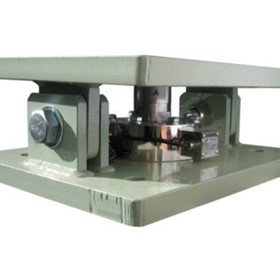
Australian Weighing Equipment or The AWE Group offers Weighing Systems, Packaging Machinery, Bulk Material Handling and Engineering Services driven by a client-service led culture and customized approach from people with innovative practices, technical capabilities and robust systems to make sure that our customers’ welfare and best interests are protected. For over 40 years, ...

AWE Chaser Bin Load Cells

AWE Customised Load Cells

AWE Load Cell Controller | GS100R

AWE Titan Load Cell

AWE Loadpin Load Cell

For over 75 years WIKA, [Alexander Wiegand SE & Co. KG] has built a reputation for innovation and quality in the manufacture and service of pressure and temperature measuring instruments. On the basis of steadily growing efficiency, innovative technologies are applied when developing new products and system solutions. The reliability of the products and the readiness to face all ...


<STRONG>HBM – Products and services from virtual to physical testing</STRONG> For over 60 years, the name HBM stands for <STRONG>reliability, precision and innovation</STRONG> all over the world. The company is the <STRONG>technology and market leader</STRONG> and offers products and services for an extensive range of measurement applications in many industries. Users worldwide ...


National Weighing & Instruments are weighing equipment specialists,committed to excellence in everything we do. Our extensive experience, especially in Industrial and precisionweighing equipment, means we can advise on all your weighing needs. National Weighing and Instruments supply and service all types of weighing and packing equipment Supply & service of pharmaceutical ...


PT Ltd is an ISO 9001 accredited manufacture and has been designing and engineering measurement solutions for the weighing industry from Auckland, New Zealand since 1979. Formerly known as Precision Transducers and exporting to 160 countries around the world, we are your one stop shop for all weighing needs. Select from an extensive range and variety of load cells, measuring ...


Complete Weighing Solutions Pty Ltd is a privately owned Australian company dedicated to supplying quality weighing equipment and services. Complete Weighing Solutions has the expertise in repairs, calibration and certification of all weighing equipment from laboratory balances to heavy industrial weighbridges. Our main focus is you, the customer, supplying weighing equipment ...

Load Cell & Accessory Buying Guide
Find and buy load cells and load cell accessories from verified suppliers on IndustrySearch. Load cells measure weight or forces such as compression, tension, bending or shear.
Things to consider when buying load cells:
- Know your application - Important factors to know before getting started are expected maximum load, direction of load, required accuracy - as % of maximum load, operating temperature - especially if it may vary.
- Electrical considerations - multiple load cells may require averaging or summing circuitry.
- The type of load cells required:
- Strain gauge: These are the most widely used and have a wide range of load capacity. They come in different mounting configurations e.g:
- S-beam: suitable for accurate dynamic and static measurement. Used for hanging or suspending a weighing system (tension).
- Platform: for applications requiring water tightness and high accuracy.
- Double-ended load cell: for multipurpose load measuring applications such as medium weight to high capacity weight measurement. Mainly used in bin, silo and hopper.
- Rope clamps: popular in hoist, crane and elevator applications due to their ease of installation.
- Hydraulic - immune to water damage, damage from lightning strikes and other electrical surges, operate over a wide range of temperatures, low maintenance costs.
- Pneumatic - Relatively slow, useful for lightweight applications with high sensitivity needs. Running on air they are explosion proof, hygienic and insensitive across a broad temperature range.
- Strain gauge: These are the most widely used and have a wide range of load capacity. They come in different mounting configurations e.g:
We also have a broad range of load cell accessories such as indicators, displays, transmitters, protectors, calibrators and junction boxes.

- A load cell consists of a metal body with one or more strain gauges attached to it. When a force or weight is applied to the load cell, the metal body deforms slightly, causing the attached strain gauges to stretch or compress. This change in resistance is then converted into an electrical signal, which is proportional to the weight or force being measured.
- Strain gauge load cells: These load cells use a strain gauge to measure changes in resistance, which are then converted into weight or force measurements.
- Hydraulic load cells: These load cells use hydraulic fluid to measure the force applied to them. They are commonly used in heavy-duty applications.
- Pneumatic load cells: These load cells use compressed air to measure the force applied to them. They are commonly used in applications where there is a risk of explosion or fire.
- Capacitive load cells: These load cells use changes in capacitance to measure the weight or force applied to them.
- Piezoelectric load cells: These load cells use changes in electrical charge to measure the weight or force applied to them. They are commonly used in dynamic applications where the force being measured is changing rapidly.
- Capacity: The load cell's capacity should be chosen based on the maximum weight or force that needs to be measured.
- Accuracy: The accuracy of the load cell is essential in ensuring precise readings. It is important to choose a load cell that provides accurate and repeatable results.
- Type of load cell: There are several types of load cells, including hydraulic, pneumatic, strain gauge, and piezoelectric. The type of load cell chosen will depend on the application and the environment in which it will be used.
- Material: Load cells are made from various materials, including aluminum, stainless steel, and alloy steel. The material chosen will depend on the application and the environment in which it will be used.
- Environmental conditions: The load cell and accessory should be able to withstand the environmental conditions in which they will be used, including temperature, humidity, and vibration.
- Compatibility: The load cell and accessory should be compatible with the measuring system in which they will be used.
- The accuracy of a load cell is typically measured as a percentage of the full-scale output (FSO) or as a percentage of the rated capacity (RC). For example, if a load cell has a rated capacity of 10,000 pounds and the accuracy is specified as ±0.1% FSO, this means that the load cell can measure weights between 9,990 and 10,010 pounds with an accuracy of ±10 pounds.
- To measure the accuracy of a load cell, a known weight or force is applied to the load cell and the output signal is recorded. The measured weight or force is then compared to the known weight or force, and the difference is calculated as a percentage of the full-scale output or rated capacity. This difference is the accuracy of the load cell.
- The capacity of a load cell is usually specified by the manufacturer and can be found in the load cell's datasheet or manual. It's important to choose a load cell with a capacity that meets or exceeds the maximum load that will be applied to it in the application. Overloading a load cell can damage it and cause inaccurate readings.
- Weighing systems: Load cells are commonly used in weighing systems for products such as livestock, grains, and liquids. They are also used in industrial weighing systems for measuring the weight of heavy machinery and equipment.
- Material handling: In material handling applications, load cells are used to monitor the weight of goods being moved, such as pallets of goods on forklifts or conveyor belts.
- Process control: Load cells are used in process control applications to monitor and control the weight of materials being added to a process, such as in food processing or chemical manufacturing.
- Testing and measurement: Load cells are used in testing and measurement applications for measuring force, torque, and pressure.
- Calibration: Load cells are often used in calibration applications to calibrate other measuring devices, such as scales and torque wrenches.
Load Cell & Accessory Costs and Supplier Insights
If you are looking to buy a Load Cell & Accessory for sale, suppliers on IndustrySearch include Diverseco, Metromatics, Optima Weightech, Fresco Systems Australasia, Australian Weighing Equipment
Buy a Load Cell & Accessory Near Me
Load Cell & Accessory Articles & Reviews


 Reach valuable industrial buyers in minutes
 Promote key products & content
 Drive cost effective & measurable sales