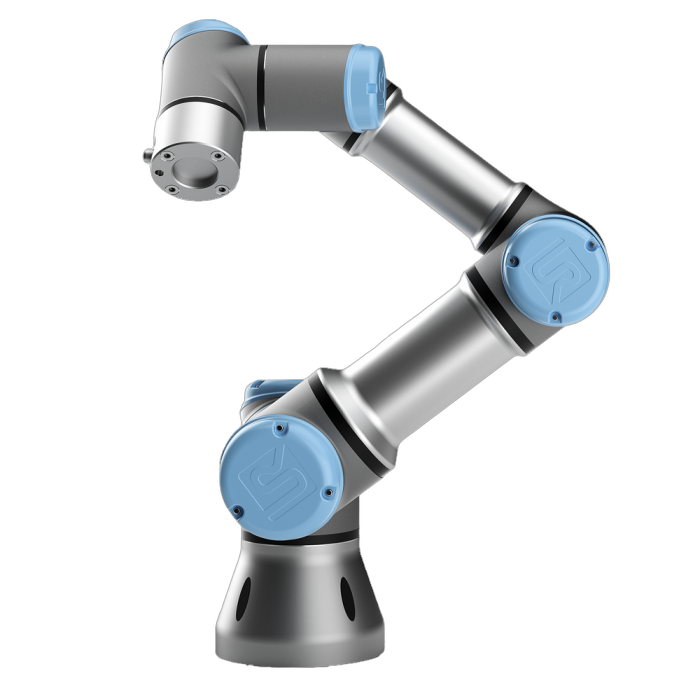

Key takeaways
- What they cost: Collaborative robots on IndustrySearch typically range from around $20,000 to $80,000 for the arm, averaging near $50,000, before tooling and integration.
- The arm is not the system: The robot arm is roughly half the total. Grippers, vision, integration, and safety assessment can double the deployed cost.
- What sets the price: Payload, reach, axis count, vision and force sensing, and application software are the main cost drivers.
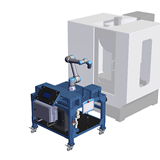
- Where they fit: Repetitive, physically demanding tasks such as machine tending, palletising, packing, assembly, and inspection, run safely alongside people without fencing.
- The decision: Match payload and reach to your task, then budget the whole cell, not just the price tag on the arm.
Collaborative robots have brought industrial automation within reach of Australian small and mid-sized manufacturers who once assumed robots meant cages, integrators, and six-figure budgets. A cobot works safely beside your team, is programmed in hours rather than weeks, and can be redeployed between tasks. But the headline arm price hides the real number. This guide covers what cobots actually cost in Australia in 2026, what drives the price, and how to budget the full system before you request quotes.
Why cobots are gaining ground
The pressure is labour, and it is not easing. Repetitive, physically demanding roles such as machine loading, packing, and palletising are among the hardest to staff consistently, and body stressing from repetitive manual work remains a leading source of serious workers' compensation claims, according to Safe Work Australia. A cobot absorbs exactly that work.
What makes a robot collaborative is built-in safety: force and torque sensing in every joint stops the arm on contact, so it can share a workspace with people without full fencing, under standards such as ISO/TS 15066. That changes the economics. Without the cost and floor space of guarding, and with programming simple enough for an operator to teach by hand-guiding the arm, a cobot fits into an existing line rather than requiring a rebuilt cell around it.
What a cobot costs in 2026
Arm price tracks payload and reach. As a working guide for the Australian market:
- Light-duty arms (3 to 6kg payload): Roughly $20,000 to $35,000. Suited to light assembly, inspection, and pick-and-place.
- Mid-range arms (10 to 16kg payload): Around $35,000 to $55,000. The volume segment for machine tending and packing.
- Heavy-payload arms (20 to 30kg+): $55,000 to $80,000 or more. Built for palletising and heavier material handling.
The critical point: the arm is only 40 to 50% of a deployed system. Once you add end-of-arm tooling, vision, integration engineering, safety assessment, and operator training, a $35,000 arm often becomes an $70,000 to $80,000 working cell. Budget the whole thing from the start. To compare arm pricing and configurations, compare collaborative robot quotes from Australian suppliers against your payload and reach.
| Cost component | Share of system | Indicative cost |
|---|---|---|
| Robot arm | 40 to 50% | $20,000 - $80,000 |
| End-of-arm tooling | 10 to 20% | $2,000 - $20,000 |
| Vision and sensors | 5 to 15% | $3,000 - $15,000 |
| Integration and safety | 20 to 40% | $5,000 - $30,000 |
The specs that shape the price
When you request quotes, these are the numbers that move the total:
- Payload: The weight the arm can carry, including the gripper. Undersize it and the cobot cannot lift your part; oversize it and you pay for capacity you never use.
- Reach: How far the arm extends. Match it to your work envelope, from a compact cell to a full pallet footprint.
- Axes: Six axes is standard and flexible. A simpler four-axis model can cut cost where motion is basic and repeatable.
- Vision and force sensing: Cameras and force-torque sensors enable guided placement, inspection, and delicate assembly. They add capability and cost.
- Software and application kits: Some vendors bundle basic software; others license modules for palletising, welding, or path optimisation separately.
Buy, lease, or Robotics as a Service?
How you pay matters as much as what you pay. Outright purchase suits operations confident of steady, long-term use that want to own the asset. Leasing spreads the cost and shifts it from capital to operating expense, which can be easier to approve. Robotics as a Service, where you pay per hour or per month, lowers the upfront barrier further and suits businesses testing automation before committing. Payback on a well-matched cobot is often measured in months for multi-shift operations, since the arm works every shift at no extra labour cost.
A realistic scenario
Picture a food manufacturer in regional Victoria struggling to staff an end-of-line palletising station. Turnover is high, the lifting is punishing, and two roles sit unfilled.
A 20kg-payload cobot with a vacuum gripper and pallet-pattern software lands at roughly $55,000 for the arm, and around $90,000 as a complete cell once tooling and integration are included. It stacks consistently across two shifts, frees staff for higher-value work, and on a two-shift line pays back inside a year. The cobot does not replace the team; it removes the station nobody wanted to fill. For a broader view of how these systems are costed, the robotic palletising system prices and buying guide breaks down cell components and ROI.
Frequently asked questions
Do cobots need safety fencing?
Often not, thanks to force-limiting and speed monitoring, but it depends on your risk assessment. Sharp tools, heavy payloads, or high speeds may still require light curtains or area scanners. A safety assessment under ISO/TS 15066 confirms what your application needs.
How hard are they to program?
Much easier than traditional robots. Most cobots can be taught by hand-guiding the arm through the motion, and no-code interfaces handle common tasks. Non-specialist operators can typically be productive after basic training.
What is the real payback period?
For single-shift work, typically 12 to 24 months; for multi-shift operations, often 8 to 14 months, because the arm works every shift without overtime. The tighter the match to a genuine labour bottleneck, the faster the return.
Can one cobot do more than one job?
Yes. Redeployability is a core advantage. With a tool change and reprogramming, the same arm can shift between machine tending, packing, and palletising as your production needs change.
What matters most
A cobot is a system decision, not an arm purchase. Match payload and reach to the task first, then budget the full cell: tooling, vision, integration, and safety, not just the price tag on the robot. Get the match right and the cobot removes a labour bottleneck and pays back fast. Get it wrong and an underspecified arm sits idle while the real cost of integration lands later.
Ready to compare payloads, reach, and pricing on collaborative robots? Get quotes from cobot suppliers across Australia here.


-160x160-state_article-rel-cat.png)