Key takeaways
- What they cost: Industrial 20 to 2,000 kVA diesel generators on IndustrySearch range from around $15,000 to $300,000, averaging near $157,500 across the band.
- What sets the price: Output in kVA, engine and alternator brand, enclosure and noise rating, control and transfer systems, and fuel-tank capacity are the main cost drivers.
- Where they fit: Standby and prime power for data centres, hospitals, mine sites, farms, construction, and any operation where an outage carries real cost.
- The number to size on: Convert your loads to kVA (kVA = kW divided by 0.8), add 20 to 30% headroom for start-up surges, then match a set to that figure.
- The decision: Size to your real peak load and duty, not the headline rating, and look at fuel and servicing over the life of the set, not just the price tag.
A diesel generator in the 20 to 2,000 kVA band is a serious capital decision, and getting the size wrong is expensive either way: too small and it trips under load when you need it most, too large and it wastes fuel and capital while risking wet stacking. This guide covers what these generators cost in Australia in 2026, what drives the price, and how to size a set to your site before you request quotes.
Why sizing drives everything
Diesel generators are rated in kVA, apparent power, while your equipment is often rated in kW or watts. The conversion matters: usable kW is roughly kVA multiplied by a power factor of 0.8, so a 100 kVA set delivers around 80 kW. Get that relationship wrong and you buy the wrong machine.
The other trap is start-up surge. Motors, pumps, compressors, and refrigeration can draw several times their running current for a few seconds at start, and those surges often set the size you need rather than the steady load. The standard approach is to total your simultaneous running loads, add the single largest start surge, convert to kVA, then add 20 to 30% headroom. That headroom is not waste; it is what keeps the set stable and leaves room for future load.
What a diesel generator costs in 2026
Price scales with output and specification. As a working guide for the Australian market across the 20 to 2,000 kVA band:
- Small industrial (20 to 100 kVA): Roughly $15,000 to $40,000. Suited to small business standby, farms, workshops, and light commercial sites.
- Mid-range (100 to 500 kVA): Around $40,000 to $120,000. The volume segment for commercial buildings, larger facilities, and construction.
- Large (500 to 2,000 kVA): $120,000 to $300,000+. Data centres, hospitals, mine sites, and critical infrastructure where extended prime or continuous power is needed.
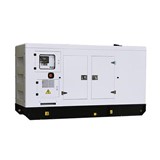
Specification shifts the total significantly. A silenced, weatherproof canopy costs more than an open frame. Automatic transfer switches, remote monitoring, larger fuel tanks for longer runtime, and premium engine and alternator brands all lift the price tag. Because the range is so wide, it pays to compare 20 to 2,000 kVA diesel generator quotes from Australian suppliers against your exact kVA and duty requirement.
| Output band | Indicative price | Typical application |
|---|---|---|
| 20 - 100 kVA | $15,000 - $40,000 | Small business, farms, workshops |
| 100 - 500 kVA | $40,000 - $120,000 | Commercial buildings, construction |
| 500 - 2,000 kVA | $120,000 - $300,000+ | Data centres, hospitals, mining |
The specs that shape the price
When you request quotes, these are the factors that move the total:
- Rating type: Standby, prime, and continuous ratings describe how long a set can run under load. Continuous-rated machines cost more but are built for sustained duty, which matters for data centres and mining.
- Engine and alternator: Premium brands carry a price premium and a service and parts network to match. The pairing affects reliability, emissions, and resale.
- Enclosure and noise: Silenced canopies typically quote noise around 68 to 74 dB(A) at seven metres and cost more than open frames. Noise limits often make this non-negotiable in built-up areas.
- Controls and transfer: Automatic transfer switches and remote monitoring add cost but enable hands-off start-up and fleet oversight, which is where the value sits for critical sites.
- Fuel capacity: Larger base tanks extend runtime between refuels, important for multi-day outage resilience, and add to both price and footprint.
Reading the total cost, not just the price tag
Purchase price is only the start. Fuel is the dominant running cost over the life of the set. As a general rule, diesel generators consume around 0.4 litres of fuel per kWh produced, so a set running heavy loads burns through operating budget quickly. Factor in servicing, oil and filter changes, load-bank testing, and installation by licensed professionals before you compare quotes on headline price alone. For help matching a set to your loads, the what size generator do I need guide walks through sizing, and the diesel generator fuel consumption guide sets out how to estimate running cost by output and load.
A realistic scenario
Picture a regional Australian hospital needing reliable standby power for theatres, imaging, and critical care. An outage here is not an inconvenience; it is a patient-safety event. The load assessment lands at around 400 kW of critical load with significant motor-start surge from HVAC and pumps.
Converting 400 kW at 0.8 power factor gives 500 kVA, and adding headroom for surge and future load points to a set around 600 to 650 kVA, silenced, with an automatic transfer switch and extended fuel capacity. That lands in the $150,000 to $200,000 range once installed. It is a large number, but sized against the cost and risk of losing power mid-procedure, the case makes itself. Undersize it to save capital and the set trips when the theatre HVAC and pumps start together.
Frequently asked questions
How do I convert my load to the kVA I need?
Total your simultaneous running loads in kW, add the largest single start-up surge, then divide by a power factor of 0.8 to get kVA. Add 20 to 30% headroom. For anything critical, have the sizing confirmed by a qualified engineer.
Do I need three-phase?
Only if you run three-phase loads such as large motors or pumps. Many smaller sites are single-phase. Choosing three-phase when you do not need it can limit usable power on any one leg.
What is wet stacking and why does oversizing cause it?
Wet stacking is unburnt fuel building up in the exhaust when a diesel set runs at low load for long periods. An oversized generator lightly loaded is prone to it, which is one reason correct sizing matters as much as buying enough capacity.
Who should install a fixed generator?
Hard-wired standby systems and automatic transfer arrangements must be designed and installed by licensed professionals. Correct transfer equipment prevents dangerous back-feeding into the grid.
What matters most
A diesel generator in the 20 to 2,000 kVA band is sized before it is priced. Convert your real loads to kVA, add headroom for start-up surge, and pick the rating type that matches your duty, then weigh fuel and servicing over the life of the set alongside the purchase figure. Size it right and it delivers dependable power for decades. Size it on the headline number and you risk a set that either trips under load or wastes fuel running half-empty.
Ready to compare outputs, enclosures, and pricing on industrial diesel gensets? Get quotes from diesel generator suppliers across Australia here.