

Floor cleaning is becoming an operational risk issue
For many commercial facilities, floor cleaning is no longer just a presentation task. It is part of daily risk management.
Supermarkets, hospitals, shopping centres, retail stores and public facilities all deal with constant foot traffic, changing floor conditions and unexpected spill risks. Water from refrigeration areas, leaking equipment, burst pipes, rainwater ingress, produce areas and customer traffic can quickly create unsafe or unattractive floor conditions.
Cleaning teams already work hard to manage these risks, but relying only on manual response can be difficult across large or busy sites.
This is where autonomous floor cleaning can provide practical support.
What is the T3P Core?
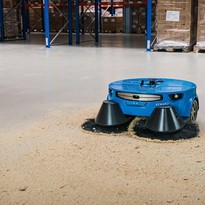
The T3P Core is an autonomous commercial floor cleaning robot designed to support daily cleaning routines in high-traffic commercial environments.
It is built to scrub, recover and dry hard floor surfaces while helping cleaning and facility teams maintain more consistent floor standards. Rather than replacing staff, the T3P Core supports them by taking on repetitive cleaning tasks and helping improve coverage across key areas of a facility.
The T3P Core is particularly suited to environments where clean, dry and presentable floors matter every day, including:
- Supermarkets and grocery stores
- Shopping centres and retail precincts
- Hospitals and healthcare facilities
- Aged care and retirement living facilities
- Commercial kitchens and food preparation spaces
- Large hospitality venues
- Public buildings and transport facilities
- Education campuses and commercial buildings
Why high-traffic facilities need a different cleaning approach
In a busy facility, floor conditions can change quickly.
A supermarket aisle may be dry and safe one moment, then affected by a leaking fridge, spilled liquid, produce waste or water tracked in from outside. In hospitals and healthcare environments, floor presentation and hygiene expectations are high. In shopping centres, heavy foot traffic makes consistent cleaning difficult without interrupting customers.
Traditional cleaning methods still have an important place, but they can be stretched during peak times or across larger areas.
An autonomous floor cleaning robot can help by providing repeatable, scheduled cleaning support. This gives facility teams another tool to help maintain floor standards throughout the day.
How the T3P Core supports cleaning teams
The T3P Core is designed to assist with routine and repeated cleaning tasks. This can help reduce the time staff spend on repetitive floor scrubbing and allow them to focus on higher-priority issues, spot cleaning, customer-facing duties or site-specific tasks.
Key benefits include:
- More consistent cleaning coverage
- Reduced reliance on repetitive manual scrubbing
- Better support for high-traffic floor maintenance
- Improved floor presentation during operating hours
- Support for spill-prone and water-risk areas
- A more structured approach to daily cleaning routines
- Practical support for stretched cleaning and facility teams
The goal is not to remove people from the cleaning process. The goal is to give teams better tools so they can manage the site more effectively.
Reducing risk from water on floors
One of the strongest use cases for the T3P Core is water recovery and floor risk reduction.
In supermarkets and commercial facilities, water on floors can come from many sources: refrigeration leaks, burst water pipes, cleaning activity, wet weather, produce areas or customer spills. Even small amounts of water can create safety concerns if they are not identified and managed quickly.
The T3P Core helps support floor maintenance by scrubbing and recovering water from hard floor surfaces. This can help facilities maintain cleaner, drier and more presentable floors across routine cleaning zones.
For organisations managing multiple sites, this type of consistency can be valuable.
Automation should fit the facility, not disrupt it
A successful robotic cleaning deployment depends on matching the robot to the site.
Before introducing autonomous cleaning, facility managers should consider:
- Which areas need regular cleaning support?
- Are the cleaning routes clear and repeatable?
- Are the floors suitable for robotic scrubbing?
- Will the robot be used during trading hours, after hours, or both?
- Where will the robot be stored, filled, emptied and charged?
- Who will be trained to operate and monitor the robot?
- Is local support and servicing available?
The best results come when the robot is introduced as part of a clear operational plan.
A practical step toward smarter facility management
Autonomous floor cleaning is becoming more practical for commercial facilities because it addresses real day-to-day challenges: labour pressure, presentation standards, repeated cleaning tasks and floor safety concerns.
The T3P Core gives facility teams a way to support these goals without completely changing how their cleaning operation works.
For supermarkets, hospitals, shopping centres and high-traffic commercial facilities, robotic floor cleaning is no longer just a future idea. It is becoming a practical tool for improving consistency, supporting staff and helping manage operational risk.





-205x205.jpg)