
Key takeaways
- Price range: Expect $20,000–100,000+ depending on size, axles and features; the market average listing price is around $60,000.
- Common new prices: Small single-axle to light low-loader floats start from ~$20k–60k; heavy quad-axle, extendable low loaders from ~$100k+.
- Regulatory limits and permits: Standard heavy-vehicle width is 2.5 m; anything wider/longer/heavier than NHVR limits requires oversize/overmass permits and may need escorts. Know NHVR dimension and OSOM rules before you buy.
- Finance and ROI: Trailer finance is widely available with typical commercial equipment rates often starting in the high single digits; compare truck & trailer finance lenders and check balloon options.
- Maintenance & parts: Plan for regular axle, suspension and hydraulic checks; common spare parts (winches, jockey wheels, bushes) are inexpensive individually but labour on heavy haulage repairs is material, budget for preventative service.
Introduction
If you haul plant, machinery, forklifts or oversized loads, a low-loader trailer is one of the most specialised and value-dense assets you’ll purchase. The right low-loader protects expensive plant, keeps compliance headaches manageable and reduces loading/unloading time. The wrong one costs you downtime, fines and expensive retrofits.
This guide cuts through types, prices, operation, maintenance, finance and the strict compliance landscape in Australia so you can buy with confidence.
Types of low-loader trailers (and when to choose them)
- Drop-deck (single/multiple axle) low loader: Lower deck height for mid-weight plant; good for general earthmoving attachments. Use for mini-excavators, skid steers.
- Extendable low loader: Deck sections extend (e.g. 10–18 m) to carry long excavator booms or pipes; essential if you move long machines.
- Quad-axle / heavy low loader (dual steer / rear steer): Designed for high gross load and manoeuvrability; used for large tractors and construction plant.
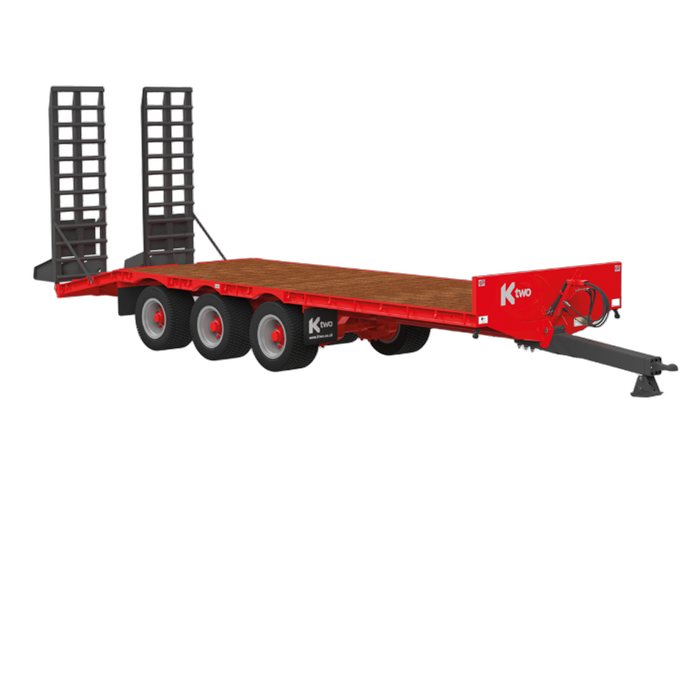
- Float trailer / beavertail: Simple ramped back for loading wheeled equipment; cheaper but less suitable for very low deck heights or wide loads.
- Tag / modular low loader systems: For extremely heavy/oversize loads, modular systems are hired rather than bought by most operators.
What you’ll pay (realistic price guide)
- Light single-axle to tandem low loaders: $20,000–60,000 (used & new simple floats).
- Tandem / tri-axle drop decks (professionals): $60,000–150,000.
Used market variance is large, classifieds show listings from under $2,000 (very old units) up to ~$200,000 for specialist kit; expect the average to be around $100,000 for active listings.
Operations: What to check before you buy
- Deck height & loading angle: Lower deck = easier loading but check ground clearance and ramp angle for your machines.
- Axle rating & configuration: Ensure axle groups and suspension match your gross mass requirements. Heavier machines need multi-axle spreads to meet road mass distribution rules.
- Gooseneck and coupling spec: Match the kingpin height to your prime mover; check compatibility with fifth wheel or pintle setups.
- Hydraulics & ramps: Test hydraulic circuits for leaks and load speed; electric/hydraulic ramp assistance reduces manual handling risk.
- Brakes and ABS: Heavy low loaders must have compliant braking systems for the trailer mass. Inspect pads, drums/rotors and valve function.
A practical test: load the heaviest machine you intend to carry, drive it up the ramps and check ramp geometry, visibility, and tie-down points.
Maintenance, parts and typical costs
Low-loader longevity hinges on routine maintenance:
- Daily/weekly: Visual check of ramps, chains, tyre pressures and lights.
- Monthly: Inspect hydraulic hoses, axle bearings, suspension bushes and wiring.
- Annual: Full service: brakes, axle re-torque, hydraulic oil change, paint/anti-corrosion touch-up.
Common replacement parts are inexpensive (e.g., jockey wheels from $20–150), but heavy haul repairs (axles, steering rams) require specialist workshops and can be costly, budget for scheduled upkeep and a parts contingency.
Financing and warranties
- Finance options: Truck and trailer finance, chattel mortgages and equipment leases are available. Competitive brokers advertise trailer/vehicle finance with rates sometimes starting around the high single digits; terms and deposit vary. Always compare lenders and check whether the lender requires comprehensive insurance or a residual (balloon) payment.
- Warranties: New trailers typically carry manufacturer structural and parts warranties (check years and terms). For hydraulics, electrics and aftermarket components, ask for specific warranties and service intervals. Keep service records, they maintain residual value.
Compliance and certification (Australia)
Regulation is a buyer-critical area:
- Mass, dimension & loading rules: The Heavy Vehicle (Mass, Dimension and Loading) National Regulation prescribes size, shape and loading. Standard width for heavy vehicles is 2.5 m; anything wider/longer/heavier than the relevant NHVR thresholds triggers permit requirements.
- Oversize/Overmass permits (OSOM): If your loaded trailer exceeds limits, you must apply for OSOM permits via NHVR and meet state conditions, this can require route assessments, escort vehicles and daytime restrictions.
- State variations: While NHVR sets national rules, permit conditions and escort requirements differ by state; confirm with local road authorities before purchase.
- Load restraint and workplace safety: Ensure tie-down points meet AS/NZS load restraint standards and that operator procedures reduce risk during loading/unloading.
Buying checklist (quick)
- Purpose: typical loads, dimensions and frequency.
- Tare and axle ratings vs your gross desired payload.
- Deck length and extendability for the longest machine.
- Brakes, suspension type and tyre condition.
- Hydraulics: test under load; check leak history.
- Documentation: service history, VIN/rego clear, OSOM history if any.
- Finance quote and insurance pre-check.
- Route feasibility: measure bridge, height and turning constraints.
Common questions
Q: Can I tow a heavy low loader with any prime mover?
A: No. Prime mover must be rated for the trailer’s gross mass and configured correctly (5th wheel height, kingpin rating and braking system). Check your truck manufacturer specs.
Q: Do I need a special licence?
A: You must hold the appropriate heavy-vehicle licence for the prime mover and comply with mass limits; drivers of oversize/overmass loads may need additional accreditation depending on state rules.
Q: How long do low-loaders last?
A: With regular maintenance, well-built trailers last 10–20+ years. Corrosion, heavy daily use and poor servicing shorten life.
Q: Is it cheaper to buy new or used?
A: Used trailers offer lower upfront cost but may have hidden wear (hydraulics, chassis stress). Balance purchase price against downtime risk and inspection findings. Used market averages around $154.5k, indicating strong demand for good condition units.
Final thoughts
A low-loader is an investment in uptime, safety and compliance. Buy to the load you run, not the load you hope for. Confirm NHVR dimension and permit implications before purchase, match trailer spec to your prime mover, and budget for preventive maintenance. Do that and your trailer will be a dependable workhorse rather than a costly paperweight.
-160x160-state_article-rel-cat.png)
-160x160-state_article-rel-cat.png)