
Vertical mast lift prices in Australia (2026): specs, costs, and fit
- What they cost: Vertical mast lifts on IndustrySearch typically range from around $15,000 to $30,000, averaging near $22,500.
- What sets the price: Working height, platform capacity, drive type (push-around vs self-propelled), and mast configuration are the main cost drivers.
- Where they fit: Indoor maintenance and stock work in tight spaces: warehouses, retail, facilities, and light installation where a scissor or boom lift is too large.
- The compliance point: Under 11 metres these do not need a High Risk Work Licence, but operators must be trained and the machine inspected to AS 1418.10.
- The decision: Match working height and capacity to your task and confirm the footprint fits your aisles, then weigh buying against hiring.
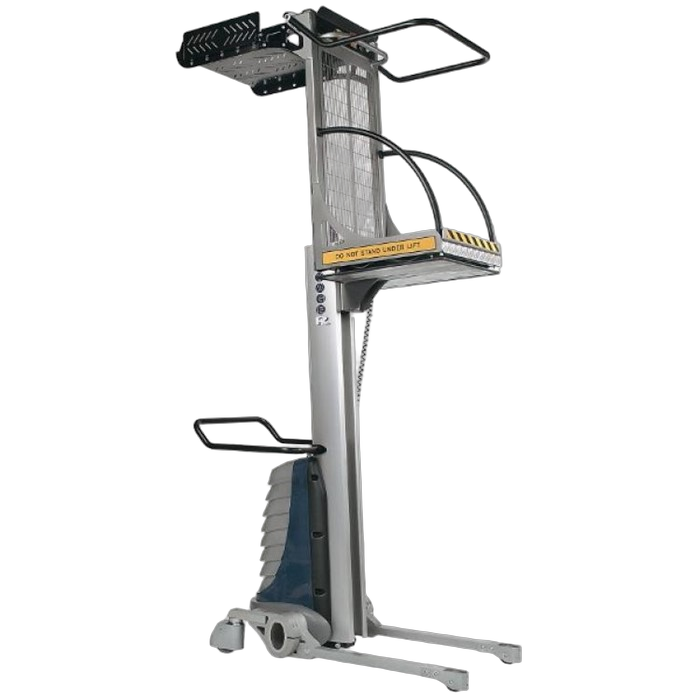
When you need safe vertical access in a tight indoor space, a vertical mast lift often beats a scissor or boom lift on footprint and price. Its single mast lifts one or two workers straight up on a compact base that fits through standard doorways and turns in narrow aisles. This guide covers what vertical mast lifts cost in Australia in 2026, the specs that shape the price, and how to match a machine to your site before you request quotes.
Why a mast lift over a scissor or boom
The appeal is access without bulk. A vertical mast lift has a small footprint, often zero or near-zero tail swing, and light overall weight, so it manoeuvres where larger platforms cannot and can be moved between floors in a freight lift. For repeated indoor tasks such as changing lighting, stock picking at height, or installing services, that compactness is the whole point.
Safety is the other driver. Working at height remains one of the most serious workplace risks, and falls from a height are a recognised leading cause of traumatic workplace fatalities in Australia, according to Safe Work Australia. A purpose-built platform with guardrails and a stable base is a far safer answer than a ladder for regular elevated work.
What a vertical mast lift costs in 2026
Price tracks height and drive type. As a working guide for the Australian market:
- Push-around mast lifts: Roughly $15,000 to $20,000. Manually positioned, then raised. Suited to lighter-duty, lower-frequency indoor access.
- Self-propelled mast lifts: Around $20,000 to $27,000. Drive at height and reposition without climbing down, which suits higher-frequency work across a site.
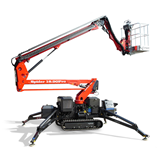
- Taller and specialist units: $27,000 to $30,000 or more. Greater working heights, higher platform capacity, jib booms, and crawler bases for uneven ground.
Options lift the total: jib booms for reach over obstacles, higher platform capacities for two operators plus tools, lithium batteries, and crawler tracks all add to the price tag. Because listed prices vary by brand and configuration, it pays to compare vertical mast lift quotes from Australian suppliers for your working height and drive type.
| Lift class | Typical working height | Indicative price | Best fit |
|---|---|---|---|
| Push-around mast | ~5 to 8m | $15,000 - $20,000 | Lighter, lower-frequency access |
| Self-propelled mast | ~6 to 10m | $20,000 - $27,000 | Frequent work across a site |
| Taller / specialist | Up to ~14m | $27,000 - $30,000+ | Higher reach, two operators, rough ground |
The specs that shape the price
When you request quotes, these are the numbers that move the total:
- Working height: The single biggest driver. Size it to the height you actually reach regularly, plus a safe margin, not to the tallest point in the building.
- Platform capacity: Common ratings cover one operator, or two operators plus tools and materials. Account for the heaviest realistic load on the platform.
- Drive type: Push-around units are cheaper but must be moved manually and lowered to reposition. Self-propelled units drive and reposition at height, saving time on frequent work.
- Footprint and tail swing: Zero tail swing and a narrow base let the machine work in tight aisles and turn in place. Confirm it fits your doorways and layout.
- Mast and base: Single or double mast, jib boom for reach over obstacles, and standard or crawler base for uneven ground all shift capability and cost.
Buy or hire?
The first question for many buyers is whether to own or hire. Hiring suits project-based, seasonal, or occasional access where the machine would otherwise sit idle. Buying suits regular, ongoing use where the lift is needed on demand and hire costs would mount. The break-even calculation should compare the all-in hire cost, including transport and damage waivers, against the full cost of ownership, including insurance, annual inspection, and maintenance, not just the purchase price. The guides on whether to hire or buy access equipment and access platform prices and buying considerations work through that maths, and the principles apply directly to mast lifts.
A realistic scenario
Picture a facilities team in a Brisbane distribution centre maintaining lighting, sprinklers, and services across a large indoor site, currently hiring a lift several times a year and juggling delivery windows.
A self-propelled vertical mast lift with a jib boom, at around $24,000, lets the team reach services over racking, drive between jobs at height, and work on demand without booking a hire. Once annual use passes the break-even against repeated hire, ownership wins, and the compact base keeps it usable in aisles a scissor lift could not enter. It does not replace larger platforms for big outdoor jobs; it removes the friction from routine indoor access.
Frequently asked questions
Do I need a licence to operate a vertical mast lift?
For platform heights under 11 metres, a High Risk Work Licence is generally not required, but operators must be trained and assessed as competent by the employer. Boom-type platforms above 11 metres do require a WP class licence. Confirm current requirements with your state WHS regulator.
How is a mast lift different from a scissor lift?
A mast lift raises a platform straight up a single mast on a very compact base, ideal for tight indoor access with one or two people. A scissor lift offers a larger platform and higher capacity but a bigger footprint. Choose the mast lift for manoeuvrability in narrow spaces.
What inspections are required?
Owned units require regular inspection by a competent person in line with AS 1418.10, plus routine maintenance. Keep records current, as they matter for both safety and, where relevant, insurance.
Can it handle two operators?
Some models do. Double-mast and higher-capacity units allow two people on the platform, while single-mast units are rated for one. Check the platform capacity against how you plan to use it.
What matters most
A vertical mast lift is the right call when you need safe indoor access in tight spaces without the bulk of a scissor or boom lift. Anchor your choice to working height and platform capacity first, confirm the footprint fits your aisles and doorways, then weigh buying against hiring on real annual use. Get the fit right and the lift makes routine work at height safe and quick. Get it wrong and you are left with a machine too short for the job or too large for the aisle.
Ready to compare working heights, capacities, and pricing on vertical mast lifts? Get quotes from vertical mast lift suppliers across Australia here.