
Key Takeaways
- Three specs define the truck: Loader type, body size, and lift system together decide whether a truck suits your routes and what it costs.
- Loader follows the route: Rear for mixed and bulky, front for commercial dumpsters, side for standardised residential carts.
- Body size sets the trips: Bodies commonly run from around 16 to 28 cubic metres; bigger means fewer runs but a heavier, dearer truck.
- The lift must match the bins: Bin lifters and arms have to suit your container format and carry SafeWork bin-lifter certification.
- Price tracks capacity: New garbage trucks in Australia commonly run from about $150,000 to $300,000, with body type and size the main drivers.
Choosing a garbage truck is more than picking a loader style. Three specifications decide whether a truck earns its keep: the loader type that suits your collection, the body size that matches your volumes, and the lift system that fits your bins. Get all three aligned with your routes and you have an efficient, compliant workhorse. Get any one wrong and you are making extra trips, straining the crew, or stuck with a lifter that does not suit your containers. This guide steps through each specification so you can buy the right truck the first time.
Step one: choose the loader type
The loader configuration is the foundation, because it dictates the waste you can collect and the crew you need. There are three main types, each optimised for a different job.
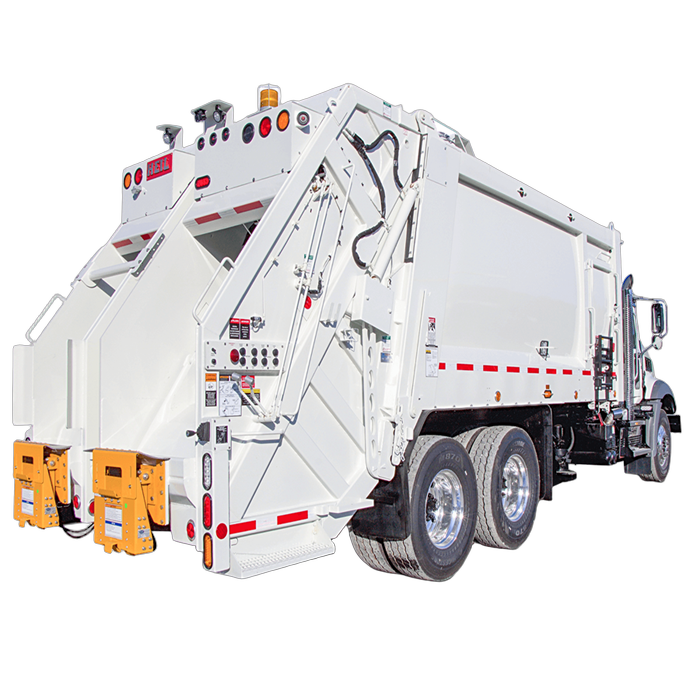
- Rear loader: Loaded from the back, manually or by a bin lifter, and highly flexible with mixed, bulky, and irregular waste. Usually needs a driver plus runners.
- Front loader: Hydraulic forks lift large commercial dumpsters over the cab, running a single operator on high-volume commercial and industrial routes.
- Side loader: Collects from the side, and in automated form (ASL) lifts standardised wheelie bins with one operator, ideal for high-density residential rounds.
If your work spans several route types, you may need more than one configuration, or a flexible rear loader as a compromise. For a deeper head-to-head on this decision alone, see the companion rear vs front vs side loader guide.
Step two: size the body
Body size, measured in cubic metres of compacted capacity, sets how much you carry before a trip to the transfer station or landfill. Australian compactor bodies commonly range from around 16 to 28 cubic metres, and the right size is a balance: too small and you make extra trips that burn fuel and time; too large and you carry a heavier, costlier truck that may run underloaded.
Compaction ratio matters as much as raw volume. Modern hydraulic systems compress waste significantly, and front loaders can reach around 5:1, meaning far fewer trips per shift. Match the body to your route volume and density: dense waste hits weight limits before it fills the body, so a smaller body can be the right call for heavy streams, while light, bulky waste rewards a larger body.
| Body size | Suits | Trade-off |
|---|---|---|
| Smaller (~16 m3) | Tight routes, dense or heavy waste | More frequent trips |
| Mid (~20-24 m3) | General residential and mixed rounds | Balanced for most operators |
| Larger (~28 m3) | High-volume, lighter waste | Heavier, dearer, risk of underloading |
Step three: match the lift system
The lift is where the truck meets your bins, and it must suit your container format exactly. A residential round on 240-litre and 660-litre bins needs a rear or side bin lifter sized for those carts; a commercial route on large dumpsters needs a front-loader fork system. Getting this wrong means the truck cannot service your bins efficiently, or at all.
Safety and compliance ride on the lift too. Bin lifters used in kerbside collection are subject to SafeWork guidelines, and you should confirm the truck body and bin-lifter combination carries the relevant certification. Automated arms reduce manual handling and the repetitive-strain injuries that come with it, which is a major reason automated side loaders have grown so popular. Confirm the lifter's rated capacity comfortably exceeds the loaded weight of your heaviest bin.
How the three specs shape your price
Loader type, body size, and lift system together drive the purchase price. New garbage trucks in Australia commonly run from about $150,000 to $300,000, with body type and size the primary cost drivers, and automated systems and larger capacities pushing toward the top of the range. On top of the truck itself, factor in the chassis GVM, the driver licence class it demands (garbage trucks commonly require a Heavy Rigid licence), registration, insurance, and running costs. Judge the buy on total cost of ownership over the body's typical 7 to 12 year service life, not the sticker alone.
A realistic scenario
Picture a contractor winning a residential kerbside contract for a compact, hilly suburb with standardised wheelie bins and tight, winding streets. The instinct is to buy the biggest body available to minimise trips.
But a 28 cubic metre truck is heavy and unwieldy on the narrow, steep roads, and the dense household waste hits weight limits well before the body fills, so the extra capacity is wasted. The better fit is an automated side loader with a mid-size body sized to the route's real volume and a lifter matched to the suburb's standard carts: one operator, manageable on the streets, and legal on weight. A different contract, say a flat commercial precinct with big dumpsters, would point to a front loader with a larger body instead. The three specs follow the route together. To pin down the loader decision, the rear vs front vs side loader guide goes deeper, and for bulk or construction waste in large containers the skip loader vs hook loader guide is the right companion. Browse current garbage truck listings to compare, and weigh truck and trailer finance against an outright purchase.
Frequently asked questions
How do I choose the right garbage truck?
Start with three specs in order: the loader type that suits your collection (rear, front, or side), the body size that matches your route volume and waste density, and the lift system that fits your bins. Align all three with your routes and confirm licensing and compliance before comparing price.
What size garbage truck body do I need?
Australian compactor bodies commonly run from around 16 to 28 cubic metres. Match the size to your route volume and waste density: dense waste hits weight limits before filling a large body, so smaller suits heavy streams, while light, bulky waste rewards a bigger body. Oversizing risks running underloaded.
How much does a garbage truck cost in Australia?
New garbage trucks commonly run from about $150,000 to $300,000, with the loader type and body size the main price drivers. Automated systems and larger capacities sit toward the top of the range. Factor in licensing, registration, insurance, and running costs when comparing total cost of ownership.
Does the bin lifter need to match my bins?
Yes. The lift system must suit your container format, whether 240 and 660-litre wheelie bins or large commercial dumpsters. A mismatched lifter cannot service your bins efficiently. Confirm the lifter's rated capacity exceeds your heaviest loaded bin and that the body and lifter carry SafeWork bin-lifter certification.
How long does a garbage truck body last?
Garbage truck bodies are typically engineered for 7 to 12 years of service. High-cycle operations such as automated side loaders running many lifts a day wear faster than lower-frequency commercial front-loader routes. Replacing the body while keeping the chassis is common practice to extend total vehicle life.
What matters most
The right garbage truck is defined by three specs working together: a loader type matched to your collection, a body sized to your volume and waste density, and a lift that fits your bins and carries the right certification. Work through them in that order, let the route drive each choice, and judge the buy on total cost of ownership across the body's service life. Get the combination right and the truck runs efficiently and legally for a decade; get any one spec wrong and you pay for it in extra trips, strained crews, or bins you cannot service.
Ready to spec the right garbage truck for your operation? Get quotes from garbage truck suppliers across Australia here.
-160x160-state_article-rel-cat.png)
-160x160-state_article-rel-cat.png)