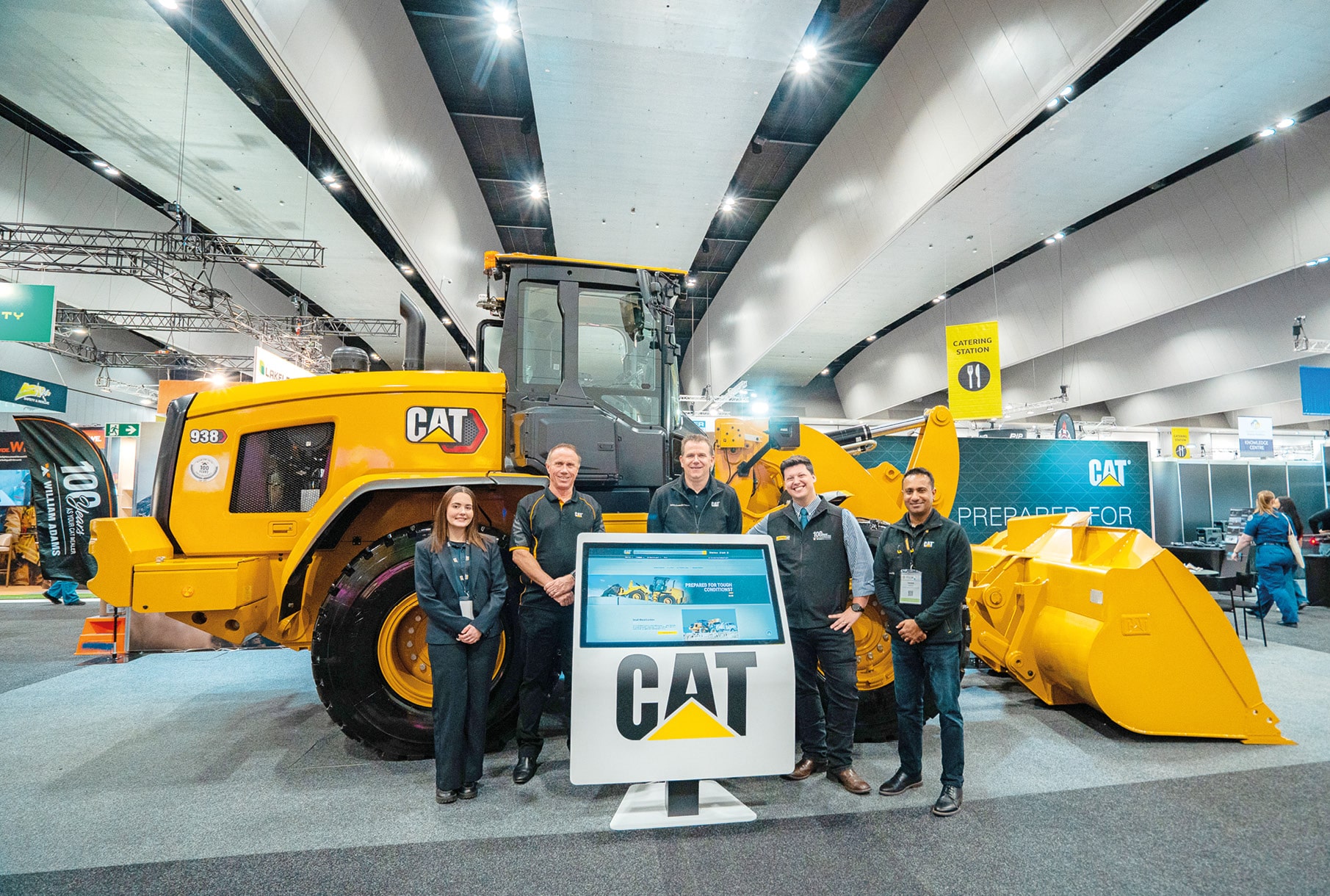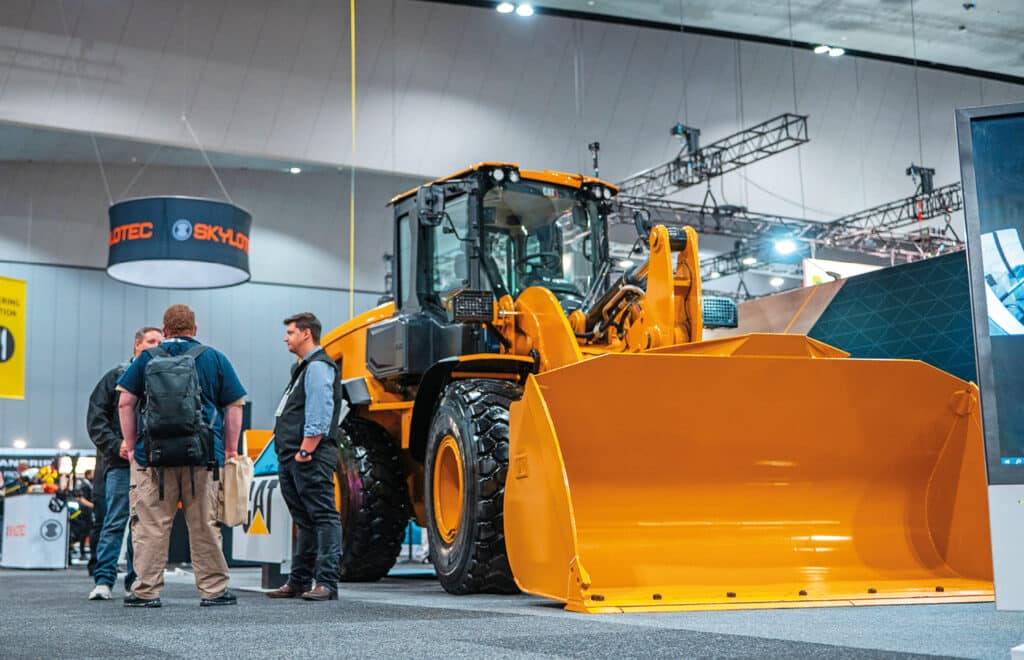
Caterpillar® recently made its debut at an AFAC conference, bringing the technology and capabilities of the Cat® 938 wheel loader to an audience responsible for Australia’s emergency response operations.
Emergency management equipment is judged by more than its ability to perform a task. It needs to be dependable, safe, adaptable, and capable of working effectively when conditions are unpredictable and the consequences of failure can be serious.
That makes AFAC’s annual conference a natural setting for Caterpillar to demonstrate how technology is changing the role of heavy equipment in emergency management.
AFAC is the national council for fire and emergency services in Australia and New Zealand, responsible for creating synergies across the emergency management sector.
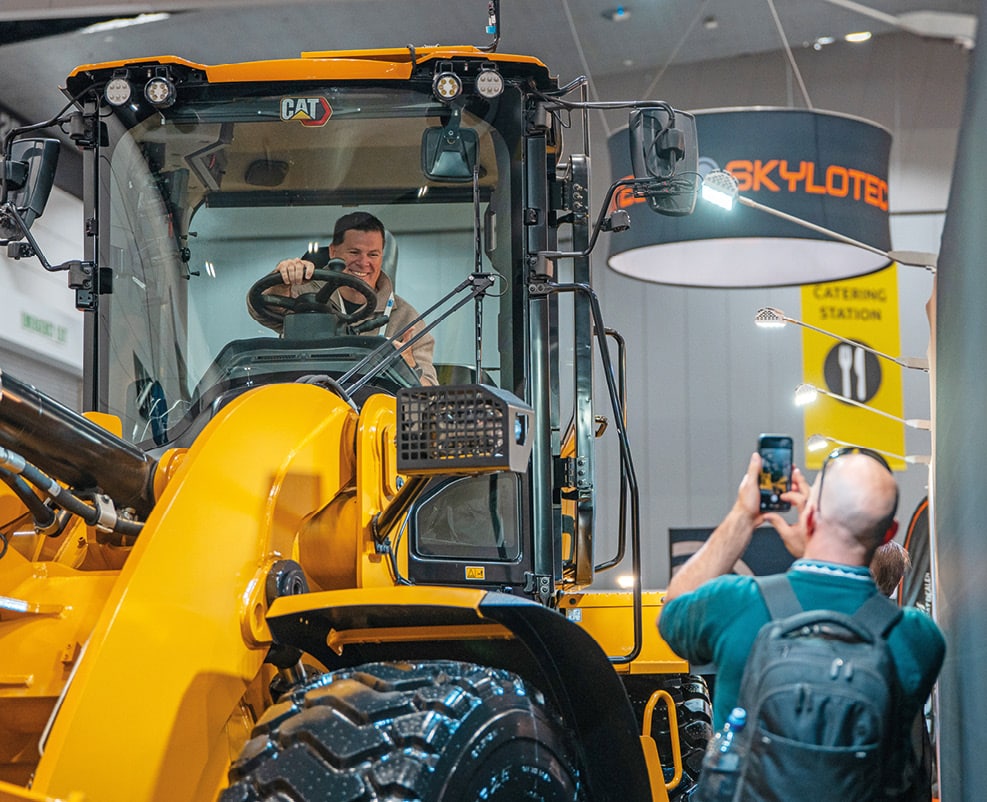
This year, for the first time, Caterpillar exhibited at the AFAC event, joining emergency management professionals, first responders, industry leaders, researchers, and technology providers at the Melbourne Convention and Exhibition Centre.
Held in August, AFAC26 brought together people from across Australia and around the world to exchange knowledge, examine emerging challenges, and explore equipment and technologies designed to improve emergency preparedness, response, and recovery.
For Caterpillar, participation represented more than an opportunity to display a machine. It provided a platform to engage directly with a sector in which operational requirements intersect with the capabilities of modern construction equipment.
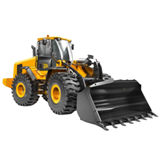
At the centre of Caterpillar’s display was the Cat 938 small wheel loader, a machine combining power, manoeuvrability, operator assistance, and safety technology for applications where versatility and control are important.
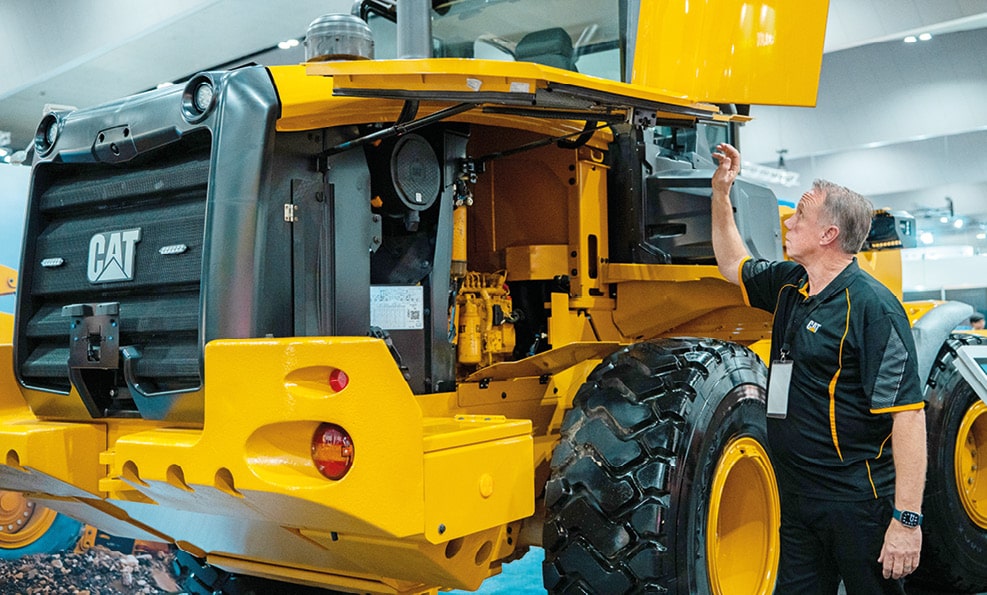
Product specialist Greg Monk was at the exhibition to take visitors through the machine and explain how its technology can support operators working in demanding environments.
Facts about AFAC
AFAC26 featured more than 100 expert speakers, while the exhibition brought together national and international brands, manufacturers and suppliers displaying equipment, technology and services.
Although AFAC is held in Melbourne, its reach extends well beyond Victoria. Its audience reflects the national and international nature of emergency management, with delegates coming together to consider challenges that do not stop at state or national borders.
The exhibition covered a range of capability areas, including equipment, personal protective equipment, fleet, workforce, community risk reduction, response operations, and fire safety. It also provided exposure to technologies addressing areas such as artificial intelligence, prediction, and detection.
That breadth is important to Caterpillar. Greg said that emergency services and associated organisations may require equipment for tasks such as vegetation management, access preparation, debris removal, material handling, site rehabilitation, flood response, disaster recovery, or general infrastructure support.
“The circumstances can vary enormously, yet the common requirement is for machines that can be deployed safely and productively when they are needed,” he said.
“Caterpillar’s first appearance at AFAC reflected an intention to engage with a sector where machine capability and technology can play an increasingly important role.”
The timing was also appropriate. AFAC26 was built around the theme Leading Together: Integrity, Inclusion and Impact, with the conference examining how collaboration, diverse perspectives, and innovation can shape the future of emergency management.
Greg said that Caterpillar’s presence fitted naturally into that discussion.
“Technology is most useful when it helps people make better decisions, operate more safely, and achieve more with the equipment available to them,” he said.
Technology takes centre stage
Greg said the Cat 938 provided an opportunity to demonstrate how contemporary wheel loader technology had moved beyond basic loading and carrying.
The 938 is powered by a Cat C7.1 engine producing a rated gross power of 191hp (143kW), while operating weight is about 16.1 tonnes. Bucket capacities range from 1.9 to 5m³, giving the machine the flexibility to work across a range of material-handling applications.
While those figures provide the foundation, it is the technology integrated into the machine that gives the 938 its relevance to an audience such as AFAC.
“The machine is designed around the principle of making the operator more effective, rather than simply adding technology for its own sake,” Greg said. “The result is a wheel loader that can combine conventional machine performance with systems intended to improve efficiency, control, safety, and consistency.
“One of these technologies is Cat Payload, which provides on-the-go weighing to help operators achieve target loads. Rather than relying solely on estimation, the operator can monitor payload information while loading, helping avoid overloading, underloading, or misloading.”
For emergency management applications, the value of accurate payload information extends beyond productivity.
Greg said knowing how much material is being moved can help operators work with greater consistency when handling aggregates, soil, debris or other materials.
“In situations where equipment may be supporting recovery or rehabilitation activities, the ability to monitor loading operations can provide an additional level of control,” he said.
Operator technology
Greg said technology is most effective when it simplifies rather than complicates the job, and the 938 had been developed around that philosophy.
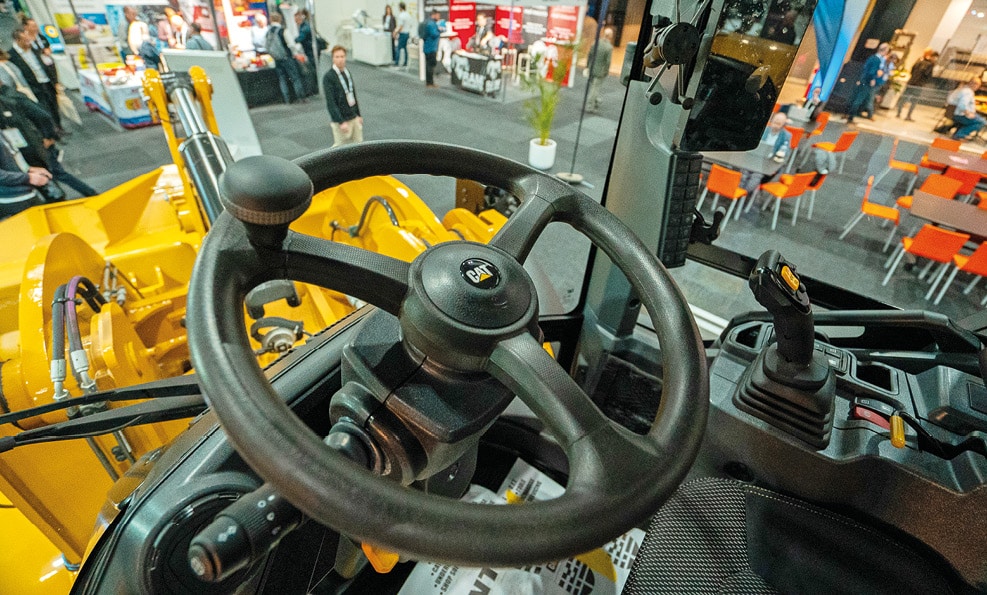
“For example, the cab features automatic temperature control, low-effort joystick controls, and an adjustable suspension seat,” he said.
“Caterpillar has also incorporated an operator environment with sound suppression and hydraulic cylinder damping to provide smooth and predictable machine control.
“The machine is equipped with an eight-inch touchscreen and jog dial, allowing key functions to be accessed from within the cab. Programmable joystick controls further allow operators to tailor the machine to the work being performed.”
For an emergency management audience, operator comfort has a practical dimension. Personnel may be required to spend long periods in equipment, sometimes in challenging weather and working conditions.
Reducing unnecessary physical effort and providing clear access to machine information can help maintain operator concentration over extended shifts.
The 938 also incorporates an Operator Not Present system, which helps isolate the machine when the operator leaves the cab, together with seatbelt notifications.
These features form part of a broader approach to machine safety rather than relying on operator awareness alone.
Visibility is another area where technology has assisted.
“The 938 can be specified with a multi-view camera and rear object detection, giving operators additional information about what is happening around the machine. A front-view camera is also available,” Greg said.
“For operations involving personnel, vehicles, and machinery working in close proximity, the ability to improve visibility around the machine can be an important part of managing risk.”
Coping with conditions
Emergency management rarely takes place on perfectly prepared ground. Floods, storms, fires, and other events can leave surfaces uneven, soft, wet, obstructed or otherwise difficult to negotiate. The Cat 938 addresses changing ground conditions through a range of drivetrain and traction technologies.
Greg said that Auto Wheel Torque automatically adjusts rim pull to reduce tyre spin and tyre wear. The machine also features an automatic differential lock, while the drivetrain incorporates a hydrostatic transmission with electronic control.
Caterpillar’s Hystat operator modes provide different powertrain settings to suit operating requirements, while creeper control allows the operator to adjust ground speed independently to support more controlled work.
“These systems work together rather than operating as isolated features,” Greg said.
“The objective is to give operators greater control over the machine while allowing the technology to assist with traction, power delivery, and efficiency.
“That is relevant when equipment is deployed outside its conventional operating environment.
“A wheel loader used for routine material handling may spend most of its working life in predictable conditions. A machine supporting emergency response can encounter something very different.
“Its value lies partly in being able to adapt to changing circumstances without compromising operator control.”
Built-in efficiency
Fuel efficiency is another area where the 938 uses technology to reduce unnecessary consumption.
The machine incorporates an Auto Engine Mode designed to reduce fuel consumption at low idle, while its adaptive engine technology automatically adjusts engine speed in response to operator input. The system is intended to optimise productivity while minimising fuel burn.
Meanwhile, extended service intervals are designed to reduce maintenance requirements and operating costs. Caterpillar has increased the service interval from 500 to 1000 hours after the initial service.
“The significance of these features becomes clearer when viewed through the lens of fleet utilisation,” Greg said.
“Emergency organisations need equipment available when circumstances demand it. Reducing fuel consumption and simplifying maintenance can support operational readiness, while digital monitoring can provide fleet managers with greater visibility of machine condition and use.”
The 938 includes Product Link Elite, providing connectivity between the machine and Caterpillar’s digital ecosystem.
The trend is toward equipment that is not simply operated, serviced and parked, but also connected and monitored throughout its working life.
Safer productivity
Greg said that Caterpillar’s approach reflects a shift across the equipment industry, where productivity and safety are no longer treated as competing priorities.
The 938 is more than a wheel loader with technology added to it. It is a machine in which the technology has been integrated into the way the operator works.
“That distinction is important when equipment is being considered for emergency management,” Greg said.
“During routine operations, there may be time to compensate for inefficiencies, make repeated adjustments, or work around equipment limitations. During emergency response or recovery, those opportunities can be reduced.
“Equipment needs to provide capability without creating additional complexity.”
More than a machine
The Cat 938 may have been the physical focus of Caterpillar’s AFAC display, yet the message extended beyond the wheel loader itself.
The machine illustrates how equipment is becoming increasingly connected, automated, and responsive to the operator. It combines conventional wheel loader capability with payload measurement, traction management, operator assistance, machine connectivity, enhanced visibility and systems designed to improve efficiency.
“Caterpillar’s first appearance at AFAC26 also represented an important step in building relationships beyond its traditional customer base,” Greg said.
“The event provided a meeting point for people who operate in environments where safety and preparedness are paramount, and where equipment can be called upon to perform when circumstances are far from ordinary.
“That made AFAC26 an appropriate venue for Caterpillar to demonstrate its approach to technology: practical systems designed to support people, improve machine performance, and provide greater control over complex operations.”