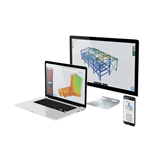
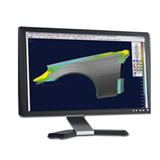
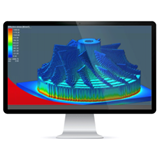
Australian sheetmetal machinery specialist Maxitec says there is only one software that is capable of providing this — JETCAM.
Now the arrival of Boeing's 787 Dreamliner to the world's commercial air market is arguably the first signal that composite materials have moved beyond military applications and Formula 1 racing and into the mainstream market.
JETCAM was there to help make it happen.
Composite materials have generated momentum and Australia and New Zealand can forecast how to gear-up by looking at countries already processing such materials.
Bombardier Aerospace, based in Montreal, Canada, is an ideal example. It amalgamated its processing platform onto JETCAM software to gain control of its nesting.
This action to its nesting, according to Andrew Bentrup, managing director of Maxitec — which distributes and installs JETCAM in Australia and New Zealand — was identified as the ideal way forward to maximise profits and manage job processes with composites.
"For any company in our region which contemplates – or is already – processing any type of very expensive composites, this is a very good lesson," Bentrup said.
"The price of a sheet of engineered composite is normally many, many times more than that of a sheet of steel — or even aluminium.
"So it is imperative for our companies to ensure their nesting is at peak performance because every square millimetre of raw material has a significant dollar value.
"Wastage cannot be tolerated at all. We are talking about the kinds of composites normally the domain of institutions such as NASA, British Aerospace, Formula 1 racing, first world military development and Boeing — the premium end of the raw material price bracket.
"Bombardier comfortably fits into this market space and there are important lessons in streamlining to be learnt by our local fabricators from the steps taken by this company over the last seven years."
Bombardier Aerospace is a world leader in the design and manufacture of innovative aviation products and services for the regional business and amphibious aircraft markets in Canada.
In 2004 it began a project to replace its existing Unis-based CAM/nesting system, which had not improved in nesting efficiency for some time. Bombardier Aerospace embarked on benchmarking several systems.
It sought out a company that was very progressive in terms of development, which JETCAM appeared to be. Also, JETCAM's nests were viewed by Bombardier as approximately 5-7 per cent better than the closest competitor and nest efficiency was one of the main reasons for the project
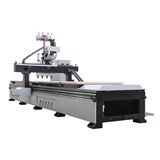
In 2005 five licenses of Expert Premium were installed, along with JETCAM's high performance nesting module to drive the AGFM composite cutter. Remove Control Processing was used to automate the nesting process.
JETCAM Expert was installed on a Citrix server platform to allow users to run on client systems throughout the organisation worldwide. JETCAM Orders Controller (JOC) was also installed on the server being accessed by method engineers (programmers), logistics staff and production staff. Further licenses were added in 2006 to drive the Multicam router, with licenses for the Shoda being installed at the end of 2006.
After the installation of JETCAM for the composite cutter some of the licences were not put to full use, due to the high level of automation that RCP and JOC provided, so JETCAM swapped these for routing licenses.
The company never initially considered using JETCAM Expert for the Multicam router, as this machine is used for prototyping and spares however the success of the composite project demonstrated that it was worthwhile.
Bombardier had 8000 legacy CAD files, of which almost all had geometry problems. JETCAM software was able to ‘heal' most of these automatically in about 3 hours, with the remainder being quickly fixed manually over a couple of days. Bombardier anticipated this would take at least a month.
The initial benchmarks gave Bombardier an indication of the material savings they could expect and in practice this alone quickly paid for the project. The company saw on average an approximate 15-20 per cent saving which meant that software paid for itself in around two months due composite material savings alone.
The automation now in place is such that once a component has been designed and its outline geometry is available no other process has to take place manually within the CAM system. Staff simply orders parts from JOC, and CNC programs arrive in the appropriate network location a few minutes later.
Further savings were noted on the shop floor, with machine cycle time seeing a 5 per cent improvement — saving around 120 hours on the machine per year — as the software did not force the cutter head to keep rising after each cut, which the previous system did.
Programming time was drastically reduced due to the fact that component ‘tooling' is now virtually instantaneous. Previously, if an error was noticed on a component, it would have to be repaired in the CAD system and go back through the CAM process again.
Now operators can perform modifications within JETCAM. On average, 10-15 per cent of plies need adjusting; couple this with the overall speed and ease of use, and this means Bombardier saw a 500 per cent improvement in its composite programming.
Aircraft components are often symmetrical resulting in only a left-hand design. Bombardier starts by programming the left-hand part; an in-house routine automatically mirrors and programs components.
On request JETCAM developed a new function with JOC that automatically created mirror components, tooling and naming them to the client's naming convention. The components were immediately ready for nesting which reduced manufacturing cycle time, tool proves and first article inspection.
With any software purchase the ongoing cost of maintenance is something to consider. Bombardier realised a further saving of 5 per cent against the maintenance of the previous system, with Bombardier's internal support staff estimating that users required only a fraction of assistance on a JETCAM Expert compared to the previous situation.
In addition to the quantifiable benefits there were also a number of other features that saved more time and reduced the possibility for error, such as the automatic printing of part/ply information. Prior to JETCAM Expert parts were misidentified up to 30 per cent of the time, causing delays.
Bombardier is already on its third installation of JETCAM Expert in its Saint Laurent facility, with its Belfast facility also now a long-time user of the system. Further installation projects are also under review.