Get to know your barcodes
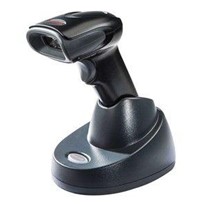
While operating barcodes becomes easier, there are now more options and varieties of scanners to choose from. Choosing the right one can be a challenge without understanding its types and functions.
Finding the right barcode scanner depends on your specific needs, such as:
- Where it will be used
- How often it will be used
- What kind of barcodes need to be read
- How it will be used
- Whether it will be connected to a PC
Knowing how you will be using your scanner will ultimately help you decide what scanner type you will need.
What are barcodes and how do they work?
Barcodes are machine-readable data codes that serve a wide range of organisational and financial applications. They are used to keep track of various transactions including inventories, shipments, price retails, financial documents and assist with many other logistics services.
Barcodes are composed of numbers containing coded information that can be translated into what we call barcode symbology. They can be scanned and decoded by different types of barcode readers.
There are four primary types of barcode readers that are each designed to fulfil specific information needs. UPC codes and 2D matrix codes are examples of barcodes. UPC code uses thin and thick bar patterns to represent data. On one hand, a complex coding system like 2D matrix codes use patterns of blocks and arrangements to store masses of information. Both types of barcode are able to store information for later use.
Barcode scanners then read the barcode and use software to convert the optical code information into a digital and readable signal. The data signal is then sent to perform another function such as representing information in a digital read out or logging stock into an inventory.
What types of barcode scanners are out there?
Pen type readers
This consists of a light source and photodiode that are placed next to each other in the tip of a pen or wand. The user passes the tip over a barcode and the LED light illuminates the black and white bars.
The voltage waveform generated by the photodiode is a representation of the bar and space pattern in the barcode. This waveform is decoded by the scanner in a manner similar to the way Morse code dots and dashes are decoded.
Pen or wand barcode readers are designed for durable, inexpensive use by a single user who can quickly scan packages or other items. However, because of the shakiness and imprecision of human use, the user may need some practice to perfect the scan.
Laser scanners
Laser scanners are slightly more advanced than a pen scanner. A laser barcode scanner is capable of more exact light readings which prevent false positives or scanner errors. Laser scanners work the same way as pen type readers, except that they use a laser beam as the light source.
They typically employ either a reciprocating mirror or a rotating prism to scan the laser beam back and forth across the barcode. This light then reflects back to a diode, which measures the level of reflection.
This reflection is translated into digital signal readout of the barcode. Laser scanners can either be mounted in a scanning unit or be part of a handheld unit.
Charged coupled device
CCD readers (also referred to as LED scanners) use hundreds of tiny light sensors lined up in a row in the head of the reader. These lights are shot directly onto a barcode. A sensor then measures not the reflection, but voltage of the ambient light directly in front of each lightbulb.
This voltage measurement provides a digital snapshot of the barcode. CCD units can be very expensive, but are highly accurate and versatile pieces of equipment.
The important difference between a CCD reader and a pen or laser scanner is that the CCD reader is measuring emitted ambient light from the barcode. On one hand, pen or laser scanners are measuring reflected light of a specific frequency originating from the scanner itself.
2D camera
2D imaging scanners are the newest type of barcode reader currently available. They use a small video camera to capture an image of a barcode. The reader then uses sophisticated digital image processing techniques to decode the barcode.
Video cameras use the same CCD technology as in a CCD barcode reader except that instead of having a single row of sensors, a video camera has hundreds of rows of sensors arranged in a two dimensional array so that they can generate an image.
Some barcodes do not consist of white and black bars, but white and black spaces in a two-dimensional (2D) target. These 2D barcodes cannot be read by standard machinery. However, they do allow for versatility of information coding. They can hold and provide much more data than a standard barcode.
Omni directional barcode scanners
Omni directional barcode scanners use a series of straight or curved scanning lines of varying directions in the form of a starburst. A lissajous pattern or other multi-angle arrangements are projected at the symbol. One or more of them will be able to cross all of the symbol's bars and spaces, no matter what the orientation.
Omni-directional scanners are most familiar through the horizontal scanners in supermarkets, where packages are slid across a glass or sapphire window. There are a range of different omni-directional units available. These can be used for differing scanning applications; these range from retail type applications to industrial conveyor scanning.
In retail type applications, the barcodes read only a few centimetres away from the scanner. While in industrial conveyor scanning, the unit can be a couple of metres away or more from the code. Omni-directional scanners are also better at reading poorly printed, wrinkled or even torn barcodes.
If you are looking for quality barcode scanners or want to solve a complex data selection problem, contact a trusted data technology specialist.