In Central New York, recent upgrades at a municipal water plant have provided the means for operators to enhance their process for meeting the water quality needs of customers.
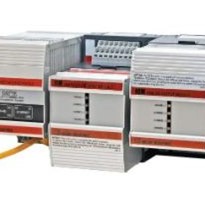
As part of the upgrades, the facility modernised its control system utilising a Moore Industries' distributed I/O solution. This technology reduced wiring costs for field instrumentation while improving operational readiness and reliability.
The Onondaga County Water Authority (OCWA) supplies water from Otisco Lake and Lake Ontario to more than 345,000 retail and wholesale customers via 91,000 metered connections located in suburban Onondaga County and parts of Madison, Oneida and Oswego counties.
A treatment plant owned and operated by OCWA, which treats water from Otisco Lake, supplies approximately half of OCWA's water. Located in the Town of Marcellus, New York, the facility has undergone infrastructure improvements designed to enhance its overall performance.
OCWA recently rehabilitated four existing filter units and added two new filters to improve the plant's water quality, increase its reliability, and comply with state and federal regulations governing municipal drinking water plants. Process Description OCWA has two intake pipes located in Otisco Lake.
The water entering these pipes is immediately chlorinated to provide disinfection and to discourage the growth of zebra mussels. The water then travels, by gravity, approximately five miles to OCWA's water treatment plant in Marcellus (Figure 1).
Water first enters the Rapid Mix tank where a coagulant (polyaluminum chloride) and a taste and odour control chemical (powdered activated carbon) are added. After 30 seconds of mixing, the water enters the contact basins where calm conditions allow the coagulant to make small particles adhere together to form larger particles.
Some of these particles settle and are cleaned out later. The contact time in the basins also allows the powdered activated carbon (used during times of high algae growth in the lake) to absorb organic taste and odour causing chemicals. After approximately one hour of contact time, the water enters the filters. Particles are removed as the water passes through one of the six filters.
These filters contain granular activated carbon and sand. The filters are washed periodically and the water used to do this is collected in lagoons and allowed to settle. It is then recycled back to the start of the treatment plant to be treated again (Figure 2).
After filtration, the water is once more disinfected with chlorine and fluoride is added. The water is stored in large tanks located at the treatment plant to provide adequate contact time for the chlorine to work. Once the water leaves the tanks, orthophosphate is added to provide a coating for pipes in the distribution system, which is done in order to prevent the leaching of lead and copper from the pipes.