
Key Takeaways
| Factor | Typical Range / Value | Buyer Implication |
|---|---|---|
| New price (AUD 2026) | $12,000 – $35,000 | Pantograph models cost 40–60% more than moving mast units |
| Used price | $5,000 – $15,000 | Battery age and mast chain condition are the two biggest risk factors |
| Annual running cost | $1,500 – $4,000 | Includes maintenance, energy and consumables |
| Battery replacement | $1,200 – $4,000 | Lead-acid every 3–5 years; lithium-ion every 6–8 years |
| Weekly hire rate | $110 – $250/week | Hire-to-own converts to ownership after 24–36 months |
| 5-year TCO | $20,000 – $50,000 | 40–60% lower than equivalent counterbalance forklift TCO |
What Drives Walkie Reach Stacker Pricing in Australia
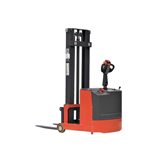
Walkie reach stackers sit in a price band between basic walkie stackers ($4,000–$10,000) and full ride-on reach trucks ($40,000–$80,000+). They are the most cost-effective way to access racking at heights up to 5.5 m without a forklift licence, making them a core investment for Australian 3PL warehouses, retail storerooms and small-to-medium distribution operations managing racking density on a budget.
This guide breaks down every cost layer — purchase price, running costs, battery replacement, depreciation and financing — so you can build a complete cost model for internal approval. Compare walkie reach stacker pricing from verified Australian suppliers on IndustrySearch to benchmark real quotes against these figures.
Operations where walkie reach stacker pricing is most relevant:
- 3PL and distribution warehouses running narrow aisle racking in NSW and VIC
- Retail chains managing back-of-house inventory across multiple stores
- Cold storage facilities where counterbalance forklifts are oversized for racking tasks
- Manufacturing operations staging components in racked storage areas
Step 1: Understand What Sets the Price Bracket
Before comparing quotes, understand the three variables that move a walkie reach stacker from the $12,000 entry point to the $35,000 top end. Your configuration here determines your entire cost model.
| Price Driver | Lower End | Upper End |
|---|---|---|
| Reach mechanism | Moving mast ($12,000–$20,000) | Pantograph ($18,000–$35,000) |
| Lift height | 3.0–3.5 m (entry models) | 4.5–5.5 m (taller mast, heavier frame) |
| Battery type | Lead-acid (standard) | Lithium-ion (adds $2,000–$5,000) |
If your racking tops out at 3.5 m and you run single-deep — a moving mast unit at $12,000–$16,000 covers the task. Adding power steering or side shift moves you to $16,000–$20,000.
If you need double-deep access or lift heights above 4.5 m — budget $22,000–$35,000 for a pantograph model with power steering, proportional controls and a higher-capacity battery.
Step 2: Evaluate Running Cost Specifications
With your configuration confirmed, these running cost factors determine whether the total investment fits your operating budget.
| Cost Item | Typical Annual Cost | Buyer Consideration |
|---|---|---|
| Preventive maintenance | $800 – $2,500 | Two services per year covers mast chain, hydraulic fluid, wheels and electrical checks |
| Electricity (charging) | $200 – $600 | Single-shift operations sit at the lower end; multi-shift with opportunity charging at the upper end |
| Load wheels | $150 – $400/set | Replace every 12–18 months on concrete floors; more frequently on rough surfaces |
| Battery water/maintenance | $100 – $300 (lead-acid only) | Lithium-ion eliminates this cost entirely |
| Mast chain replacement | $400 – $800 (every 3–5 years) | High-frequency lifting operations wear chains faster — inspect at every service |
Step 3: Build the Full Cost Model (2026 Prices)
Purchase price is only part of the picture — most cost models that get rejected at approval stage have missed the running cost layer. Here is a five-year total cost model for three common configurations.
| Cost Layer | Entry (Moving Mast) | Mid (Pantograph) | High-Spec (Pantograph + Li-ion) |
|---|---|---|---|
| Purchase price | $14,000 | $24,000 | $32,000 |
| Maintenance (5 years) | $5,000 | $8,000 | $7,000 |
| Battery replacement | $1,500 | $2,500 | $0 (within li-ion lifespan) |
| Energy (5 years) | $1,500 | $2,000 | $1,800 |
| 5-year TCO | $22,000 | $36,500 | $40,800 |
The lithium-ion premium adds $6,000–$8,000 to the purchase price but eliminates battery replacement and battery maintenance costs within the first five years — narrowing the TCO gap to roughly $4,000 against a mid-spec lead-acid pantograph. For warehouses running two shifts per day in Melbourne or Brisbane, the faster charge time (2–3 hours vs 8–10) avoids the need for a second battery, which alone saves $2,000–$4,000. Request quotes from walkie reach stacker suppliers on IndustrySearch to compare pricing across battery types and configurations.
Step 4: Plan the Asset (Depreciation and Financing)
The ATO effective life for electric walkie stackers is 10 years. Under diminishing value, the depreciation rate is 20%; under prime cost, 10% per annum. The instant asset write-off threshold for 2025–26 is $20,000 for eligible small businesses — entry-level and most mid-range models fall within this threshold.
Residual value at 8–10 years sits at 10–20% of new price on well-maintained units. Hire-to-own at $140–$250 per week converts to ownership after 24–36 months — a useful option for seasonal operations or new warehouse setups where pallet volumes are not yet proven.
Step 5: Evaluate Suppliers
You are ready to go to market. Use this checklist to assess each supplier against the same criteria.
| Factor | What to Ask |
|---|---|
| Quoted price inclusions | Does the price include charger, battery, delivery and commissioning — or are these extras? |
| Capacity at height | What is the rated capacity at your maximum racking beam — not at floor level? |
| Warranty coverage | What is covered (mast, motor, hydraulics, electronics, battery) and for how long? |
| Service agreement | Is a preventive maintenance contract available, and what does it cost per annum? |
| Parts availability | Are common wear parts (wheels, chains, batteries) stocked in Australia? |
| Battery options | Is lithium-ion available? What is the price premium over lead-acid? |
| Hire and trial | Is short-term hire or a warehouse trial available before committing to purchase? |
| Finance options | Chattel mortgage, hire purchase, operating lease — which structures are available? |
| Training | Is operator training included and does it meet WHS documentation requirements? |
| Used unit certification | For refurbished units — has the battery been load-tested and the mast chains measured for stretch? |
Frequently Asked Questions
What is the cheapest walkie reach stacker that will handle 1,200 kg pallets to 4 m?
A moving mast model at $14,000–$18,000 handles 1,200–1,500 kg to 4.0–4.5 m. Confirm the rated capacity at your actual lift height, not at floor level, as capacity reduces at maximum extension.
Is lithium-ion worth the price premium?
For single-shift operations, the premium is harder to justify within five years. For two-shift warehouses, lithium-ion pays back through eliminated battery replacement, zero water maintenance and 2–3 hour charge times that avoid the need for a second battery pack.
How does walkie reach stacker TCO compare to a counterbalance forklift?
On equivalent racking tasks up to 5.5 m, the walkie reach stacker’s five-year TCO is 40–60% lower. The forklift adds HRWL licence costs ($800–$1,500 per operator), higher annual maintenance ($2,500–$5,000) and greater energy consumption.
What should I check before buying a used walkie reach stacker?
Battery age and remaining cycle life are the biggest risk. After that, inspect mast chain stretch (replace if beyond manufacturer tolerance), hydraulic cylinder seals and load wheel condition. A used unit at $5,000–$10,000 needing a $2,500 battery replacement may still cost less than new.
Can I claim a walkie reach stacker under the instant asset write-off?
For the 2025–26 financial year, the threshold is $20,000 for eligible small businesses. Entry-level moving mast models and some mid-range pantograph units fall within this — higher-spec models above $20,000 depreciate over the standard 10-year effective life.
Summary
- New walkie reach stackers cost $12,000–$35,000; used units from $5,000–$15,000
- Reach mechanism (moving mast vs pantograph) and lift height are the two biggest price drivers
- Five-year TCO ranges from $20,000–$50,000 depending on configuration and battery type
- Lithium-ion adds $6,000–$8,000 upfront but eliminates battery replacement within five years
- Instant asset write-off applies to models under $20,000 for eligible small businesses
- Always compare TCO, not just purchase price — running costs can exceed purchase price over the asset life
Ready to Source Your Walkie Reach Stacker?
Don’t waste time contacting suppliers individually. IndustrySearch gives you direct access to verified Australian walkie reach stacker suppliers — compare models, specs and pricing in one place, then request quotes from suppliers best matched to your operation.
- Compare models — filter by capacity, configuration and region
- Request quotes — contact multiple verified suppliers with a single enquiry
- Contact suppliers directly — speak to specialists who service your state
→ Compare Walkie Reach Stackers on IndustrySearch Now →