Choosing the right cardboard baler depends on your daily cardboard volume, available floor space, and labor requirements. From compact vertical balers to high-capacity automatic horizontal systems, different machines are designed to meet different recycling needs.
This guide explains what a cardboard baler is, how it works, the main types available, and the key factors to consider before purchasing one.
1. What Is a Cardboard Baler?
A cardboard baler is a recycling machine designed to compress loose cardboard waste into compact, secured bales. It uses hydraulic pressure to reduce the volume of materials such as corrugated cardboard, old corrugated containers (OCC), and packaging waste.
By turning bulky cardboard into dense, manageable bales, a cardboard baler makes material storage, handling, transportation, and recycling easier.
Cardboard balers are commonly used in:
Supermarkets and retail stores
Warehouses and distribution centers
Packaging and manufacturing facilities
Paper mills and recycling plants
Material recovery facilities (MRFs)
Depending on processing volume, available space, and automation requirements, businesses can choose from vertical cardboard balers, semi-automatic horizontal balers, fully automatic horizontal balers, and two-ram balers.
2. How Does a Cardboard Baler Work?
Most industrial cardboard balers use a hydraulic system to generate the force needed to compress cardboard. The basic working principle is to feed loose material into a compression chamber, apply pressure with a hydraulic ram, and secure the compressed material into a bale.
The typical cardboard baling process involves five steps:
Step 1: Feed the Cardboard
Operators load loose cardboard boxes, corrugated cardboard, or other suitable paper waste into the machine's feeding chamber. Larger horizontal balers may use conveyors or hopper systems to feed material automatically.
Step 2: Compress the Material
The hydraulic system drives the compression ram, which pushes the cardboard against the chamber walls or a fixed compression surface. This reduces the material's volume.
Step 3: Form the Bale
Additional cardboard is fed into the machine and compressed until the required bale size or length is reached.
Step 4: Tie the Bale
The compressed cardboard is secured with wire or strapping to maintain its shape during storage and transportation. Depending on the machine design, bale tying can be manual or automatic.
Step 5: Eject the Finished Bale
The completed bale is released from the compression chamber using a manual or automatic ejection system. It can then be moved to a designated storage area for collection, transportation, or recycling.
The exact operating sequence varies by machine design. Vertical balers generally require more manual handling, while fully automatic horizontal cardboard balers can integrate automatic tying, bale ejection, and conveyor feeding for continuous material processing.
3. Types of Cardboard Balers and Their Applications
Different cardboard baler types are designed for different processing volumes, operating environments, and labor requirements.
A. Vertical Cardboard Balers: Best for Small to Medium Volumes
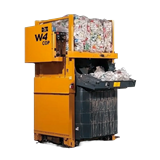
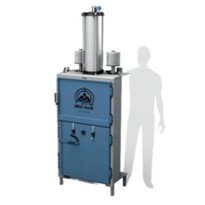
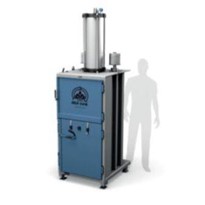
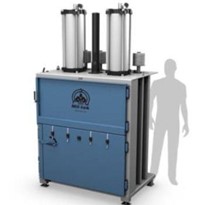
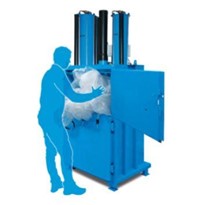
A vertical cardboard baler compresses cardboard from top to bottom using a vertical hydraulic ram. Its compact design makes it suitable for businesses with limited floor space and moderate amounts of recyclable cardboard.
Typical applications:
Supermarkets and retail stores
Small warehouses and distribution centers
Restaurants and hotels
Small recycling facilities
Key advantages:
Compact footprint and relatively simple installation
Lower initial investment compared with larger horizontal systems
Suitable for businesses generating smaller quantities of cardboard
Common limitations:
Most vertical cardboard balers require operators to load material and manually tie finished bales. As cardboard volumes increase, manual feeding and tying can become time-consuming and limit processing capacity.
B. Horizontal Cardboard Balers: For Higher Processing Volumes
A horizontal cardboard baler compresses material horizontally inside a larger chamber. Recycling facilities, paper mills, packaging manufacturers, and large warehouses commonly use this equipment to handle substantial volumes of cardboard and waste paper.
Horizontal balers can be classified by their feeding, compression, and bale-tying configurations.
Semi-Automatic Horizontal Cardboard Balers
Semi-automatic horizontal balers use hydraulic compression and controlled operating cycles, while operators typically handle the final bale-tying process manually.
Suitable for:
Medium-sized recycling businesses
Packaging and printing facilities
Operations with moderate to high cardboard volumes
Main consideration: Manual bale tying still requires labor and may interrupt the production cycle.
Fully Automatic Horizontal Cardboard Balers
Fully automatic horizontal balers automate the compression, wire-tying, and bale-ejection processes. They can also be integrated with conveyors and feeding systems for continuous material handling.
Suitable for:
Large recycling centers
Paper mills
Packaging factories
High-volume cardboard and waste paper processing plants
Key advantages:
Automatic bale tying reduces manual intervention.
Conveyor feeding supports continuous material handling.
Consistent bale dimensions help with stacking and transportation.
Higher processing capacity suits demanding production schedules.
For plants handling several tons of waste paper per hour, a fully automatic cardboard baler is often a practical option.
Two-Ram Cardboard Balers
A two-ram baler uses two independent hydraulic rams: one for material compression and another for bale ejection. This design differs from a conventional single-ram horizontal baler.
Two-ram balers are commonly used in demanding recycling operations. They can handle a range of recyclable materials and are suitable for facilities that need flexibility in material processing and bale production.
Typical applications:
Large material recovery facilities (MRFs)
Mixed recyclable material processing
Large-scale cardboard and plastic recycling
Facilities requiring flexible material handling
Main consideration: Two-ram systems generally involve a higher equipment investment. Selection should be based on material mix, processing volume, and bale specifications.
4. How Do You Choose the Right Cardboard Baler?
Selecting a cardboard baler based only on price or pressing force can lead to an unsuitable investment. Consider these five factors before making a decision.
1. Daily Processing Volume
Estimate how many tons of cardboard or waste paper your facility processes per hour or per day. Small operations may be better suited to vertical balers, while continuous production often requires horizontal equipment.
2. Material Type
Corrugated cardboard, OCC, mixed paper, and shredded paper have different feeding and compression characteristics. Confirm that the selected baler is suitable for your actual material.
3. Labor Requirements
If operators are available for manual feeding and tying, a semi-automatic machine may be sufficient. Businesses looking to reduce manual bale handling should consider fully automatic balers.
4. Bale Size and Weight
Check the requirements of your recycling buyers or paper mills. Bale dimensions and weight can affect storage, transportation, and material acceptance.
5. After-Sales Service and Warranty
A cardboard baler plays an important role in daily recycling operations. Before purchasing, evaluate installation support, operator training, spare parts availability, warranty coverage, and access to technical assistance.
5. Mexico Case Study: Choosing a Fully Automatic Cardboard Baler for a Paper Mill
A paper manufacturing company in Mexico needed a more reliable waste paper baling solution. Its target processing capacity was approximately 6 tons per hour.
The customer had previously purchased equipment from another supplier and had concerns about machine quality and after-sales support. This made technical support and long-term service assurance important factors in its next purchasing decision.
The ENERPAT Solution: HBA80-11075
ENERPAT recommended the HBA80-11075 fully automatic horizontal baler for the customer's waste paper application.
Designed for continuous waste paper and cardboard processing, the machine features automatic wire tying to reduce manual bale handling and support a more streamlined production process.
Key Specifications:
Model: HBA80-11075
Press force: 80 tons
Motor power: 37 kW
Bale size: 1100 × 750 × variable length mm
Published throughput range: 4–8 tons per hour
The customer's target throughput was approximately 6 tons per hour, which falls within the model's published throughput range. Actual capacity depends on material characteristics, feeding conditions, and operating practices.
Installation, Training, and Warranty Support
Beyond machine specifications, ENERPAT provided a service plan addressing the customer's previous concerns:
On-site installation and commissioning by service engineers.
Operator training covering machine operation and routine maintenance.
One-year complete-machine warranty.
Five-year hydraulic-cylinder warranty.
For a paper mill that processes waste paper on a continuous production schedule, technical support is an important consideration when purchasing equipment. Clear warranty coverage also helps the customer understand the available after-sales support.
6. Frequently Asked Questions About Cardboard Balers
What is a cardboard baler?
A cardboard baler is a hydraulic recycling machine that compresses loose cardboard and packaging waste into compact bales. These bales are easier to store, handle, transport, and send for recycling.
How does a cardboard baler work?
A cardboard baler uses a hydraulic ram to compress loose cardboard inside a chamber. Once the required bale size is reached, the material is tied with wire or strapping and then ejected. Feeding, tying, and ejection methods vary depending on the machine type and automation level.
What is the difference between a vertical and horizontal cardboard baler?
A vertical cardboard baler compresses material downward and is generally suitable for smaller operations with limited floor space. A horizontal cardboard baler compresses material along a horizontal axis and is commonly used for higher-volume recycling and industrial applications.
When should you choose a fully automatic cardboard baler?
A fully automatic cardboard baler is worth considering if your facility handles large amounts of cardboard or waste paper and needs continuous material feeding. It can reduce manual bale tying and handling.
What is the difference between a semi-automatic and fully automatic cardboard baler?
A semi-automatic horizontal baler generally requires manual bale tying, while a fully automatic horizontal baler performs the tying process automatically. The latter is more suitable for operations seeking greater automation and continuous processing.
Is a two-ram baler better than a single-ram horizontal baler?
A two-ram baler can be suitable for mixed materials and demanding recycling applications. The best choice depends on material type, processing volume, bale specifications, and budget.
What capacity cardboard baler do paper mills need?
The required capacity depends on the volume, type, and consistency of the waste paper generated. Paper mills processing several tons per hour may need a fully automatic horizontal cardboard baler. For example, the ENERPAT HBA80-11075 has a published throughput range of 4–8 tons per hour, making it a model worth evaluating for applications targeting approximately 6 tons per hour. Final model selection should be based on actual material testing and operating requirements.