

Key takeaways
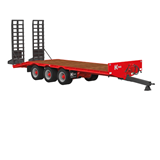
- Container ramp (new, 2026): $2,500-$15,000 - portable, no installation, bridges ground level to container floor for forklift access.
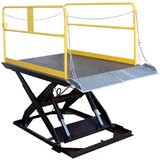
- Loading dock lift (new, 2026): $15,000-$60,000+ - fixed or semi-permanent hydraulic platform that raises loads from ground level to dock or truck height.
- If your site handles containers at ground level without a permanent dock → a container ramp delivers access at 10-20% of the cost of a dock lift, with zero installation.
- If your site loads trucks from a raised dock and needs height adjustment for different trailer heights → a loading dock lift provides a permanent, level transfer platform that a ramp cannot replicate.
- Installation gap: A ramp is operational within minutes of delivery. A dock lift requires civil works, pit or surface mounting, electrical connection and commissioning at $5,000-$20,000+.
- Throughput difference: A ramp handles 10-20 container loads per day with a forklift. A dock lift can cycle 30-50+ truck loads per day with powered height adjustment and level docking.
- Many sites need both: A dock lift for truck loading at the permanent dock and a container ramp for ground-level container access in the yard.
Container ramp vs loading dock lift: Which solves your access problem? (2026)
A container ramp and a loading dock lift solve the same fundamental problem - bridging a height gap so forklifts can move palletised goods between ground level and an elevated surface. The difference is permanence, cost and throughput. A ramp costs $2,500-$15,000, arrives ready to use and repositions in minutes. A dock lift costs $15,000-$60,000+, requires installation and civil works, but delivers a permanent level transfer platform that handles higher volumes with less operator effort.
This comparison guide puts both options side by side on price, throughput, installation and the decision factors that matter at procurement stage. To compare pricing from verified Australian suppliers, see container ramps and loading dock lifts on IndustrySearch. For a detailed cost breakdown on ramps specifically, see the container ramp guide.
Operations where this comparison matters most:
- Warehouses expanding container handling capacity and deciding between portable or permanent access
- Distribution centres adding ground-level container yards alongside existing dock infrastructure
- Manufacturing sites choosing between retrofitting a dock lift or deploying ramps for container freight
- New facility fit-outs deciding whether to invest in permanent dock infrastructure or start with portable ramps
Step 1: Compare the core differences
Before comparing costs, confirm which solution matches your site layout and container handling volume.
| Factor | Container Ramp | Loading Dock Lift |
|---|---|---|
| Access type | Inclined steel platform - forklift drives up into container | Hydraulic platform - raises load/forklift to dock or truck height |
| Installation | None - position with forklift, chain to container, operational in minutes | Civil works, pit or surface mount, electrical connection - $5,000-$20,000+ |
| Portability | Fully portable - relocate between containers or sites | Fixed or semi-permanent - relocating requires decommissioning |
| Purchase price | $2,500-$15,000 | $15,000-$60,000+ |
| Throughput | 10-20 container loads/day | 30-50+ truck loads/day |
| Height adjustment | Fixed incline - suits standard container heights only | Variable - adjusts to different truck and trailer heights |
| Operator effort | Forklift drives up incline under load - requires skilled ramp driving | Level transfer at height - no incline driving required |
Step 2: Evaluate the key specifications
With your preferred solution confirmed, these are the specs that determine whether a given model fits your site.
| Specification | Container Ramp | Loading Dock Lift |
|---|---|---|
| Capacity (SWL) | 3,000-12,000 kg | 2,000-10,000 kg |
| Platform size | 1.8-3.0 m long x 1.8-2.4 m wide | 1.5-3.0 m long x 2.0-2.5 m wide |
| Height range | Fixed at container floor height (1.1-1.4 m) | 0-1.8 m variable (suits different truck heights) |
| Cycle time | N/A - always in position | 30-60 seconds per lift cycle |
| Power requirement | None | 3-phase or single-phase electric hydraulic |
| Annual maintenance | $200-$600 (chain, surface, structural checks) | $1,500-$4,000 (hydraulic service, safety testing, electrical) |
Step 3: Understand the full cost comparison (2026 prices)
Purchase price is only part of the picture - installation and annual running costs are where these two options diverge most sharply.
| Cost Category | Container Ramp | Loading Dock Lift |
|---|---|---|
| Purchase (mid-range) | $5,000-$8,000 | $25,000-$40,000 |
| Installation | $150-$500 (delivery only) | $5,000-$20,000 (civil, electrical, commissioning) |
| Annual maintenance | $200-$600 | $1,500-$4,000 |
| 5-year total cost | $7,000-$11,500 | $40,000-$80,000 |
The most common mistake is installing a dock lift for container access when a ramp does the job at one-fifth the cost. A dock lift justifies its premium when the site loads 20+ trucks per day at varying heights - not for intermittent container work. For sites handling both, the practical answer is a dock lift for truck loading and a ramp for the container yard. Get quotes for container ramps and loading dock lifts on IndustrySearch to compare current pricing.
Step 4: Decision framework - container ramp vs loading dock lift
| Decision Factor | Choose Container Ramp | Choose Loading Dock Lift |
|---|---|---|
| Primary task | Ground-level container loading/unloading | Dock-to-truck transfer at variable heights |
| Volume under 20 loads/day | Yes | No |
| Volume 20+ loads/day | No | Yes |
| Capital budget under $15,000 | Yes | No |
| Need to access multiple locations | Yes | No |
| Variable truck/trailer heights | No | Yes |
| No civil works permitted (leased site) | Yes | No |
| Permanent facility with high throughput | No | Yes |
Step 5: Evaluate suppliers
You are ready to go to market. Use this checklist to assess each supplier against the same criteria.
| Factor | What to Ask |
|---|---|
| SWL and certification | What is the SWL rated for dynamic loads? Is AS 1418 certification provided? |
| Installation scope (dock lift) | Is installation included? What civil and electrical preparation does my site need? |
| Delivery lead time | What is the lead time for stock models? Is commissioning included for dock lifts? |
| Warranty | What structural and hydraulic warranty applies? What is excluded? |
| Servicing | Do you provide annual servicing? What does the service schedule include? |
| Hire option | Is hire available for either product? Is hire-to-own offered? |
| Site assessment | Will you conduct a site assessment before quoting to confirm the right solution? |
| Parts availability | Are hydraulic components and wear parts stocked in Australia? |
Frequently asked questions
When does a loading dock lift justify its cost over a container ramp?
When your site loads 20+ trucks per day at varying trailer heights from a permanent dock. Below that volume, or for ground-level container access, a ramp at one-fifth the total cost is the more practical option.
Can a container ramp be used for truck loading AS well AS container access?
Yes, but only if the truck bed is at a similar height to a shipping container floor (1.1-1.4 m). Trucks with higher or variable bed heights need a dock lift or adjustable dock leveller for safe, level transfer.
Do i need both a ramp and a dock lift?
Many sites do. A dock lift serves the permanent loading dock for truck traffic, and a portable ramp serves the container yard. Running both costs less than installing a second dock lift.
What WHS requirements apply to container ramps and dock lifts in Australia?
Both must be included in the site WHS risk assessment under the WHS Act 2011. Dock lifts require annual hydraulic safety testing. Ramps require pre-use inspection of chains, surface and structural integrity each shift.
Can i install a dock lift on a leased warehouse site?
It depends on your lease terms - most require landlord approval for civil works. Surface-mounted dock lifts avoid pit excavation but still need electrical connection. A portable ramp avoids all lease complications.
What matters most
- Match the solution to the access problem: Ramp for container access, dock lift for truck loading at varying heights.
- Cost gap is 5-8x: A ramp costs $7,000-$11,500 over 5 years vs $40,000-$80,000 for a dock lift.
- Volume is the trigger: Under 20 loads/day, a ramp handles it. Over 20, a dock lift earns its premium.
- Portability matters: Leased sites or multi-location operations favour ramps over permanent infrastructure.
- Many sites need both: Dock lift for the permanent dock, ramp for the container yard.
Most warehouse managers decide after comparing their daily load count against the installed cost of each option.
Do not waste time contacting suppliers individually. IndustrySearch gives you direct access to verified Australian container ramp and dock lift suppliers - where industrial buyers request and compare multiple quotes so they can buy with confidence.
- Get quotes for container ramps and dock lifts - contact multiple verified suppliers with a single enquiry
- Compare models - filter by capacity, installation type and region
- Contact suppliers directly - speak to specialists who service your state
→ Get and compare container ramp quotes now →
-160x160-state_article-rel-cat.png)