
Key Takeaways
- Wide price spread: a used diesel truck starts around $130,000, a new one runs $190,000 to $350,000, and electric costs roughly double diesel.
- Three things set the price: how the truck picks up bins (the loader type), new or used, and diesel or electric.
- Loader type follows your routes: kerbside bins, commercial bins or hard waste each suit a different truck, and that decision drives the cost.
- One-person trucks cost more but run cheaper: automated front and side loaders need one driver, not a crew, which can pay back the higher price.
- Decision shortcut: pick the loader type for your routes, then new or used, then diesel or electric.
What a garbage truck actually costs in Australia
There is no single garbage truck price, because there is no single garbage truck - there is the one that fits your operation. A council on automated kerbside routes, a contractor on commercial bins, and a small operator after a used workhorse are buying three different machines at three different prices.
Three things narrow new, used and electric garbage truck prices down to your truck, plainest first: how you collect (which sets the loader type), new or used, and diesel or electric. Settle those and your quote request names a real machine.
Loader type and how you collect
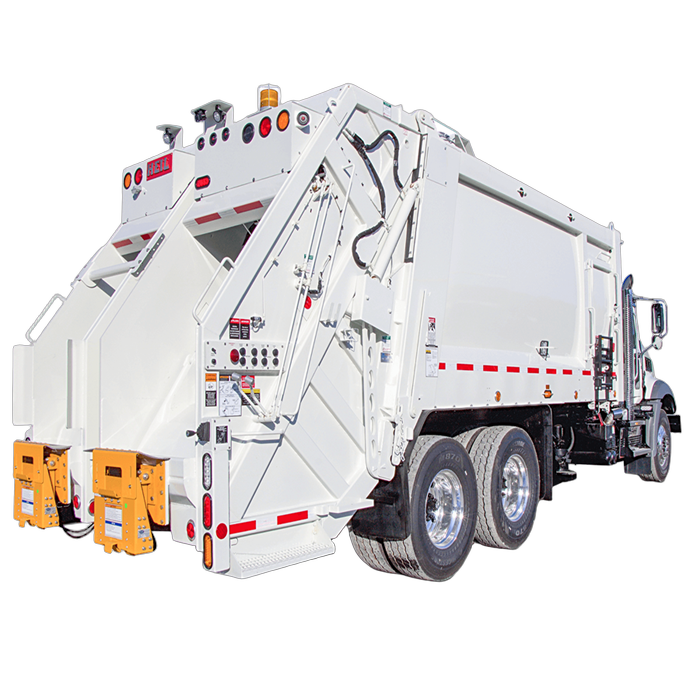
This is the biggest lever, because how you collect decides which truck you are buying. Run residential or hard-waste routes and you are buying a rear loader, which takes bins in at the back with a crew of two or three. Service commercial bins and you are buying a front loader, which lifts them over the cab on forks with one driver. Run automated kerbside collection and you are buying a side loader, which grabs bins from the side with one driver.
Watch the trap: the cheaper truck on paper can be the wrong buy. The rear loader has the lowest sticker but needs a two or three-person crew, while a front or side loader costs more upfront and runs on one driver. Over a few years of wages the automated truck often wins, so let your routes and crew pick your loader type - it is the first thing a supplier needs before they can quote.
New or used
With the loader type fixed, new or used sets your price. A used one, often ex-council, runs $130,000 to $200,000 depending on age, kilometres and the state of the compaction and lifting gear. New, the same loader runs from roughly $190,000 for a rear loader to $350,000 or more for a large automated front loader.
If you go used, the compactor and bin-lifting arm decide whether you have bought a bargain or a liability: a worn unit can need a five-figure rebuild within a year. Get the service history on those parts and have them inspected before you commit. You can get quotes for garbage trucks across new and used in one place; the prime mover price guide covers the same trap on heavy trucks.
Diesel or electric
The last call is diesel or electric for your truck. Diesel is the standard and sets the prices above. An electric version of the same loader, which runs on a battery and motor instead of a diesel engine, costs roughly double upfront because of the battery.
For most private operators buying on cost, your truck is the diesel one - the electric premium is hard to justify yet. Electric becomes your truck mainly if you are a council or operator with an emissions target or quiet-running need on residential routes. Decide which side you are on before you ask for a quote, so suppliers price the right machine.
Putting it together: the price bands
Your three answers point to one row, giving you a price band before you contact a single supplier.
| Type | Price (AUD) | Best for |
|---|---|---|
| Used diesel (any loader) | $130,000-$200,000 | Tighter budgets, lighter routes |
| New rear loader | $190,000-$260,000 | Residential and hard-waste routes |
| New front or side loader | $280,000-$350,000+ | Automated, single-driver routes |
| Electric (any loader) | Roughly double diesel | Councils, emissions targets |
Before you commit, confirm these with the supplier so the price you are quoted is the price you pay:
- Body volume and bin-lift capacity: that they match your bin sizes and route load.
- Licence class: medium or heavy rigid, by the truck's weight and axles.
- Compactor and lifting-gear condition: on any used truck, with service history.
What you'll pay to run it - and why it changes what you buy
Running cost should shape the purchase, not just follow it. The biggest is usually crew: a rear loader's two or three-person crew is a wage bill every shift, which is why buying an automated single-driver truck can pay back its higher price within a couple of years. If your routes are heavy enough, that maths justifies quoting on a dearer front or side loader. Judge each quote on cost per route, not the sticker. The water truck buying guide weighs running costs the same way.
Depreciation and the write-off when you buy
How you write the truck off affects what it really costs after tax, so check it before you buy. The ATO treats a garbage truck as having a 15-year working life: a $250,000 truck claims around $33,000 in the first year under the faster method.
The $20,000 instant asset write-off, which lets you claim an asset's full cost in one year, applies to assets ready for use by 30 June 2026. Every garbage truck costs far more than $20,000, so it is written down gradually - do not time a purchase expecting to claim the whole truck at once. A permanent $20,000 threshold from 1 July 2026 was announced in the May 2026 Budget but is not yet law; without it, it drops to $1,000.
Frequently Asked Questions
How much does a garbage truck cost in Australia in 2026?
A used diesel truck starts around $130,000, a new one runs $190,000 to $350,000 by loader type, and an electric truck costs roughly double a diesel. Loader type and condition set most of the difference.
Why is a front loader more expensive than a rear loader?
A front loader has more automation and lifts heavy commercial bins over the cab, so it costs more to build. It runs on one driver, so the higher price can pay back in lower wages.
Is it worth buying a used garbage truck?
It can be, if the compactor and bin-lifting gear check out, since that is where the costly wear hides. Have them inspected before you commit to one used truck over another.
How much more does an electric garbage truck cost?
An electric truck costs roughly double a comparable diesel one upfront, mostly due to the battery. Councils with emissions targets lead the take-up, where lower running costs offset some of the premium.
Ready to source your garbage truck?
A quote request that names your loader type, condition and power source comes back as a real price you can act on. Settle those three, confirm the spec points above, then go to market. Most buyers shortlist 2-4 models after getting quotes.
Don't waste time contacting suppliers individually. IndustrySearch gives you direct access to verified Australian garbage truck suppliers - where industrial buyers request and compare multiple quotes so they can buy with confidence. Get quotes for garbage trucks while 2026 pricing holds.
-160x160-state_article-rel-cat.png)
-160x160-state_article-rel-cat.png)