
Key Takeaways
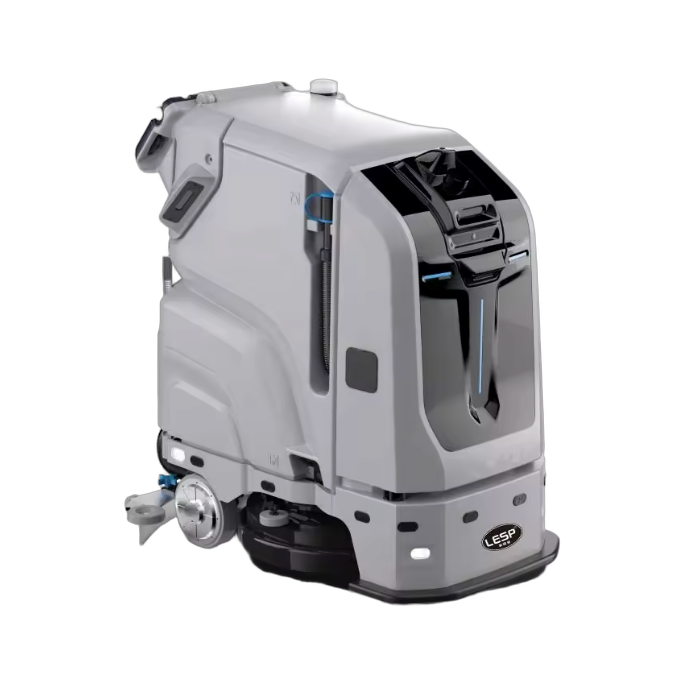
- What they are: Autonomous scrubber-dryers map your site and clean hard floors unsupervised, with commercial units covering areas from roughly 200 to over 1,500 square metres per charge.
- What they cost: Robotic floor scrubbers on IndustrySearch list between $5,000 and $20,000, while Robots as a Service swaps that outright cost for a monthly fee bundling hardware, software, and maintenance.
- Where they fit: Large, open, hard-floor sites with repetitive cleaning: warehouses, hospitals, airports, retail centres, and campuses. Tight, cluttered, or carpeted spaces are weak candidates.
- Why now: Rising wages and a $20.1 billion commercial cleaning sector under margin pressure are turning automation from novelty into standard practice.
- The decision: Match cleaning path, run time, navigation, and floor type to your building before you compare price.
Autonomous floor cleaning has crossed from trade-show curiosity to a real line item in Australian facility budgets. If you run a warehouse, hospital, shopping centre, or large campus, you have likely watched a competitor deploy a robotic scrubber and wondered whether the numbers stack up. This guide covers the specs that matter, the real costs, and the site conditions that decide whether a robot pays for itself.
Why automation is gaining ground in 2026
The pressure comes from two directions: demand is up and labour is expensive. Australia's commercial cleaning sector generated $20.1 billion in revenue in 2025-26, supported by more than 44,000 businesses and over 209,000 employees, according to IBISWorld. Wage growth has compressed operator margins, and cleaner roles carry high turnover and constant recruitment demand.
Robotic scrubbers answer that squeeze. They take on the repetitive, physically demanding floor work, running consistent plans without breaks. That redirects your team rather than replacing it: staff shift to detail work and disinfection while the robot handles open floor. For many sites the appeal is also the audit trail, since modern units report exactly what was cleaned, when, and to what standard.
The specs that actually matter
Marketing sheets bury the useful numbers. These are the specs to compare when you request quotes:
- Cleaning path width: The scrubbing deck size sets how much floor the robot clears per pass. Match it to your dominant layout, not your largest room.
- Coverage capacity: Measured in square metres per charge or per hour, this tells you whether one unit can clean your site in the window you have. Compact robotic units handle around 200 to 1,500 square metres, with larger machines covering more.
- Battery run time: A charge should cover your cleaning window with margin. Several hours is achievable on current machines, but ramps, heavy soil, and full tanks shorten real run time.
- Navigation and sensors: LiDAR and 3D sensors give a 360-degree view for obstacle avoidance, the difference between a machine that stops safely around people and one that becomes a liability.
- Fleet and reporting software: Command-centre platforms let you monitor cleaning, pull completion reports, and manage multiple units, which is where the compliance value sits.
What it costs and how to read the pricing
Pricing splits into two very different models, and the right one depends on your cash position and how you account for cleaning spend:
- Outright purchase (CapEx):Robotic floor scrubbers list between $5,000 and $20,000, while larger ride-on autonomous units run higher. You own the asset but carry maintenance, consumables, and software costs.
- Robots as a Service (OpEx): A monthly fee unlocks the hardware, software licence, and maintenance. It lowers the upfront barrier and often falls under contract services rather than a capital request, which can be easier to approve.
Whichever route you choose, budget for total cost of ownership. A robot running over abrasive floors wears out brushes, squeegees, and filters, so factor those consumables in from day one rather than discovering them six months later.
| Consideration | Outright purchase | Robots as a Service |
|---|---|---|
| Upfront cost | Higher (asset paid in full) | Low (monthly fee) |
| Maintenance | Your responsibility | Usually bundled |
| Accounting | Capital expense | Operating expense |
| Best for | Long-term, single-site owners | Trials, scaling fleets, tight capital |
Will a robot actually fit your site?
This is where most disappointments start. One size does not fit all: a machine built for a large open warehouse will struggle in a tight office corridor. Walk your building against these questions first:
- Floor type: Scrubbers excel on hard floors (concrete, vinyl, tile, sealed surfaces). Heavily carpeted sites are a poor fit.
- Open space versus clutter: Large, predictable areas are ideal. Constantly shifting pallets and trolleys cut efficiency and force manual intervention.
- Ramps and levels: Steep ramps drain batteries, and some units need lift integration to handle multiple floors. Confirm your layout sits within stated limits.
- Cleaning window: Match coverage capacity and run time to your available hours, whether an overnight shift or daytime operation around staff and visitors.
A realistic scenario
Picture a distribution centre in Western Sydney with 8,000 square metres of sealed concrete and a night cleaning shift that keeps running over budget. Turnover is high, and overtime is outpacing the roster.
A larger autonomous scrubber can clear the open floor across a night shift while one staff member handles racking edges, amenities, and spot work. On a RaaS plan, the centre swaps unpredictable overtime for a fixed monthly fee, and command-centre reports give visibility a manual roster never offered. The robot does not eliminate the crew, it absorbs the repetitive floor work driving the cost blowout.
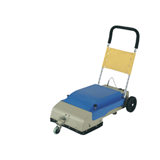
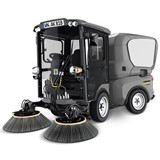
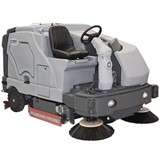
If your site sits at the smaller or mixed end, it is worth weighing a robotic unit against a walk-behind floor scrubber or a ride-on floor scrubber before committing to autonomy. For a broader view of how powered options compare, the ride-on sweeper versus scrubber guide sets out where each machine type earns its place.
Frequently asked questions
Do robotic scrubbers replace my cleaning staff?
Rarely entirely. They take over open-floor scrubbing so your team can focus on detail cleaning, disinfection, and edges. Most sites redeploy staff rather than cut them.
How much floor can one unit clean?
Compact robotic scrubbers handle roughly 200 to 1,500 square metres, while larger machines cover more. Real coverage depends on obstacles, soil, and layout, so size the machine against your cleaning window, not the headline figure.
Should I buy or subscribe?
Buying suits long-term single-site operators who want to own the asset. RaaS suits businesses testing automation, scaling a fleet, or preferring an operating expense with bundled maintenance.
Are they safe around people?
Commercial units carry LiDAR and 3D sensors for 360-degree visibility, plus e-stop buttons, bumpers, and audible signalling, built to detect and stop for people and obstacles.
What matters most
A robotic floor scrubber is a facility decision, not a gadget purchase. The units that pay for themselves are matched to the building: hard floors, open space, a clear cleaning window, and enough repetitive floor work to justify the machine. Get the specs and site fit right first, then choose the cost model that suits your cash position. Get the fit wrong and even the best machine underperforms.
Ready to compare specs and pricing on autonomous cleaning? Get quotes from robotic floor scrubber suppliers across Australia here.


-160x160-state_article-rel-cat.png)