
Key takeaways
- Price range: New counterbalance forklifts in Australia cost $15,000-$60,000+ AUD depending on capacity, fuel type and mast configuration.
- Capacity range: Most warehouse and manufacturing operations specify 1.5-3.5 tonne models; heavy-duty industrial units extend to 7+ tonnes.
- Fuel types: Electric (lithium-ion or lead-acid), LPG and diesel - each with different TCO, compliance and site suitability profiles.
- If your operation is primarily indoors on smooth floors and runs single-shift, choose electric. If you need continuous multi-shift outdoor use with fast refuelling, LPG or diesel is the correct specification.
- Licensing: All operators require a High Risk Work Licence (HRWL) Class LF issued by the state WHS regulator - no exemptions.
- Supplier evaluation: Compare warranty terms, service response time, parts availability and finance structure across at least 3 suppliers before committing.
Counterbalance forklifts in Australia: What to specify before you buy
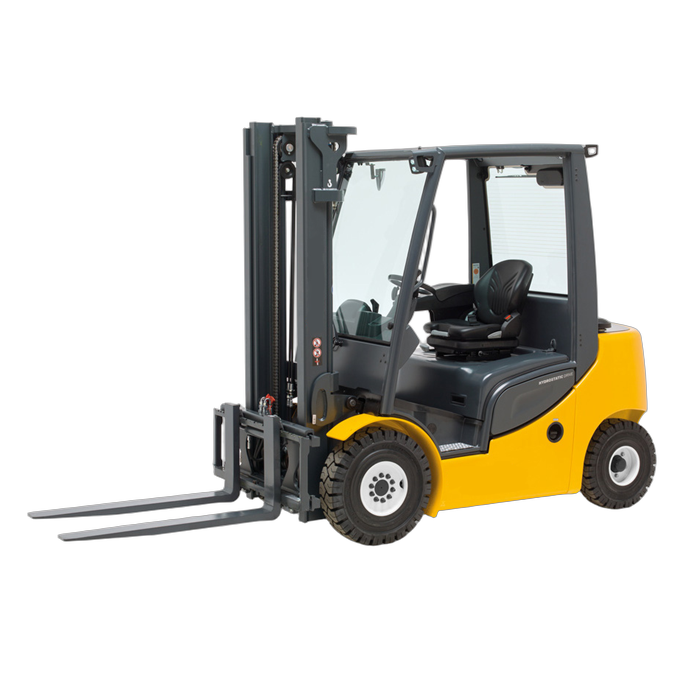
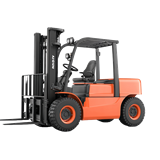
Counterbalance forklifts are the most widely deployed forklift type in Australian warehouses, manufacturing plants and distribution centres. The counterweight design - engine or battery mass at the rear balancing the load at the front - eliminates the need for outrigger legs, giving these machines a turning radius and aisle footprint that suits loading docks, racking aisles and open yards where space is shared with pedestrians and other plant.
This guide covers the configuration, specification and supplier evaluation steps that determine whether you end up with the right machine or an expensive workaround. If you are comparing counterbalance forklifts against reach trucks for narrow-aisle work, the reach forklift vs counterbalance forklift comparison covers that decision in detail.
Operations where counterbalance forklifts are the standard specification:
- Warehouse and distribution (pallet put-away, retrieval, dock loading)
- Manufacturing and production (line feeding, finished goods handling)
- Construction and building materials (outdoor yards, heavy loads)
- Food and beverage (cold store and ambient warehouse)
- Timber, steel and heavy industry (high-capacity outdoor handling)
Choose your configuration
Before costing anything, confirm which configuration suits your site. Your choice here sets your price bracket, fuel infrastructure requirements and most of the specs that follow.
Type | Key Spec | Best For |
|---|---|---|
3-wheel electric | 1.3-2.0T capacity, tight turning radius | Indoor warehouse, narrow aisles, smooth floors |
4-wheel electric | 1.5-5.0T capacity, lithium or lead-acid | Indoor/outdoor on sealed surfaces, single to multi-shift |
LPG counterbalance | 1.8-3.5T capacity, cylinder swap refuel | Mixed indoor/outdoor, multi-shift, no charging infrastructure |
Diesel counterbalance | 2.5-7.0T+ capacity, pneumatic tyres | Outdoor-only, rough terrain, heavy loads, construction yards |
If your site is enclosed and loads stay under 2.5 tonnes, electric is the lowest-TCO option. If your operation crosses into outdoor use, runs multiple shifts, or handles loads above 3.5 tonnes, the LPG forklift buying guide and diesel and LPG forklift guide cover those fuel-type decisions.
Evaluate the key specifications
With your configuration confirmed, these are the specs that determine whether a given model fits your racking height, load profile and aisle layout.
Specification | Typical Range | Buyer Consideration |
|---|---|---|
Rated capacity | 1.5-7.0+ tonnes | Rated at 500 mm load centre - extended loads or attachments reduce effective capacity by 15-30% |
Lift height | 3,000-7,000 mm | Match to your top racking beam plus 150 mm clearance; capacity decreases at height |
Mast type | 2-stage, 3-stage, full free lift | Full free lift allows forks to rise before mast extends - required for containers and low clearance doorways |
Turning radius | 1,800-2,800 mm | Determines minimum aisle width; 3-wheel models offer the tightest turn |
Tyre type | Cushion or pneumatic | Cushion for smooth indoor floors only; pneumatic for outdoor, uneven or gravel surfaces |
Battery (electric models) | Lead-acid 48-80V or lithium-ion | Lithium adds $8,000-$15,000 upfront but eliminates watering, allows opportunity charging and lasts 2-3x longer |
The most common mistake is specifying capacity based on your heaviest pallet without accounting for attachments. A clamp, rotator or side-shift can reduce effective capacity by 200-500 kg below the rated figure on the capacity plate. Always confirm residual capacity with the attachment fitted at your required lift height.
Understand the full cost breakdown (2026 prices)
Purchase price is only part of the picture - most cost models that get rejected at approval stage have missed the running cost layer. Here is the full breakdown for counterbalance forklifts in Australia.
Category | Price Range (AUD) | Typical Configuration |
|---|---|---|
Entry-level electric (1.5-2.0T) | $15,000-$28,000 | 3-wheel, lead-acid, 3,000 mm mast |
Mid-range electric (2.5-3.5T) | $28,000-$45,000 | 4-wheel, lithium option, 4,500 mm mast |
LPG counterbalance (2.0-3.5T) | $28,000-$55,000 | 4-wheel, pneumatic tyres, 4,500 mm mast |
Diesel counterbalance (3.5-7.0T) | $40,000-$75,000+ | Heavy-duty, pneumatic, outdoor rated |
Used / refurbished | $8,000-$30,000 | Varies by hours, condition and service history |
Annual maintenance | $4,000-$12,000 | Servicing, tyres, wear parts - higher for IC engines |
Over a 5-year ownership period, a 2.5-tonne electric counterbalance running single-shift typically costs $6,000-$10,000 per year in energy and maintenance combined, versus $14,000-$25,000 for an equivalent LPG unit. The break-even point where electric TCO beats LPG is typically reached within 2-3 years for single-shift indoor operations. Get quotes for counterbalance forklifts to compare current pricing from verified suppliers.
Plan the asset - depreciation and financing
The ATO effective life for a counterbalance forklift is 11 years. Under the diminishing value method, the depreciation rate is 18.18% per annum; under the prime cost method, it is 9.09%. For businesses with aggregated turnover under $10 million, the instant asset write-off threshold of $20,000 (2024-25 financial year) applies to eligible assets - most entry-level electric counterbalance forklifts fall within this range.
Residual value at 8-10 years for well-maintained units with documented service history is typically 15-25% of original purchase price. For operations where volume is unproven, a 3-5 year operating lease at $600-$1,200 per month (depending on unit value) keeps the asset off the balance sheet and provides a walk-away option at lease end.
Evaluate suppliers
You are ready to go to market. Use this checklist to assess each counterbalance forklift supplier against the same criteria.
Factor | What to Ask |
|---|---|
Capacity at your lift height | What is the residual capacity at my maximum lift height with my planned attachment fitted? |
Mast configuration | Does the quoted mast provide full free lift, and what is the collapsed height for my lowest doorway? |
Battery/fuel specification | For electric: is lithium-ion included or an option, and what is the runtime at my shift length? For IC: what is the annual fuel cost estimate at my hours? |
Tyre suitability | Are the quoted tyres correct for my floor surface, and what is the expected replacement interval? |
Warranty | What is the warranty period for powertrain, battery and hydraulics, and does it include on-site labour? |
Service network | Where is your nearest technician, what is your breakdown response time, and do you offer a service contract? |
Parts availability | Are common wear parts and filters held in Australian stock, and what is the lead time for non-stock items? |
Operator training | Is operator familiarisation included in the purchase, and do you provide refresher training? |
Demo or trial | Can I trial the machine on my site before committing, and what are the terms? |
Finance options | Do you offer in-house finance, chattel mortgage or operating lease, and what deposit is required? |
Compliance requirements
Counterbalance forklifts are classified as plant under the WHS Act 2011 and WHS Regulations 2017. These compliance obligations apply in every Australian state before the machine enters service:
- All operators must hold a current HRWL Class LF licence issued by the relevant state WHS regulator (SafeWork NSW, WorkSafe Victoria, Workplace Health and Safety Queensland or equivalent).
- Pre-operational checks are required before every shift and must be documented in a logbook or fleet management system.
- Periodic formal inspections are required every 6-12 months by a competent person - frequency varies by state.
- LPG gas systems require annual inspection and certification under AS 4983-2010.
- Diesel forklifts used in partially enclosed environments require a documented ventilation assessment for diesel particulate matter (DPM) compliance.
Frequently asked questions
What capacity do most Australian warehouses specify?
The 2.0-3.0 tonne range covers the majority of standard pallet-handling operations. Over-specifying adds purchase cost and reduces manoeuvrability without operational benefit.
When should i choose a 3-wheel over a 4-wheel counterbalance?
Three-wheel models suit indoor operations on smooth, level floors where tight turning is the priority. For outdoor use, uneven surfaces or loads above 2 tonnes, a 4-wheel configuration provides the necessary stability.
What is the expected lifespan?
Electric counterbalance forklifts last 10,000-15,000 operating hours with correct maintenance. At 1,500 hours per year on single shift, that equates to 7-10 years before replacement.
Does every operator need a licence?
Yes - a HRWL Class LF is mandatory in every Australian state, including on private property. Operating without a valid licence is an offence under the WHS Act.
Is lithium-ion worth the premium over lead-acid?
Lithium adds $8,000-$15,000 upfront but eliminates battery watering, allows opportunity charging and delivers 2-3 times the cycle life. For multi-shift operations, lithium typically delivers lower 5-year TCO.
What matters most
- Match capacity to your actual pallet weight at the required lift height with attachments fitted - not the nameplate rating alone.
- Fuel type selection (electric, LPG, diesel) is driven by site environment, shift pattern and charging infrastructure - not purchase price.
- Mast configuration and tyre type must match your racking height, doorway clearance and floor surface.
- Every operator requires a current HRWL Class LF licence before operating any counterbalance forklift in Australia.
- If you are within six months of purchasing, request quotes from at least three suppliers to compare delivered price, warranty and service terms.
Most buyers shortlist 2-4 models after getting an initial round of quotes and comparing specifications against their site requirements.
Do not waste time contacting suppliers individually. IndustrySearch gives you direct access to verified Australian counterbalance forklift suppliers - where industrial buyers request and compare multiple quotes so they can buy with confidence.
- Get quotes for counterbalance forklifts - contact multiple verified suppliers with a single enquiry
- Compare models - filter by capacity, configuration and region
- Contact suppliers directly - speak to specialists who service your state
? Get and compare counterbalance forklift quotes now

-160x160-state_article-rel-cat.png)




-160x160-state_article-rel-cat.png)