Thermal Work Limit (TWL) Weather Stations ...
Thermal Work Limit (TWL) Weather Stations
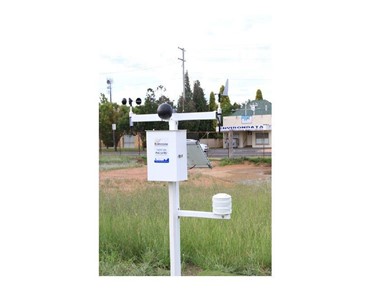
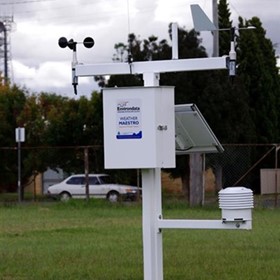
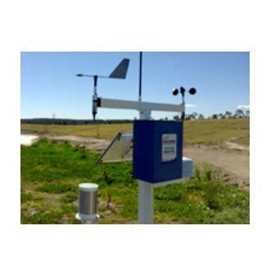
Environdata’s new Thermal Work Limit (TWL) weather stations (utilizing the TWL30 Firmware) can provide accurate, reliable, on-site monitoring to manage the risk of heat stress.
Our heat stress weather stations have alert functions and robust Australian Made reliability, built to survive Australia’s harsh conditions and to keep your workers safe and productive.
Features
- Accurate heat stress weather station
- Protects staff in hot working conditions
- Maintains productivity in hot working conditions
- Tested throughout Australia & Middle East
- Accounts for the accumulative effects of sun, wind, temperature & humidity
- Default values for clothing, posture & sweat rate, or factory set to your specific needs
Applications
- OH & S heat stress management & alerts
- Manage productivity & morale in thermally stressful working environments
TWL Summary
Heat stress occurs when the body’s metabolic heat production exceeds the individual’s ability to dissipate the heat produced. Heat is dissipated by evaporative cooling from the skin, enhanced by sweating. In humid conditions the efficiency of sweat evaporating and providing cooling from the skin decreases. In windy conditions the evaporative cooling efficiency increases. In sunny conditions, the solar radiation absorbed by the skin means a human absorbs more heat, which then needs to be dissipated as well as the metabolic heat generated by work.
As the principal factor driving metabolic heat production is muscular activity, those working in hot conditions are at greatest risk. For any set of weather conditions, there is a maximum rate at which an individual can dissipate heat i.e. a limiting metabolic rate, and therefore a maximum rate at which they can safely work.
Many industries, particularly in the military, resource or construction sectors, have workers exposed to thermally stressful work environments. These workers need to be protected from heat stress, but without unnecessarily compromising productivity. Many current measures of heat stress are very conservative in many sets of conditions, as they are too simplistic. This leads to standing workers down when they are safe to continue working with no risk of heat stress.
In research conducted throughout Australia and the Middle East by a research team from Curtin University (Western Australia), Thermal Work Limit (TWL) has been developed to indicate the limiting metabolic rate a worker can sustain given the environmental factors to which they are exposed.
Environdata can now incorporate TWL into our weather stations, the TWL30 firmware option, to provide an accurate, reliable and robust Heat Stress Weather Station to determine TWL and prevent heat stress.
These TWL weather stations give OH&S professionals and line management the means to implement safe working limits based on weather conditions at any given moment. With the added knowledge that the workers on site are protected by a reliable weather station to alert them based on weather conditions relevant to them, worker morale and productivity can improve.
TWL has been shown to be more appropriate than the traditional Wet Bulb Globe Temperature (WBGT) as a predictor of heat stress. WBGT can also be provided as a standard output from our weather stations, so both measures can be used and compared in heat stress management.
Sensors Used
- Air Temperature (Ambient)
- Relative Humidity (Ambient)
- Wind Speed (2m)
- Radiant Heat (Black Globe Temperature)
- Barometric Pressure (Optional)
To contact Environdata Weather Stations about Thermal Work Limit (TWL) Weather Stations use Get a quote.
- Your delivery location?
- NSW
- VIC
- QLD
- SA
- WA
- NT
- ACT
- TAS
- New Zealand
- Papua New Guinea
- Afghanistan
- Albania
- Algeria
- Andorra
- Angola
- Antigua and Barbuda
- Argentina
- Armenia
- Austria
- Azerbaijan
- Bahamas
- Bahrain
- Bangladesh
- Barbados
- Belarus
- Belgium
- Belize
- Benin
- Bhutan
- Bolivia
- Bosnia and Herzegovina
- Botswana
- Brazil
- Brunei
- Bulgaria
- Burkina Faso
- Burma
- Burundi
- Cabo Verde
- Cambodia
- Cameroon
- Canada
- Central African Republic
- Chad
- Chile
- China
- Colombia
- Comoros
- Congo (Brazzaville)
- Congo (Kinshasa)
- Costa Rica
- Côte d'Ivoire
- Croatia
- Cuba
- Cyprus
- Czechia
- Denmark
- Djibouti
- Dominica
- Dominican Republic
- Ecuador
- Egypt
- El Salvador
- Equatorial Guinea
- Eritrea
- Estonia
- Ethiopia
- Fiji
- Finland
- France
- Gabon
- Gambia
- Georgia
- Germany
- Ghana
- Greece
- Grenada
- Guatemala
- Guinea
- Guinea-Bissau
- Guyana
- Haiti
- Holy See
- Honduras
- Hungary
- Iceland
- India
- Indonesia
- Iran
- Iraq
- Ireland
- Israel
- Italy
- Jamaica
- Japan
- Jordan
- Kazakhstan
- Kenya
- Kiribati
- Korea, North
- Korea, South
- Kosovo
- Kuwait
- Kyrgyzstan
- Laos
- Latvia
- Lebanon
- Lesotho
- Liberia
- Libya
- Liechtenstein
- Lithuania
- Luxembourg
- Macedonia
- Madagascar
- Malawi
- Malaysia
- Maldives
- Mali
- Malta
- Marshall Islands
- Mauritania
- Mauritius
- Mexico
- Federated States of Micronesia
- Moldova
- Monaco
- Mongolia
- Montenegro
- Morocco
- Mozambique
- Namibia
- Nauru
- Nepal
- Netherlands
- New Zealand
- Nicaragua
- Niger
- Nigeria
- Norway
- Oman
- Pakistan
- Palau
- Panama
- Papua New Guinea
- Paraguay
- Peru
- Philippines
- Poland
- Portugal
- Qatar
- Romania
- Russia
- Rwanda
- Saint Kitts and Nevis
- Saint Lucia
- Saint Vincent and the Grenadines
- Samoa
- San Marino
- Sao Tome and Principe
- Saudi Arabia
- Senegal
- Serbia
- Seychelles
- Sierra Leone
- Singapore
- Slovakia
- Slovenia
- Solomon Islands
- Somalia
- South Africa
- South Sudan
- Spain
- Sri Lanka
- Sudan
- Suriname
- Swaziland
- Sweden
- Switzerland
- Syria
- Taiwan
- Tajikistan
- Tanzania
- Thailand
- Timor-Leste
- Togo
- Tonga
- Trinidad and Tobago
- Tunisia
- Turkey
- Turkmenistan
- Tuvalu
- Uganda
- Ukraine
- United Arab Emirates
- United Kingdom
- United States
- Uruguay
- Uzbekistan
- Vanuatu
- Venezuela
- Vietnam
- Yemen
- Zambia
- Zimbabwe
Environdata | Weather Station | Weather Maestro Data Logger
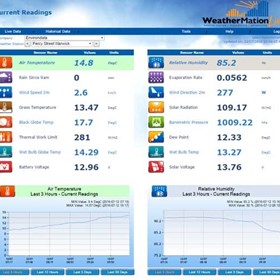
Environdata | Weather Station Software | WeatherMation Live
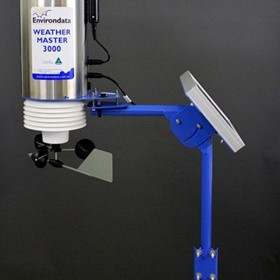
Environdata | Weather Station | WeatherMaster 3000
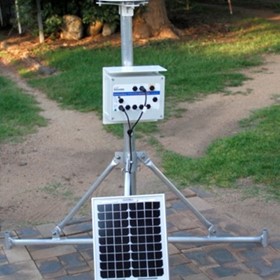
Logging Rain Gauge for Weather Stations | RG30 & RG35 series
Soil Temperature Sensor
Dust Monitor
Wind Warning Systems
Ceilometer
Visibility Sensor
Pyranometer
Laser Precipitation Monitor
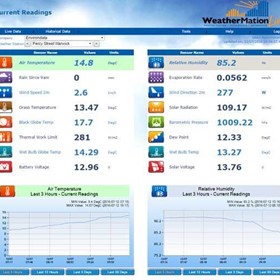
Weather Station Software | WeatherMation Self-Hosted
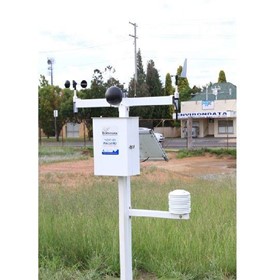
Thermal Work Limit (TWL) Weather Stations
4-20MA Sensor Signal Converter
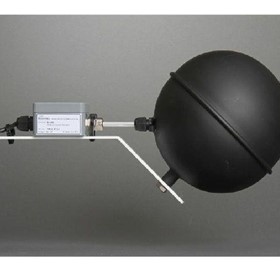
Black Globe Temperature Sensor
Specialised Weather Station Hardware
Bird Deterant Strips - Solar Panels
Solar Panels & Mounts
Rain Gauge Posts Weather Instruments
Sensor Shelters for Weather Instruments
Environdata | Weather Station | WeatherMaster 3000
Logging Rain Gauge for Weather Stations | RG30 & RG35 series
Environdata | Weather Station | Weather Maestro Data Logger
Remote Weather Stations
Weather Station Data Recorders
AirData Firmware AD40 for Weather Stations
Ten Metre Tilt-down Weather Station Mast
Two Metre fixed Weather Station Mast
Portable Two Metre Weather Station Tripod
Galvanised Two Metre Weather Station Mast
Automatic Weather Station | PDS
Touch Screen Wireless Weather Station
Weather Station Cattle FeedlotWind - Heat Stress Index MLA Approved
Davis | Weather Station | Vantage Pro 2 With Standard Radiation Shield
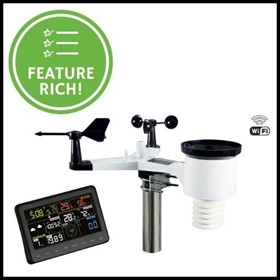
Wireless Weather Station | 7" LCD Display
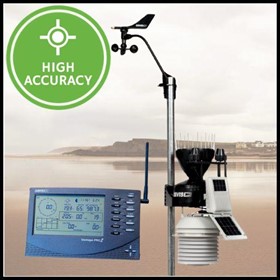
Wireless Vantage Pro2 Plus Weather Station | With Fan Aspirated Shield
Davis Wireless Vantage Pro2 Weather Station
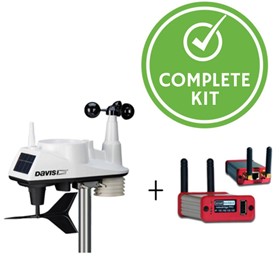
Davis Vantage Vue Weather Network Weather Station - IC-DWNWS-6357AU
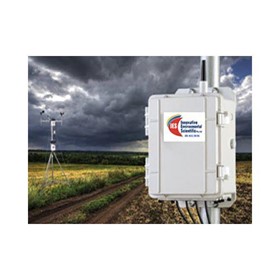
Research Weather Station Data Logger Station
Thanks for your help!
Sorry! Unable to submit your request at this time. Please try again later.
Report this product