
Key takeaways
- New order picker prices (2026 AUD): low-level $15,000-$30,000, mid-level $35,000-$65,000, high-level $80,000-$180,000+.
- Used order pickers: $8,000-$60,000 depending on level, hours and battery condition.
- Annual running costs: $4,000-$12,000 per machine for energy, maintenance and wear parts on a single-shift operation.
- Battery type drives TCO: lithium-ion adds $5,000-$15,000 upfront but reduces per-shift energy cost by 20-30% and eliminates watering and equalisation charges.
- If your operation runs 20+ hours per week of picking: buying typically delivers lower five-year cost than hiring within 18-30 months.
- Hire rates: $250-$600/week for low-level, $600-$1,200/week for high-level, depending on state and contract length.
- ATO effective life: 10 years for order pickers, with diminishing value rate of 20% or prime cost rate of 10%.
- Operators working above 2 metres require fall protection under WHS Regulations 2017. High-level units require a High Risk Work Licence (LO class) in most states.
Introduction
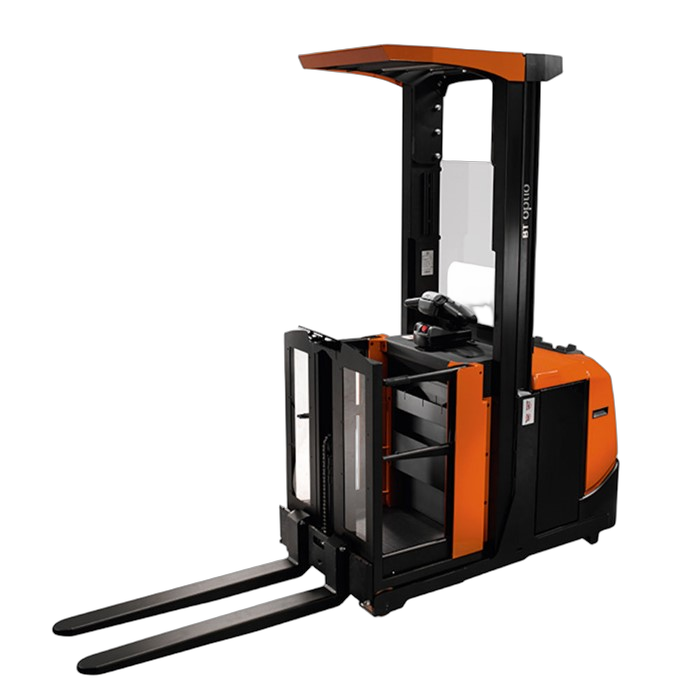
Order pickers are purpose-built warehouse vehicles that elevate the operator to picking height, allowing single-item or case-level retrieval directly from racking. With Australian 3PL and e-commerce fulfilment volumes continuing to grow in 2026, operations that previously managed with reach trucks or ladders are moving to dedicated order pickers to cut pick times and reduce manual handling injuries - a shift accelerated by tightening WHS enforcement around working at height in NSW and Victoria.
This guide breaks down the full cost of owning an order picker in Australia: purchase price by level, annual running costs, depreciation, and the hire-vs-buy threshold. If you are building a business case or preparing a finance application, get quotes for order pickers on IndustrySearch to benchmark supplier pricing against these ranges.
Operations that typically invest in order pickers:
- 3PL and e-commerce fulfilment centres with high SKU counts
- Retail distribution centres running case-pick or piece-pick operations
- Pharmaceutical and parts warehouses with narrow-aisle, high-density racking
- Cold storage facilities requiring operator-up picking from multi-level racking
- Hardware and automotive parts distributors managing thousands of SKUs across mezzanine or high-bay layouts
Choose your level category
Before costing anything, confirm which level category your operation needs. Your choice here sets your price bracket and most of the specs that follow.
Level | Pick Height | Price Range (AUD, 2026) | Best For |
|---|---|---|---|
Low-level |
Ground to ~1.8m |
$15,000-$30,000 |
Retail backrooms, small parts warehouses, ground-level case pick |
Mid-level |
1.8m-3.5m |
$35,000-$65,000 |
Standard warehouse racking, second-level picking |
High-level |
3.5m-12m+ |
$80,000-$180,000+ |
High-bay DCs, narrow-aisle fulfilment, multi-level racking systems |
Used (all levels) |
Varies |
$8,000-$60,000 |
Budget-constrained operations with verified maintenance history |
If your highest pick point is below 1.8 metres, a low-level unit keeps your capital outlay under $30,000. If you are picking above 3.5 metres, budget $80,000+ and factor in the LO licence requirement for your operators.
Evaluate the key cost specifications
With your level category confirmed, these are the specs that drive total cost of ownership beyond the purchase price.
Specification | Typical Range | Cost Impact |
|---|---|---|
Battery type |
Lead-acid or lithium-ion |
Lithium-ion adds $5,000-$15,000 upfront but cuts per-shift energy cost 20-30% and removes watering labour |
Battery capacity |
24V (low-level) to 48V (high-level) |
Higher voltage = longer run time per charge but higher replacement cost ($3,000-$12,000) |
Load capacity |
250 kg-1,200 kg |
Heavier-rated platforms cost more and consume more energy per cycle |
Travel speed |
6-14 km/h |
Higher speeds increase pick rate but accelerate tyre and brake wear |
Lift speed |
0.15-0.50 m/s |
Faster lift = higher throughput on high-level units, adds $5,000-$10,000 to purchase price |
Aisle width requirement |
1,500mm-3,000mm |
Wire-guided narrow-aisle units cost more but recover floor space value in high-rent DCs |
Understand the full cost breakdown (2026 prices)
Purchase price is only part of the picture - most cost models that get rejected at approval stage have missed the running cost layer. Here's the full breakdown.
Category | Cost Range (AUD) | Typical Configuration |
|---|---|---|
New low-level order picker |
$15,000-$30,000 |
Walk-behind, 24V lead-acid, 250-500 kg platform capacity |
New mid-level order picker |
$35,000-$65,000 |
Rider, 36V, platform elevation to 3.5m, 500-800 kg |
New high-level order picker |
$80,000-$180,000+ |
Cab-up, 48V, wire-guided, 800-1,200 kg, lift to 12m |
Used order picker |
$8,000-$60,000 |
All levels - price depends on hours, battery age and service history |
Annual maintenance |
$2,500-$6,000 |
Quarterly service, hydraulic checks, safety system inspections |
Annual energy (charging) |
$1,200-$3,500 |
Single-shift, five days per week - lithium-ion at the lower end |
Battery replacement (over life) |
$3,000-$12,000 |
Lead-acid every 4-5 years, lithium-ion every 7-10 years |
Tyres and wear parts (annual) |
$500-$2,000 |
Load wheels, drive tyres, platform seals |
Weekly hire rate |
$250-$1,200 |
Low-level from $250/week, high-level from $600/week - short-term rates higher |
Over five years on a single-shift mid-level order picker, expect total running costs of $25,000-$45,000 on top of the purchase price. The most common mistake is excluding battery replacement from the five-year cost model - a single lead-acid battery swap at year four adds $4,000-$8,000 that many approvals miss. For a mid-level unit at $50,000 purchase price running 25+ hours per week, buying breaks even against hiring at around $700/week within 18-24 months. If your picking hours fall below 15 per week, hiring or short-term leasing typically delivers better value. Get quotes for order pickers to compare supplier pricing against these ranges before finalising your business case.
Plan the asset - depreciation and financing
The ATO assigns an effective life of 10 years for order picking trucks. Under diminishing value, the depreciation rate is 20%. Under prime cost, it is 10%. The current instant asset write-off threshold of $20,000 (2026 financial year) applies to eligible small businesses - a low-level unit under this threshold can be fully expensed in the year of purchase.
For mid-level and high-level units exceeding the instant write-off threshold, chattel mortgage and hire-to-own structures are the most common finance paths in Australia. Chattel mortgage gives immediate ownership and GST recovery on the next BAS. For operations where volume is unproven, an operating lease with a 12-month exit clause limits capital exposure while you validate picking throughput. Residual values for well-maintained order pickers at 8-10 years sit at 10-20% of purchase price for low and mid-level units, and 5-15% for high-level units due to higher wear on mast and platform systems. For a detailed breakdown of equipment finance structures, see the used forklift finance guide on IndustrySearch.
Evaluate suppliers
You're ready to go to market. Use this checklist to assess each supplier against the same criteria.
Factor | What to Ask |
|---|---|
Purchase price |
What is the delivered price including battery, charger and commissioning? |
Battery specification |
Is lithium-ion available as factory-fit? What is the upcharge over lead-acid? |
Warranty coverage |
What is the standard warranty period for chassis, mast, electronics and battery? |
Service contract options |
Is a full-service maintenance contract available? What does it include per service visit? |
Parts availability |
Are common wear parts (tyres, load wheels, platform seals) held in Australian stock? |
Lead time |
What is the current delivery lead time for new units? Are demo or ex-rental units available sooner? |
Hire-to-own pathway |
Can hire payments be credited toward purchase if we convert within 6-12 months? |
Operator training |
Does the supplier provide on-site operator training as part of the purchase or hire agreement? |
State service coverage |
Do you have technicians in our state? What is the standard response time for breakdowns? |
Used unit history |
For used units: can you provide full service records, battery test results and remaining mast certification? |
Finance options |
Do you offer in-house finance, chattel mortgage facilitation or operating lease structures? |
Trade-in or buyback |
Do you accept trade-ins on existing MHE? Is there a guaranteed buyback value at end of term? |
Frequently asked questions
How much does a new order picker cost in Australia in 2026?
New order picker prices range from $15,000-$30,000 for low-level units to $80,000-$180,000+ for high-level cab-up machines with wire guidance. The primary price driver is pick height - each step up in level roughly doubles the capital outlay.
When does buying an order picker become cheaper than hiring?
For a mid-level unit running 25+ hours per week, buying breaks even against a $600-$700/week hire rate within 18-24 months. Below 15 hours per week, hiring or short-term leasing typically delivers better five-year value.
What are the annual running costs for an order picker?
Annual running costs for a single-shift order picker total $4,000-$12,000 covering energy, scheduled maintenance, tyres and wear parts. Multi-shift and high-level operations sit at the top of this range due to higher service frequency and faster component wear.
Do order picker operators need a licence in Australia?
Operators of high-level order pickers (where the platform rises above a set threshold) require a High Risk Work Licence, LO class, issued by the state WHS regulator. Low-level units typically fall outside the LO requirement, but all operators must receive documented competency training under WHS Regulations 2017.
Should i choose lithium-ion or lead-acid batteries for my order picker?
Lithium-ion adds $5,000-$15,000 to the purchase price but reduces per-shift energy cost by 20-30%, charges in 1-2 hours (vs 6-8 for lead-acid), and lasts 7-10 years versus 4-5. For multi-shift or cold storage operations, lithium-ion justifies the premium within the first two years of ownership.
Summary
- New order picker prices span $15,000 (low-level) to $180,000+ (high-level) in 2026 AUD
- Annual running costs of $4,000-$12,000 per machine - battery replacement is the most commonly omitted line item
- Buying beats hiring at 25+ hours/week usage within 18-24 months for mid-level units
- Lithium-ion batteries justify premium over lead-acid for multi-shift and cold storage operations
- ATO effective life is 10 years - instant asset write-off threshold of $20,000 covers most low-level units
- High-level units require LO class licence and fall protection under WHS Regulations 2017
Most buyers shortlist 2-4 models after getting a quote - if you're within 60 days of purchasing, start the comparison now.
Don't waste time contacting suppliers individually. IndustrySearch gives you direct access to verified Australian order picker suppliers - where industrial buyers request and compare multiple quotes so they can buy with confidence.
- Get quotes for order pickers - contact multiple verified suppliers with a single enquiry
- Compare models - filter by capacity, configuration and region
- Contact suppliers directly - speak to specialists who service your state
→ Get and compare order picker quotes now → https://www.industrysearch.com.au/buy/order-picker

-160x160-state_article-rel-cat.png)




-160x160-state_article-rel-cat.png)