
Let us get you 3 quotes
Compare and select the best Pressure & Temperature Gauge
Compare Quotes

Find the right
Pressure & Temperature Gauge
Pressure & Temperature Gauge
Join industrial buyers comparing supplier quotes and buying with confidence. Free, quick and easy.

Get quotes from top Australian suppliers








How IndustrySearch works
Tell us what you need
Answer a few quick questions about the equipment you're looking for.
Get personalised quotes
Receive tailored quotes from relevant Australian suppliers.
Compare and choose
Compare quotes, ask questions and choose the best option for you.
Looking to buy the best Floyd Pressure & Temperature Gauge for sale? Get Quotes sends your requirements to expert suppliers in Australia so you get personalised quotes to compare Pressure & Temperature Gauge prices, specifications, features and terms then choose the one that’s right for you. Also compare servicing, consumables and reviews, so you can buy with confidence.
 Save time
 Compare quotes
 Buy with confidence
Save time, compare quotes & buy with confidence
Pressure Gauge & Temperature Gauge Suppliers
Updated Feb 05, 2024
Supplier Location
Brand
Filter by brand:
Filter by location:

Floyd Australia | PRESSURE | TEMPERATURE | CALIBRATION | SERVICES
For 87 years, Floyd Australia has been designing and manufacturing top-of-the-line instrumentation for all industries that require pressure and temperature measurement. Our product lines of pressure gauges, thermometers, diaphragm seals, transmitters, switches, and accessories, along with an excellent technical support team are trusted by some of the top companies in Australia.
For 87 years, Floyd Australia has been designing and manufacturing top-of-the-line instrumentation for all industries that require pressure and temperature measurement. Our product lines of pressure gauges, thermometers, diaphragm seals, transmitters, switches, and accessories, along with an excellent technical support team are trusted by some of the top companies in Australia.
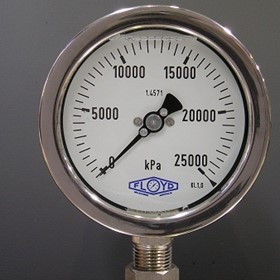
Floyd Refinery Oil & Chemical Pressure Gauges
These pressure gauges are widely used in the oil and chemical industries. The gauge wetted parts are 316 stainless steel. For the food and ...
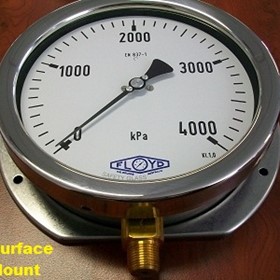
Floyd Liquid Filled Gauges - Glycerine or Silicone Oil
Protect against pulsation and vibration with liquid filled gauges, available in stainless steel cases with brass or 316 stainless steel wetted ...

Sensor Measurement | Test & measurement, Instrumentation & Sensors
Sensor Measurement is a wholly Western Australian owned and operated company established in 1988. We supply high-quality instrumentation, sensors for automation, machine safety and connectivity products directly from world-renowned international manufacturers. Our staff have over sixty years combined experience in sales and engineering applications incorporating our range ...
Sensor Measurement is a wholly Western Australian owned and operated company established in 1988. We supply high-quality instrumentation, sensors for automation, machine safety and connectivity products directly from world-renowned international manufacturers. Our staff have over sixty years combined experience in sales and engineering applications incorporating our range ...


Pressure & Temperature Gauge
Pressure & Temperature Gauge
What is a pressure gauge?
A pressure gauge is a device that measures the pressure of a fluid or gas in a system. It typically consists of a dial, a pointer, and a bourdon tube or other sensing element that expands or contracts based on the pressure of the system. The gauge is calibrated to read the pressure in units such as pounds per square inch (PSI), kilograms per square centimeter (Kg/cm2), or pascals (Pa). Pressure gauges are commonly used in industrial settings to monitor processes and ensure safety.
What types of pressure gauges are available in Australia?
There are several types of pressure gauges available in Australia, including:
- - Bourdon tube gauges: These are the most common type of pressure gauge and work by measuring the deflection of a curved metal tube as the pressure increases.
- - Diaphragm gauges: These gauges use a flexible diaphragm to measure pressure and are often used in applications where the pressure is low or where the medium being measured is corrosive.
- - Differential pressure gauges: These gauges measure the difference in pressure between two points and are often used in HVAC systems and industrial processes.
- - Digital gauges: These gauges use electronic sensors to measure pressure and display the readings on a digital screen.
What is the accuracy of the pressure gauge?
The accuracy of a pressure gauge depends on several factors, including the type of gauge, the manufacturer's specifications, and the calibration process. Generally speaking, high-quality pressure gauges have an accuracy of 1% or less, meaning that the reading displayed on the gauge is within 1% of the actual pressure. It is important to regularly calibrate pressure gauges to ensure their accuracy and reliability.
What is the pressure range of the gauge?
The pressure range of a gauge can vary depending on the specific gauge. Some gauges have a range of 0-100 psi, while others may have a range of 0-10,000 psi or higher. The pressure range will typically be indicated on the gauge or in the product specifications.
What is the maximum pressure the gauge can handle?
The maximum pressure a gauge can handle varies depending on the specific gauge and manufacturer. It is important to check the specifications of the gauge to determine its maximum pressure limit. Exceeding the maximum pressure limit can damage the gauge and potentially cause injury or damage to equipment.
What are the materials used to make the gauge?
A pressure gauge is a device that measures the pressure of a fluid or gas. The materials used to make a gauge depend on the type and application of the gauge. Some common materials used to make pressure gauges include:
- Stainless steel: This is a common material used for making gauges as it is durable, corrosion-resistant, and can withstand high pressure and temperature.
- Brass: Brass is often used for making gauges that measure low to medium pressure. It is a cost-effective material and is resistant to corrosion.
- Copper: Copper is also used for making gauges that measure low to medium pressure. It is a good conductor of heat and electricity and is also resistant to corrosion.
- Plastic: Plastic is used for making gauges that measure low pressure. It is lightweight and inexpensive.
- Glass: Glass is used for making gauges that measure low pressure. It is transparent and allows for easy reading of the pressure.
- Ceramic: Ceramic is used for making gauges that measure high pressure. It is durable and can withstand extreme pressure and temperature.
What is the size of the gauge?
The size of a pressure gauge can vary depending on its intended use and application. Common sizes for pressure gauges can range from 5 inches in diameter to 6 inches or more. The size of the gauge will typically be listed in the product specifications or on the gauge itself. It is important to choose a gauge that is appropriate for the pressure range and accuracy required for the specific application.
What are the units of measurement used in the gauge?
A pressure gauge typically measures pressure in units of pounds per square inch (psi), kilopascals (kPa), or bar. Other units of measurement such as atmospheres (atm) or millimeters of mercury (mmHg) may also be used depending on the application. The units of measurement are usually marked on the gauge face and can be selected by adjusting the gauge's settings.
What is the cost of a pressure gauge in Australia?
The cost of a pressure gauge in Australia can vary depending on the type of gauge, brand, and quality. Generally, a basic pressure gauge can range from $20 to $50, while more advanced gauges equipped with additional features like digital display or high accuracy can cost upwards of $100 or more. The cost may also vary depending on the supplier and location of purchase. It is recommended to compare prices and features before making a purchase to ensure you get the best value for your money.
Get 3+ Quotes Now - Compare prices, availability and quality. It’s free, quick and secure.
Back to top
Pressure & Temperature Gauge Costs and Supplier Insights
The listed price of a Pressure & Temperature Gauge for sale ranges from $50 to $500, averaging $275.
Use Get Quotes to receive personalised prices and proposals from trusted suppliers with top reviews and excellent service.
Buy a Pressure & Temperature Gauge Near Me
Save time and delivery costs while getting fast support, by contacting Pressure & Temperature Gauge suppliers near you.

Are you a Pressure & Temperature Gauge supplier?
 Reach valuable industrial buyers in minutes
 Promote key products & content
 Drive cost effective & measurable sales
learn more
Reach valuable industrial buyers in minutes
Promote key products & content
Drive cost effective & measurable sales