
Rebar Bender

Join industrial buyers comparing supplier quotes and buying with confidence. Free, quick and easy.





How IndustrySearch works
Tell us what you need
Answer a few quick questions about the equipment you're looking for.
Get personalised quotes
Receive tailored quotes from relevant Australian suppliers.
Compare and choose
Compare quotes, ask questions and choose the best option for you.
 Save time
 Compare quotes
 Buy with confidence
Save time, compare quotes & buy with confidence
Rebar Bender | Electric & Hydraulic Suppliers
Rebar is short for reinforcing bar. What does a rebar reinforce? Concrete. Basically, rebar is used to strengthen concrete under tension in construction projects and anything involving concrete in need of a little help.
By nature and necessity, rebar is therefore extremely strong and dependable stuff, which is why it’s usually made from steel. It can, however, be made from fibreglass where the effects of corrosion and magnetism take precedence over outright strength.
And while rebar comes in all manner of sizes and grades designed to support all kinds of structures from small residential builds to major commercial and industrial structures, it’s notoriously inflexible. It has to be to fulfil its primary supportive role.
Yet, somehow, rebar rods have to be bent and cut to fit the specifications of a build.
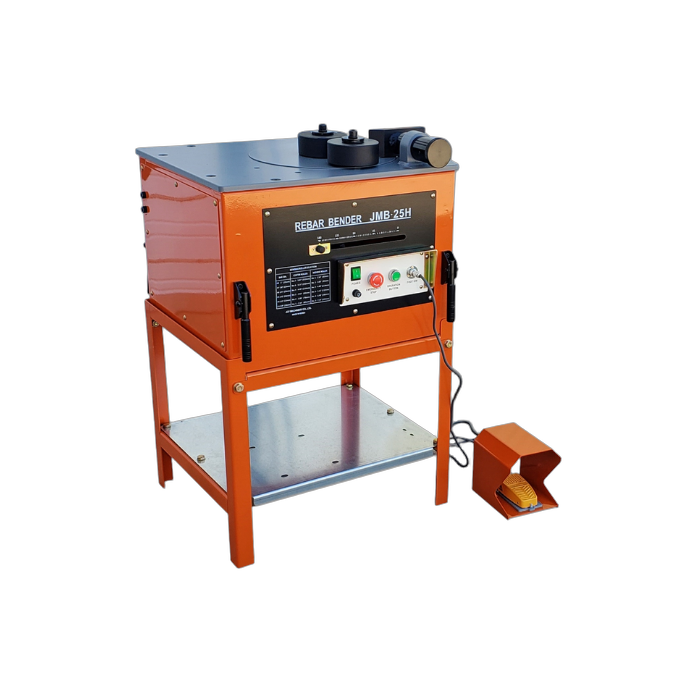
Enter the rebar bender, the Uri Geller of the rebar bending world and a machine of Herculean strength. Whether for small residential projects involving relatively thin rebar or huge industrial-based projects bending the thickest reinforced steel, there’s a rebar bending machine to suit.

Capital Equipment Machinery Sales and now with our recent acquisition Parkanson Australia has a team of professional staff with extensive knowledge in the business of sales and service of: Lathes, Milling Machines, Bandsaws, Press Brakes, Guillotines and Pedestal Drills. Proudly representing such companies as: Press brakes and guillotines Parkanson manual, semi-automatic, ...

Rebar Bender Buying Guide
Find and buy a rebar bender from verified suppliers on IndustrySearch. A rebar bender is a specialized machine used to bend steel bars and other heavy metals at accurate angles.
Things to consider when buying a rebar bender:
- Manual or hydraulic - There are two types of rebar benders that you can choose from including hydraulic and manual benders. The hydraulic rebar bender is the most ideal choice for steel bars that are over 1 inch in diameter. It is mainly used in large constructions such as roads, parking lots and office buildings. On the other hand, manual benders are ideal for DIYers and smaller projects.
- Portable or stationary - A portable bender is an excellent choice for a wide range of projects. On the other hand, a stationary bender is designed to be mounted on a surface making it inconvenient if you are working away from your workstation.
- Size - Rebar benders come in various sizes ranging from small to large benders. Ensure that you choose an effective bender that can safely shape your steel bars. If you choose a bender that’s too large, it may not be precise, while one that’s too small may not have the required strength to bend bars. You can also consider buying the versatile type, which you can adjust to a wide range of bend diameters from 4mm to 16mm.
Contact our vendors for a free quote or expert advice on rebar benders. Delivery available Australia wide.

- Capacity: The capacity of the rebar bender should match the size of the rebar you will be working with.
- Power source: Rebar benders can be powered by electricity, hydraulic power, or manual power. Choose the power source that best suits your needs.
- Bend angle: Look for a rebar bender that can bend rebar to the angle you need.
- Speed: Consider the speed at which the rebar bender can bend rebar, especially if you will be working on large projects.
- Durability: Look for a rebar bender made from high-quality materials that can withstand heavy use.
- Portability: If you need to move the rebar bender from one job site to another, look for a model that is lightweight and easy to transport.
- Wear appropriate personal protective equipment (PPE) such as safety glasses, gloves, and steel-toed boots.
- Ensure that the Rebar Bender is properly secured to a stable surface before use.
- Keep your hands and fingers away from the bending area to avoid injury.
- Do not exceed the maximum capacity of the Rebar Bender.
- Use the Rebar Bender in a well-ventilated area to avoid inhaling fumes.
- Turn off the power supply and unplug the Rebar Bender when not in use.
- Regularly inspect the Rebar Bender for any signs of damage or wear and tear.
Rebar Bender Costs and Supplier Insights
Buy a Rebar Bender Near Me

 Reach valuable industrial buyers in minutes
 Promote key products & content
 Drive cost effective & measurable sales