Fibre-Laser Cutting
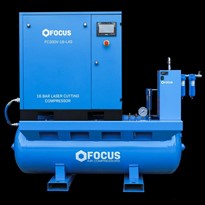
Laser cutters need 16-bar high-pressure air for clean, fast cuts through steel, aluminium, and stainless.
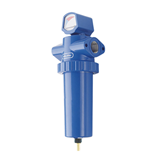
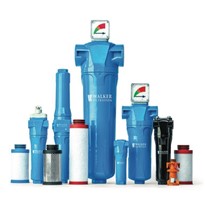
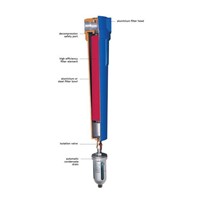
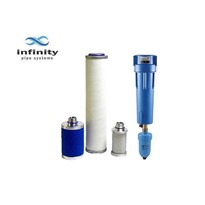
A full three-stage filtration system is standard: pre-filter, post-filter, and carbon filter, supplied as a complete Full-Feature (FF) package with an auto tank drain. The carbon stage is essential. Even trace oil in the airstream coats the laser's focusing lens, degrading cut quality and shortening how long the laser holds focus, costing you in downtime, lens replacements, and scrap material.
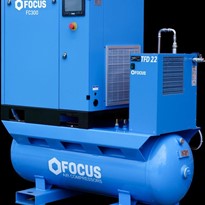
Where a laser runs alongside other pneumatic equipment, a single high-pressure compressor can serve both needs. A dedicated regulator splits the supply: full 16-bar to the laser, regulated low-pressure to everything else. It's space-efficient and removes the need for a second compressor.
Timber Joinery
CNCs, edgebanders, panel saws, thicknessers, and belt sanders all depend on dry compressed air to run pneumatic components, actuators, and clamping systems. Moisture in the line accelerates corrosion, contaminates solenoid valves, and gives manufacturers grounds to reject a warranty claim when something fails.
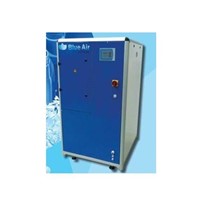
The priority is moisture removal: a quality refrigerated air dryer, paired with a one- or two-stage filtration system (pre-filter and post-filter). Sizing should match the number of machines running at once, so pressure and flow hold across the whole lineup.
Automated Warehousing
Conveyor systems and automated pickers rely on clean, dry air to the solenoid valves that manage start, stop, and directional changes. Moisture or contamination makes solenoids fail, and a stoppage has an immediate, measurable hit on output.
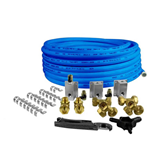
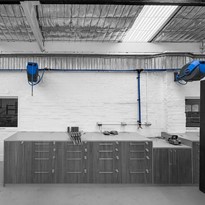
The real advantage here is flexibility: air lines run beneath conveyors with tapping saddles bringing outlets exactly where needed, built around the floor layout so supply grows with the operation rather than against it.
Abrasive Blasting
Blasting is one of the most air-hungry applications in any industrial setting, so correct compressor sizing is critical. Nozzle size drives the CFM requirement: a size 1 nozzle needs a fraction of what a size 7 or higher demands. A truck blasting operation running three size 7 nozzles at once needs substantial airflow, so get the CFM calculation right before specifying a compressor.
Because blasting draws so much air, it's rarely efficient to run a whole facility off one large unit. The better setup is a dedicated high-capacity compressor sized for blasting, paired with a separate smaller compressor for other equipment. This keeps energy costs down and protects ancillary gear from pressure fluctuations during high-demand blasting cycles.
Where the same space is used for blasting, and operators wear air-fed breathing masks, carbon filtration is both a compliance requirement and best practice. Untreated compressed air isn't safe to breathe.
Printing
Air drives the solenoid valves controlling media feeding, registration, and finishing on commercial presses and wide-format signage. Even minor contamination can cause valve stiction, misfiring, and costly errors on high-value stock.
A two-stage filtration system (pre-filter and post-filter) is sufficient here. The focus is keeping contaminants and moisture out of solenoids and internal air pathways.
Stone Processing
Stone processing has more points of direct air and water contact with the finished product than almost any other workshop environment. An insufficient system can mean stained surfaces, compromised finishes, and rework on stone with no margin for error.
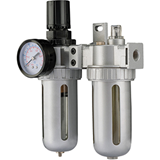
A refrigerated air dryer with pre- and post-filtration is non-negotiable; oil in the final polishing line will mark and contaminate the stone surface. Hand tools, including polishers, sanders, angle grinders, and finishers, each need their own filter regulator lubricator (FRL) to hold tool pressure at 90-100 PSI and introduce a controlled oil drip. FRLs belong at the tool outlet only, never on any line where air contacts the finished stone.
Water supply adds another layer: wet cutting tools often run a recycled water system to process, clean, and return water to the lines, so both air and water circuits need careful, coordinated design.
Automotive Workshops
Demand varies a lot by what the workshop actually does. A tyre fitting operation just needs a reliable compressor with enough flow for inflation equipment and basic air tools. A full-service centre is a different environment entirely, with the system matched to how the operator actually works.
A busy multi-bay service centre needs a quiet rotary screw compressor for noise reduction, with pre- and post-filtration plus a refrigerated air dryer for consistent quality across every workstation. Beyond air tools, compressed air also drives fluid distribution: engine oils, transmission fluid, coolant, and other fluids move through dedicated stainless steel lines at high pressure, from a central supply straight to every bay. That removes the time lost chasing drums and keeps technician output high.
Powder Coating
Clean, dry air is needed at every stage, from surface preparation through to spray application. Moisture or oil in the line contaminates the powder before it reaches the oven, causing adhesion failure and finish defects on components that already have significant labour invested in them.
A refrigerated air dryer with pre and post filtration is essential to protect both finish quality and line output. Most setups run components on a rail system through a curing oven, so the air system needs to hold consistent, clean air without pressure drops or contamination interrupting the cycle.
Smash Repair Workshops
Compressed air runs from the first grind to the final coat, powering sanders, die grinders, air hammers, impact wrenches, and blow guns across every stage of the repair. It's a multi-tool environment, so a correctly sized rotary screw compressor is the backbone of a productive body shop.
The spray booth places the highest demand on air quality. Primers, base coats, and clear coats all need clean, dry air; moisture or contamination means fisheyes, adhesion failure, and rework on a job that's nearly done. A refrigerated air dryer with pre and post filtration protects quality across the whole workshop.
Food & Beverage
Any compressed air that contacts product or packaging must meet strict food safety and compliance standards. Contaminated lines put both product integrity and regulatory standing at risk.
A full filtration package is the standard: pre-filter, post-filter, carbon filtration, refrigerated air dryer, and an auto tank drain to eliminate moisture at the source. Any pipework in direct food contact must be 316-grade stainless steel. Beyond tool supply, compressed air also does precision work here, sorting, directing, and handling product through automated lines with controlled air bursts that mechanical systems can't replicate.
Recycling Facilities
Recycling facilities power conveyor systems, balers, compactors, shredders, granulators, and forklifts, often continuously. With that many high-demand machines drawing from one system at once, undersizing the compressor or storage capacity doesn't just reduce efficiency; it can bring the whole operation to a halt.
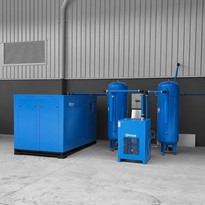
A large-capacity compressor paired with a suitably sized receiver tank is the foundation, giving the volume and pressure buffer needed at peak demand. Pre- and post-filtration protects the system and keeps it running cleanly on equipment that runs hard, day in and day out.
Industrial Manufacturing
Large-scale machinery, automated systems, welding, and hand tools all depend on a reliable, clean air supply, regardless of what's being manufactured. Unplanned downtime from an underpowered or poorly specified system has an immediate, measurable impact on output.
At minimum, a refrigerated air dryer with pre- and post-filtration is standard. Where compressed air feeds solenoid valves on automated machinery, two to three filtration stages are needed to protect those components from contamination and premature failure. Welding and hand-tool applications need consistently clean air to perform and last.
Not sure what your setup needs?
Our team can walk you through the right system for your industry: https://www.focusindustrial.com.au/contact-us/
Or use the free compressor calculator to get a CFM estimate based on your actual setup: https://www.focusindustrial.com.au/air-compressor-calculator/