
Plasma Cutter

Join industrial buyers comparing supplier quotes and buying with confidence. Free, quick and easy.





How IndustrySearch works
Tell us what you need
Answer a few quick questions about the equipment you're looking for.
Get personalised quotes
Receive tailored quotes from relevant Australian suppliers.
Compare and choose
Compare quotes, ask questions and choose the best option for you.
 Save time
 Compare quotes
 Buy with confidence
Save time, compare quotes & buy with confidence
Plasma Cutter Suppliers
Plasma cutters are used in metal fabrication, HVAC ducting, pipework, automotive repair, on-site equipment maintenance, and even decorative artwork.
Unlike laser cutters, Plasma cutters utilise a high-velocity compressed gas, charged by electrodes, to generate a high-temperature plasma jet that is hot enough to melt through metals. A nozzle guides the flow and size of the plasma jet to focus it on the cutting area.
Plasma cutting is compatible with all electrically conductive metals. Thus, sporting broad material capabilities including mild steel, stainless steel, copper, and aluminium.
A typical plasma cutter features the following components:
- Power Supply: The electric power supply ensures a smooth, uninterrupted plasma arc throughout the cutting operation.
- Arc Start and Control Module: This unit generates the pilot arc. Modern machines also come equipped with precise arc control, dynamically adjusting the arc parameters according to changing work conditions.
- Torch Gun: The plasma is ejected from the tip of the torch gun. Operators/CNC machines guide the torch along the cutting path to perform cutting or gouging, as required.
Plasma cutting is considered superior to its common alternative - oxyacetylene cutting – owing to its fast cutting speed, smaller heat-affected zone, and smooth, burr-free cutting action.

BOC a member of The Linde Group, supplies compressed and bulk gases, chemicals and equipment throughout Australia, New Zealand and the South Pacific. The company develops safe, sustainable and innovative solutions for customers in many specialty sectors, heavy industry and medical environments. For more than a century the company's gases and expertise have contributed to ...
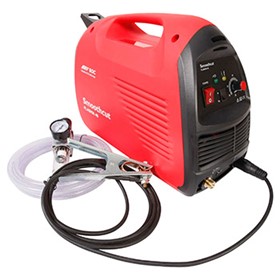

- Handheld Plasma Cutter: These cutters are portable and easy to use. They are perfect for small to medium cutting jobs and can cut through various materials.
- CNC Plasma Cutter: These cutters are computer-controlled and can cut precise shapes and designs. They are mostly used in industrial settings and can cut through thick materials.
- High Definition Plasma Cutter: These cutters use advanced technology to produce cleaner cuts with less slag. They are perfect for cutting materials that require high precision.
- Inverter Plasma Cutter: These cutters are lightweight and energy-efficient. They are ideal for DIY projects and can cut through thin materials.
- Dual Gas Plasma Cutter: These cutters use two gases, usually oxygen and nitrogen, to produce a high-temperature plasma arc. They are perfect for cutting thick materials.
- Power source: Plasma cutters can be powered by either electricity or compressed air. Electric plasma cutters are more common, but compressed air models are more suitable for outdoor use.
- Cutting capacity: Consider the thickness of the metal you will be cutting and choose a plasma cutter that can handle that thickness.
- Cutting speed: Look for a plasma cutter that has a high cutting speed, so you can get your work done quickly and efficiently.
- Duty cycle: The duty cycle refers to the amount of time a plasma cutter can operate continuously before it needs to cool down. Choose a plasma cutter with a duty cycle that meets your needs.
- Portability: If you need to move your plasma cutter around, look for a model that is lightweight and easy to transport.
- Price: Plasma cutters come in a wide range of prices, so consider your budget before making a purchase.
- Auto-shutoff - This feature automatically turns off the plasma cutter when it's not in use, reducing the risk of accidents.
- Thermal overload protection - This feature protects the plasma cutter from overheating and causing damage or injury.
- Air pressure gauge - This gauge helps monitor the air pressure in the plasma cutter, ensuring that it's operating safely.
- Safety trigger - This feature requires the user to press a trigger before the plasma cutter starts cutting, preventing accidental cuts.
- Ground clamp - This clamp helps ground the plasma cutter, reducing the risk of electrical shock.
- Eye protection - Plasma cutting produces bright light that can damage eyesight. Look for a plasma cutter with a built-in eye protection system or wear appropriate eye protection.
- Insulated handle - An insulated handle helps prevent electrical shock and reduces the risk of burns.
- Cut capacity - Choose a plasma cutter with a cut capacity that matches your needs to avoid overworking the machine and causing accidents.
Plasma Cutter Costs and Supplier Insights
Buy a Plasma Cutter Near Me
Plasma Cutter Articles & Reviews



 Reach valuable industrial buyers in minutes
 Promote key products & content
 Drive cost effective & measurable sales