
Let us get you 3 quotes
Compare and select the best CNC Controller
Compare Quotes

Find the right
CNC Controller in Darwin
CNC Controller in Darwin
Join industrial buyers comparing supplier quotes and buying with confidence. Free, quick and easy.
How IndustrySearch works
Tell us what you need
Answer a few quick questions about the equipment you're looking for.
Get personalised quotes
Receive tailored quotes from relevant Australian suppliers.
Compare and choose
Compare quotes, ask questions and choose the best option for you.
Looking to buy the best CNC Controller for sale in Darwin? Get Quotes sends your requirements to expert suppliers in Australia so you get personalised quotes to compare CNC Controller prices, specifications, features and terms then choose the one that’s right for you. Also compare servicing, consumables and reviews, so you can buy with confidence.
 Save time
 Compare quotes
 Buy with confidence
Save time, compare quotes & buy with confidence
CNC Controller Suppliers in Darwin
Updated Nov 13, 2023
Supplier Location
Brand
Filter by brand:
Filter by location:

CNC-TECH Services Pty Ltd | Metalworking & Machining Equipment
CNC-TECH Services Pty Ltd is an CNC Controller supplier to All
CNC-Tech has been providing solutions to all the problems of their customers when it comes to keeping up with their physical and financial assets. We are the providers of top class A-Z services that assist you with manufacturing, maintaining, developing the finished product and thus bringing the best outcomes. We have the potential of generating best results that highly contribute ...

CNC Controller
CNC Controller
However, based on my knowledge, here are the 10 most commonly asked FAQs for buying a CNC controller in Australia:
What is a CNC controller and how does it work?
- What are the different types of CNC controllers available in Australia?
- What are the key features to look for in a CNC controller?
- What is the price range for CNC controllers in Australia?
- Can I use a CNC controller with any type of machine?
- How do I choose the right CNC controller for my specific application?
- What are the installation and setup requirements for a CNC controller?
- How do I ensure compatibility between the CNC controller and my software?
- What kind of technical support and training is available for CNC controllers in Australia?
What is a CNC controller, and how does it work?
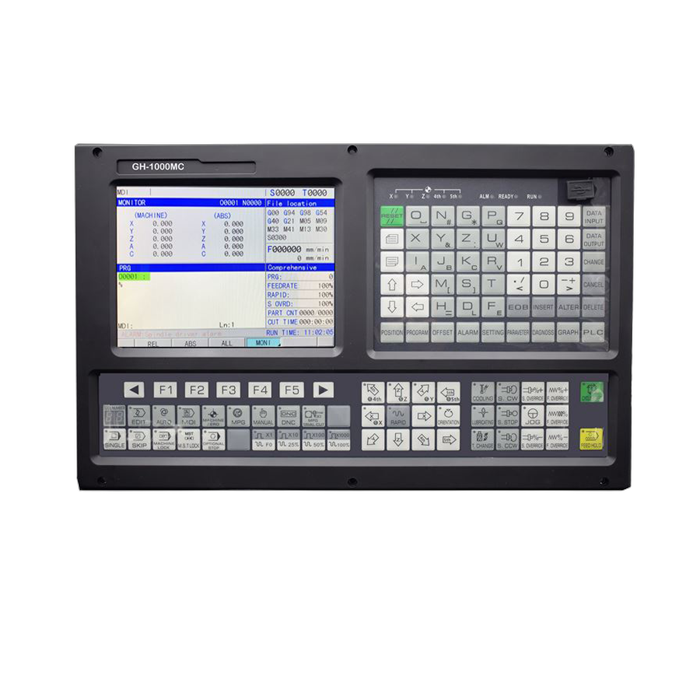
A CNC (Computer Numerical Control) controller is a device that manages the movements of a CNC machine. It receives instructions from a computer and translates them into electrical signals that control the motors and other components of the machine. The controller uses a programming language called G-code to interpret the instructions and execute them in a precise and accurate manner. The G-code contains commands that specify the speed, direction, and position of the machine's movements. The CNC controller also monitors the machine's sensors and feedback devices to ensure that the operations are carried out correctly. Overall, the CNC controller is the brain of the CNC machine, responsible for executing complex operations with high precision and accuracy.
What are the different types of CNC controllers available in the market?
There are several types of CNC controllers available in the market, including:
- Stand-alone controllers: These controllers are designed to operate independently and are typically used for small-scale applications.
- PC-based controllers: These controllers use a personal computer as the primary control unit and are commonly used in larger-scale applications.
- Embedded controllers: These controllers are integrated into the machine tool and are used for specific applications.
- Open-source controllers: These controllers are based on open-source software and are typically used by hobbyists and small-scale manufacturers.
- Motion controllers: These controllers are designed to control the motion of the machine tool and are used in applications such as robotics and automation.
- Servo controllers: These controllers are used to control the speed and position of servo motors, which are commonly used in CNC machines.
What are the key features to consider when buying a CNC controller?
When buying a CNC controller, there are several key features to consider:
- Compatibility: The controller should be compatible with the CNC machine you are using.
- Number of axes: The controller should support the number of axes required for your machine.
- Control software: The controller should have user-friendly control software that is easy to use and navigate.
- Connectivity: The controller should have multiple connectivity options, such as USB, Ethernet, and Wi-Fi.
- Accuracy: The controller should have high accuracy and precision to ensure accurate machining.
- Speed: The controller should be capable of high-speed machining to increase productivity.
- Support: The manufacturer should provide good technical support and after-sales service.
What is the price range for a CNC controller, and how much should I expect to spend?
The price range for a CNC controller can vary greatly depending on the features and capabilities of the controller. Basic controllers can be found for as little as $200, while more advanced controllers with advanced features can cost upwards of $10,000. The average price range for a good quality CNC controller is between $1,000 and $5,000. Ultimately, the price you should expect to spend will depend on your specific needs and budget.
How do I choose the right CNC controller for my specific application?
Choosing the right CNC controller for your specific application involves considering factors such as the type of machine you are using, the complexity of the parts you are producing, the level of precision required, the type of materials you are working with, and your budget. You should also consider the software compatibility, ease of use, and support offered by the controller manufacturer. It is important to do thorough research and consult with experts to ensure that you choose a controller that meets your specific needs and requirements.
What are the compatibility requirements for a CNC controller with my existing machinery?
The compatibility requirements for a CNC controller with existing machinery depend on several factors such as the type of machinery, the age of the machinery, the communication protocol used by the machinery, and the software used by the CNC controller. It is important to ensure that the CNC controller is compatible with the machine's hardware and software, as well as the communication protocol used by the machine. Additionally, the CNC controller should be able to handle the required number of axes and have sufficient memory and processing power to handle the machine's operations. It is recommended to consult with the manufacturer of the machine and the CNC controller to ensure compatibility before making a purchase.
What is the warranty and after-sales support offered by the manufacturer or supplier?
The warranty and after-sales support offered by the manufacturer or supplier refers to the guarantee and assistance provided to customers after they have purchased a product. The warranty typically covers any defects or malfunctions that may occur within a certain period of time, and the manufacturer or supplier may offer repair or replacement services. After-sales support may include technical assistance, troubleshooting, and customer service to help customers with any questions or concerns they may have about the product. The specific details of the warranty and after-sales support will vary depending on the manufacturer or supplier and the product being sold.
How do I install and set up a CNC controller, and what are the technical requirements?
To install and set up a CNC controller, you will need to follow these steps:
- Choose a CNC controller that is compatible with your machine and meets your technical requirements.
- Install the controller hardware, including the power supply, motor drivers, and other components.
- Connect the controller to your computer using a USB or Ethernet cable.
- Install the controller software on your computer and configure the settings for your machine.
- Test the controller by running a simple program to ensure that the motors and other components are working properly.
What are the maintenance and repair requirements for a CNC controller?
Regular cleaning: The CNC controller should be kept clean and free of dust and debris. This can be done using compressed air or a soft brush.
- Lubrication: The moving parts of the CNC controller should be lubricated regularly to prevent wear and tear. The manufacturer's recommendations should be followed for the type and frequency of lubrication.
- Calibration: The CNC controller should be calibrated regularly to ensure accurate positioning and movement. This can be done using specialized software and tools.
- Replacement of worn parts: Over time, some parts of the CNC controller may wear out and need to be replaced. This can include motors, bearings, belts, and other components.
- Troubleshooting and repair: If the CNC controller is not functioning properly, it may need to be repaired or replaced. This can involve diagnosing the problem, ordering replacement parts, and performing the necessary repairs.
Get 3+ Quotes Now - Compare prices, availability and quality. It’s free, quick and secure.
Back to top
CNC Controller Costs and Supplier Insights
The listed price of a CNC Controller for sale ranges from $2,000 to $15,000, averaging $8,500.
Use Get Quotes to receive personalised prices and proposals from trusted suppliers with top reviews and excellent service.
Buy a CNC Controller Near Me
Save time and delivery costs while getting fast support, by contacting CNC Controller suppliers near you.

Are you a CNC Controller supplier?
 Reach valuable industrial buyers in minutes
 Promote key products & content
 Drive cost effective & measurable sales
learn more
Reach valuable industrial buyers in minutes
Promote key products & content
Drive cost effective & measurable sales