
Let us get you 3 quotes
Compare and select the best Industrial Food Mixer
Compare Quotes

Find the right
Industrial Food Mixer
Industrial Food Mixer
Join industrial buyers comparing supplier quotes and buying with confidence. Free, quick and easy.
Get quotes from top Australian suppliers




How IndustrySearch works
Tell us what you need
Answer a few quick questions about the equipment you're looking for.
Get personalised quotes
Receive tailored quotes from relevant Australian suppliers.
Compare and choose
Compare quotes, ask questions and choose the best option for you.
Looking to buy the best Diosna Isernhager Industrial Food Mixer for sale? Get Quotes sends your requirements to expert suppliers in Australia so you get personalised quotes to compare Industrial Food Mixer prices, specifications, features and terms then choose the one that’s right for you. Also compare servicing, consumables and reviews, so you can buy with confidence.
 Save time
 Compare quotes
 Buy with confidence
Save time, compare quotes & buy with confidence
Industrial Food Mixer Suppliers
Updated Dec 03, 2024
Supplier Location
Brand
Filter by brand:
Filter by location:
Related Categories:
Bag Sewing Machine
Bottle Rinser Machine
Bread & Bakery Production Line
Bulk Bag Filler
Cartoning Machine
Centrifugal Separator
Checkweigher
Cheese Processing Machine
Cheese Vat
Chocolate Coating Enrober

Industrial Food Mixer
Industrial Food Mixer
What is an industrial food mixer and how does it work?
An industrial food mixer is a large, heavy-duty machine used in food production to mix large quantities of ingredients together. It works by combining ingredients in a bowl, which is then rotated using a motorized drive system. The bowl is designed to be removable for easy cleaning and loading of ingredients.
- The mixer has a variety of attachments, including beaters, whisks, and dough hooks, which are used to mix and blend different types of ingredients. The beater attachment is used for mixing cake batters, while the whisk attachment is used for whipping cream or egg whites. The dough hook attachment is used for kneading bread dough.
- The mixer's motor provides the necessary power to rotate the bowl and operate the attachments. The speed and power of the mixer can be adjusted to suit the requirements of different recipes.
What are the different types of industrial food mixers available in Australia?
Industrial food mixers are a critical component of the food processing industry. They are used to mix, blend, emulsify, and process various types of food products. In Australia, there are several different types of industrial food mixers available, including:
- Planetary mixers: These mixers have a fixed, non-rotating bowl and a rotating mixer head. They are ideal for mixing heavy doughs, batters, and other thick substances.
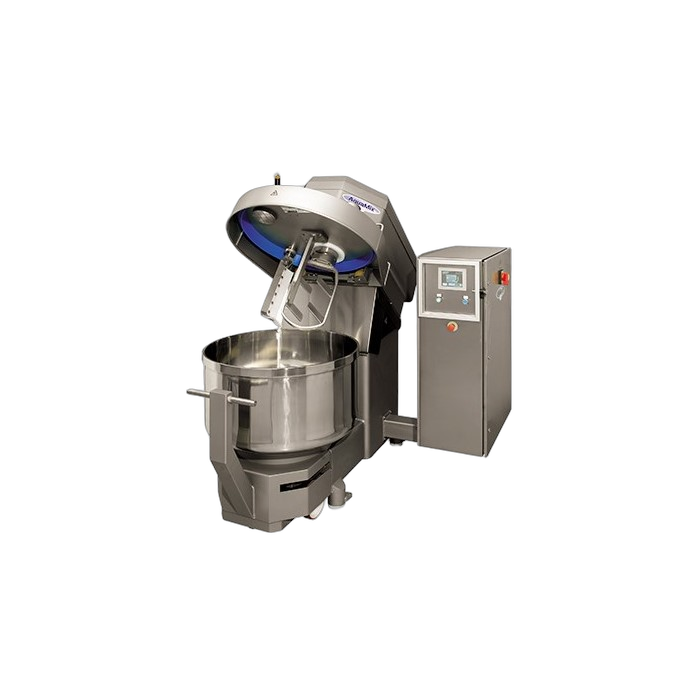
- Spiral mixers: These mixers have a rotating bowl and a stationary mixing arm. They are ideal for mixing doughs and other substances that require a lot of kneading.
- Vertical mixers: These mixers have a vertical mixing shaft that rotates around a stationary bowl. They are ideal for mixing powders, granules, and other dry ingredients.
- Horizontal mixers: These mixers have a rotating drum that tumbles the ingredients inside. They are ideal for mixing liquids, powders, and other ingredients that can be easily blended.
- High-speed mixers: These mixers use high-speed blades to mix and emulsify ingredients. They are ideal for mixing liquids, emulsions, and other substances that require a lot of shear force.
What are the key features to look for when buying an industrial food mixer?
An industrial food mixer is an essential equipment for any commercial kitchen or bakery. When choosing an industrial food mixer, it is important to consider the following key features:
- Capacity: The capacity of the mixer should be large enough to meet your production needs. Consider the size of your batches and the number of batches you need to make per day.
- Power: The power of the mixer determines the speed and efficiency of mixing. Look for a mixer with a powerful motor that can handle tough doughs and heavy ingredients.
- Speeds: The number of speeds available on a mixer determines the versatility of the equipment. Look for a mixer with at least three speeds to handle a range of tasks.
- Bowl: The size and material of the bowl are important factors to consider. Stainless steel bowls are durable and easy to clean, while plastic bowls are lighter and more affordable.
- Attachments: The attachments that come with the mixer determine its versatility. Look for a mixer that comes with a range of attachments such as beaters, whisks, and dough hooks.
- Safety features: Safety features such as automatic shut-off and overload protection are important for preventing accidents and prolonging the life of the mixer.
- Durability: Look for a mixer that is built to last. Choose a brand with a reputation for quality and durability, and look for features such as metal gears and a sturdy frame.
What is the capacity of an industrial food mixer and how do I determine what size to buy?
An industrial food mixer refers to a heavy-duty machine that mixes, blends, and kneads large quantities of ingredients for commercial use. The capacity of an industrial food mixer can vary depending on the model and manufacturer but typically ranges from 10 to 80 quarts.
What is the price range for industrial food mixers in Australia?
The price range for industrial food mixers in Australia varies depending on the size, features, and brand. Generally, the prices can range from $1,000 to $50,000 or more. Smaller mixers that are suitable for small-scale operations may cost around $1,000 to $5,000, while larger mixers that are designed for high-volume production can cost upwards of $20,000 to $50,000. Factors that can affect the price include the capacity, power, speed, material, and additional features like timers, programmable controls, and safety features. It is advisable to compare prices from different suppliers and consider the long-term benefits and maintenance costs before making a purchase.
What are the maintenance requirements for an industrial food mixer?
Industrial food mixers are heavy-duty machines that are used to mix and blend ingredients in large quantities. They are widely used in the food industry for preparing dough, batter, sauces, and other food products. As with any machinery, industrial food mixers require regular maintenance to ensure optimal performance and longevity. Here are some of the maintenance requirements for an industrial food mixer:
- Cleaning: The mixer must be cleaned thoroughly after every use to prevent the buildup of food residue and bacteria. Use warm soapy water and a non-abrasive sponge to clean the mixer. Avoid using harsh chemicals as they can damage the machine.
- Lubrication: The moving parts of the mixer, such as the gears and bearings, must be lubricated regularly to prevent wear and tear. Use food-grade lubricant as recommended by the manufacturer.
- Inspection: Regular inspections of the mixer are essential to identify any worn or damaged parts that need to be replaced. Check the blades, belts, and other components for signs of wear and tear.
- Tightening: Check all the bolts and nuts of the mixer to ensure they are tight. Loose bolts and nuts can cause the mixer to malfunction and compromise safety.
- Calibration: Industrial food mixers may need to be calibrated periodically to ensure accurate mixing and blending. Follow the manufacturer's instructions for calibration.
Can an industrial food mixer be used for other applications besides food preparation?
An industrial food mixer is designed and built specifically for the purpose of preparing large quantities of food ingredients, such as dough, batter, and sauces.
- For example, an industrial food mixer with a strong motor and durable construction may be suitable for mixing other materials, such as paint, adhesives, or chemicals. The mixer's speed and torque settings may be adjustable to accommodate different viscosities and densities of these materials.
How do I choose the right attachments for my industrial food mixer?
Attachments are a crucial component of industrial food mixers that enable them to perform different tasks. When choosing attachments for your industrial food mixer, you need to consider the type of mixer, the purpose of the attachment, and the ingredients you intend to mix. Here are some factors to consider:
- Compatibility: Ensure that the attachment is compatible with your industrial food mixer. Check the specifications of your mixer and the attachments to ensure they are compatible.
- Purpose: Determine the purpose of the attachment. For instance, if you want to make dough, a dough hook is essential. If you want to mix liquids or sauces, a paddle attachment is ideal.
- Capacity: Consider the capacity of your industrial food mixer and the attachment. Ensure that the attachment can handle the amount of ingredients you intend to mix.
- Material: Check the material of the attachment to ensure it is durable and can withstand frequent use. Stainless steel attachments are ideal for industrial food mixers.
- Ease of use and cleaning: Consider how easy it is to attach and detach the attachment from the mixer. Additionally, consider how easy it is to clean the attachment.
What is the warranty and after-sales support for an industrial food mixer?
The warranty and after-sales support for an industrial food mixer vary depending on the manufacturer and the specific product. Generally, most industrial food mixers come with a one-year warranty that covers defects in materials and workmanship. Some manufacturers offer an extended warranty for an additional fee.
- After-sales support for an industrial food mixer typically includes technical assistance, repair services, and replacement parts. Manufacturers may offer these services through their in-house service centers or authorized service providers. Some manufacturers also offer training and maintenance programs to help users operate and maintain their mixers properly.
Get 3+ Quotes Now - Compare prices, availability and quality. It’s free, quick and secure.

Are you an Industrial Food Mixer supplier?
 Reach valuable industrial buyers in minutes
 Promote key products & content
 Drive cost effective & measurable sales
learn more
Reach valuable industrial buyers in minutes
Promote key products & content
Drive cost effective & measurable sales