
Displacement Sensor & Transducer in Sydney

Join industrial buyers comparing supplier quotes and buying with confidence. Free, quick and easy.

How IndustrySearch works
Tell us what you need
Answer a few quick questions about the equipment you're looking for.
Get personalised quotes
Receive tailored quotes from relevant Australian suppliers.
Compare and choose
Compare quotes, ask questions and choose the best option for you.
 Save time
 Compare quotes
 Buy with confidence
Save time, compare quotes & buy with confidence
Displacement Sensor & Transducer Suppliers in Sydney

ECEFast is an Displacement Sensor & Transducer supplier to Sydney
ECEFast is your single source provider for all industrial instrumentation, measurement and control equipment. We specialise in sourcing the best brands at the best prices, from low cost to advances solutions, we can find the right product for your application. With access to 15,000 products plus ongoing development of new technology, systems integration and engineering services, ...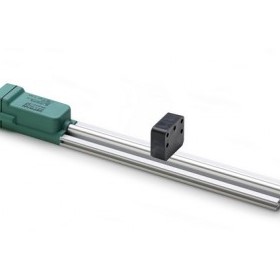

- Linear variable differential transformer (LVDT): LVDTs are used to measure linear displacement and are based on the principle of electromagnetic induction.
- Optical sensors: Optical sensors use light to measure displacement and are commonly used in industries such as robotics and automation.
- Capacitive sensors: Capacitive sensors use changes in electrical capacitance to measure displacement and are commonly used in applications that require high accuracy.
- Eddy current sensors: Eddy current sensors use changes in magnetic fields to measure displacement and are commonly used in applications that require high resolution and speed.
- Potentiometers: Potentiometers are simple sensors that use changes in resistance to measure displacement and are commonly used in applications that require low-cost solutions.
- Ultrasonic sensors: Ultrasonic sensors use sound waves to measure displacement and are commonly used in applications that require non-contact measurements.
- Hall-effect sensors: Hall-effect sensors use changes in magnetic fields to measure displacement and are commonly used in applications that require high accuracy and reliability.
- Inclinometers: Inclinometers are sensors that measure the angle of an object relative to gravity and are commonly used in applications such as vehicle control systems and construction.
- There are different types of displacement sensors and transducers, including:
- Potentiometers: Potentiometers are variable resistors that change their resistance in response to changes in position. They are commonly used in applications where the position of an object needs to be monitored, such as in steering systems or throttle controls.
- LVDTs: LVDTs, or linear variable differential transformers, are devices that measure linear displacement. They work by using a primary coil to induce a voltage in two secondary coils. The voltage induced in each secondary coil is proportional to the distance of the object being measured from the center of the primary coil.
- Capacitive sensors: Capacitive sensors use changes in capacitance to measure displacement. They work by placing two electrodes close to each other and measuring the change in capacitance as the distance between them changes.
- Optical sensors: Optical sensors use light to measure displacement. They work by emitting a beam of light onto a surface and measuring the reflection or transmission of the light. Optical sensors are commonly used in applications where precise measurements are required, such as in the manufacturing of microchips.
- Range: This refers to the maximum and minimum displacement that the sensor can measure accurately. It is important to choose a sensor that can cover the required range of motion.
- Accuracy: This refers to how well the sensor can measure displacement. It is important to choose a sensor that has a high accuracy level for the required application.
- Resolution: This refers to the smallest increment of displacement that the sensor can detect. It is important to choose a sensor with a high resolution for precision applications.
- Repeatability: This refers to how consistently the sensor can measure the same displacement under the same conditions. It is important to choose a sensor with high repeatability for applications that require consistent measurement.
- Response time: This refers to the time it takes for the sensor to detect a change in displacement. It is important to choose a sensor with a fast response time for applications that require quick measurement.
- Environmental conditions: It is important to consider the environmental conditions in which the sensor will be operating, such as temperature, humidity, and vibration. Choose a sensor that can withstand the required environmental conditions.
- Output signal: Displacement sensors can output different types of signals, such as analog or digital. Choose a sensor with an output signal that is compatible with the measurement system.
- The resolution of a displacement sensor is the smallest measurable change in displacement that the sensor can detect. The higher the resolution, the more accurate the sensor is in measuring small changes in displacement.
- Linearity refers to the ability of the sensor to provide a linear output in response to a linear input. A linear displacement sensor will provide an output that is directly proportional to the displacement being measured, thus ensuring accuracy.
- Hysteresis is the difference in output between the ascending and descending parts of a measurement cycle. Inaccuracies due to hysteresis can be minimized by proper calibration of the sensor.
- Repeatability is the ability of the sensor to provide consistent and repeatable measurements over time. This is important for applications that require frequent and accurate measurements.
- Measurement range: Consider the range of the displacement you need to measure, and choose a sensor that can cover that range. Make sure to account for any potential changes in the displacement range over time.
- Resolution: Think about the level of precision you require in your measurements. Choose a sensor with a resolution that can meet your needs.
- Accuracy: Consider the accuracy of the sensor, which refers to how close the measured value is to the true value. Look for a sensor with a high accuracy rating for the best results.
- Sensitivity: Sensitivity refers to how well the sensor can detect small changes in displacement. Choose a sensor with high sensitivity if you need to detect small changes.
- Environmental conditions: Consider the conditions in which the sensor will be used, such as temperature, humidity, and vibration. Choose a sensor that is designed to operate in those conditions.
- Output signal: Decide what kind of output signal you need from the sensor. Common output signals include voltage, current, and digital signals.
- Cost: Finally, consider the cost of the sensor and transducer. Look for a sensor that meets your needs but also fits within your budget.
Displacement Sensor & Transducer Costs and Supplier Insights
Why choose a supplier in Sydney for Displacement Sensor & Transducer Quotes?
If you are in Sydney and considering purchasing a Displacement Sensor & Transducer, it's worth considering Sydney-based suppliers. Doing so offers several benefits that are particularly relevant to businesses in the area. Here are the top reasons why opting for a local Sydney supplier can be the best decision for your Displacement Sensor & Transducer buying needs.
Innovate Faster with Suppliers in SydneyInnovate faster and more effectively with local Displacement Sensor & Transducer suppliers. Being close to the source of new developments gives you a competitive edge.
Investing in Sydney with Every Displacement Sensor & Transducer PurchaseEach purchase of a Displacement Sensor & Transducer from a supplier in Sydney is an investment in its future. Help cultivate a thriving local business landscape.
Reliable Displacement Sensor & Transducer Supply from SydneyEnsure a reliable Displacement Sensor & Transducer supply from Sydney. Local suppliers provide consistent, dependable delivery schedules.
Trustworthy Displacement Sensor & Transducer Procurement in SydneyTrust your Displacement Sensor & Transducer procurement with Sydney suppliers known for their reliability and commitment to quality.
Continuous Support for Your Displacement Sensor & TransducerGet continuous support for your Displacement Sensor & Transducer needs from Sydney's local suppliers. Ongoing help ensures your equipment performs at its best.
Compliance with Regulations by Buying LocallyEnsure full compliance with Sydney regulations when you buy a Displacement Sensor & Transducer locally. Local suppliers are familiar with local standards, helping you avoid costly issues.
Buy a Displacement Sensor & Transducer Near Me

 Reach valuable industrial buyers in minutes
 Promote key products & content
 Drive cost effective & measurable sales