
Gear Motor in Darwin

Join industrial buyers comparing supplier quotes and buying with confidence. Free, quick and easy.




How IndustrySearch works
Tell us what you need
Answer a few quick questions about the equipment you're looking for.
Get personalised quotes
Receive tailored quotes from relevant Australian suppliers.
Compare and choose
Compare quotes, ask questions and choose the best option for you.
 Save time
 Compare quotes
 Buy with confidence
Save time, compare quotes & buy with confidence
Gear Motor & DC Gearmotor Suppliers in Darwin
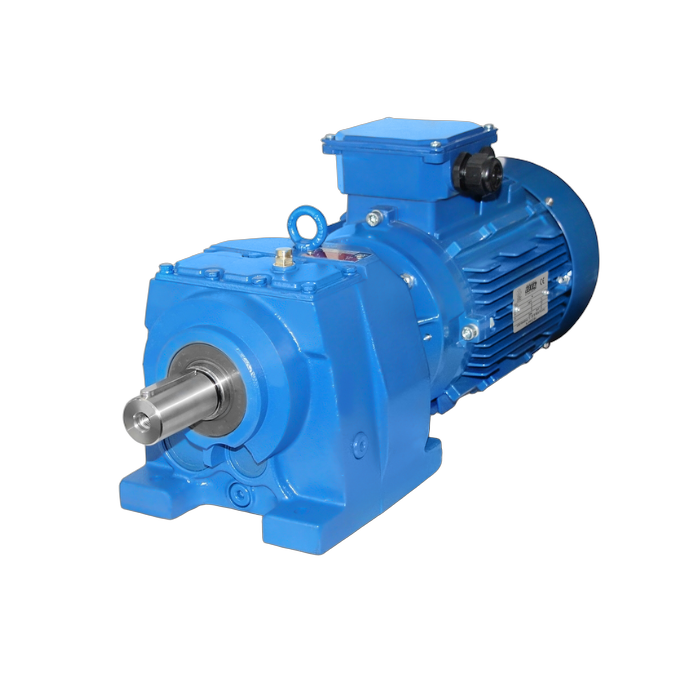
A gear motor is an electric motor that connects with a gearing system and is used in pieces of machinery that require low output shaft rotational speed and high torque output. It’s a suitable choice where available space and power are limited. It is coupled with a gear train. The gearhead can be used to rapidly multiply the available torque without increasing the motor’s power consumption.
The multiplication of torque leads to a reduction in the output shaft’s speed, but the gear motor utilizes a gearing technology to obtain optimal speed and torque output. It also offers a reliable mechanical fit to unlock the maximum potential of OEM equipment.
Gear motors eliminate any alignment errors as no motor couplings are required. They are also process-efficient, as only one system needs to be mounted and operated. In addition, they need less motor power to drive loads. Gear motors also reduce the risk of lubricant leaks due to their compact design. The right combination of the motor and gearing significantly improves design life, and they can be customized for different applications.

CM Industry Supply Automation is an Gear Motor supplier to All
We as CM Industry Supply Believe in facilitating our Customers for all their technical need in the field of automation. We are Leading Industrial Automation Provider We have a Team expertise in installation, implementation and support for all type of electrical and mechanical devices, motors, servos, gearbox, etc. Our Priority Customers like Trident, Vadhman, Jindal Steels, Birla ...

- Gear motors are commonly used in conveyor and material handling systems, as well as in pumps, fans, and compressors. They are also used in automotive applications, such as power windows, windshield wipers, and seat adjusters. Other applications include medical equipment, food processing machinery, and agricultural machinery.
- Torque requirements: Determine the minimum and maximum torque required for your application.
- Speed requirements: Determine the required speed range and the desired speed at the output shaft.
- Gear ratio: Choose a gear ratio that provides the desired output speed and torque.
- Motor size: Choose a motor size that can handle the torque requirements and fit within the available space.
- Efficiency: Look for a motor with high efficiency to reduce energy consumption.
- Operating environment: Consider the temperature, humidity, and other environmental factors that may affect the motor's performance.
- Durability: Choose a motor that is durable and can withstand the demands of your application.
- Spur Gear Motors: Spur gear motors are the most common type of gear motor. They consist of a motor and a set of gears that mesh together to provide torque output. They are simple to design and manufacture, and are generally less expensive than other types of gear motors.
- Planetary Gear Motors: Planetary gear motors are a type of gear motor that uses a planetary gear system to increase torque output. They are more compact than spur gear motors, and are better suited for applications that require high precision and low noise levels. However, they are generally more expensive than spur gear motors.
- Bevel Gear Motors: Bevel gear motors are a type of gear motor that uses bevel gears to increase torque output. They are typically used in applications that require a high level of precision and are relatively compact. However, they are generally more expensive than spur gear motors.
- Worm Gear Motors: Worm gear motors are a type of gear motor that uses a worm gear system to increase torque output. They are typically used in applications that require high torque output at low speeds, and are relatively compact. However, they are generally more expensive than spur gear motors.
- The power rating of a gear motor affects its performance in several ways. First, a higher power rating means that the motor can produce more torque, which is the force that drives rotational motion. This can be important for applications that require high levels of torque, such as heavy machinery or vehicles.
- Second, a higher power rating typically means that the motor can operate at higher speeds without losing performance. This can be important for applications that require fast, precise motion, such as robotics or automation.
- Lubrication: The gears and bearings in a gear motor require proper lubrication to prevent wear and tear. Regular oiling or greasing of the gears and motor bearings is necessary to ensure smooth operation.
- Cleaning: A gear motor should be cleaned regularly to remove dust and dirt that can accumulate on the motor and gearbox. This can be done using a soft cloth or brush.
- Inspection: Regular inspection of the gear motor is necessary to identify any signs of wear and tear, such as cracks or damage to the gears or housing. Any issues should be addressed immediately to prevent further damage.
- Temperature Control: Gear motors can generate a lot of heat during operation. It is important to ensure that the motor is not overheating, as this can lead to premature failure. Proper ventilation and cooling should be provided to prevent overheating.
- Alignment: Proper alignment of the motor and gearbox is necessary to ensure smooth operation and prevent excessive wear and tear. Any misalignment should be corrected as soon as possible.
- Read the manufacturer's instructions carefully before installing and operating the gear motor.
- Ensure that the gear motor is installed in a well-ventilated area.
- Check the alignment of the motor and gearbox before installing.
- Ensure that the motor is properly grounded and that all electrical connections are tight and secure.
- Check the lubrication of the gearbox and motor regularly.
- Do not overload the motor beyond its rated capacity.
- Ensure that the gear motor is protected against overheating.
- Use the appropriate safety gear when operating the gear motor.
- Regularly inspect the gear motor for signs of wear and tear.
Gear Motor Costs and Supplier Insights
Buy a Gear Motor Near Me

 Reach valuable industrial buyers in minutes
 Promote key products & content
 Drive cost effective & measurable sales