
MIG Welder

Join industrial buyers comparing supplier quotes and buying with confidence. Free, quick and easy.





How IndustrySearch works
Tell us what you need
Answer a few quick questions about the equipment you're looking for.
Get personalised quotes
Receive tailored quotes from relevant Australian suppliers.
Compare and choose
Compare quotes, ask questions and choose the best option for you.
 Save time
 Compare quotes
 Buy with confidence
Save time, compare quotes & buy with confidence
MIG Welder - Gasless & Gas Suppliers
Metal inert gas (MIG) welding also known as gas metal arc welding (GMAW) is an electric arc welding process that uses a consumable welding electrode and shielding gas to create fixed rigid metal joints. There are a variety of welding techniques used by industry professionals, however, MIG welding is often chosen because of its long pass capability, short lead times and ability to weld thick materials. MIG welding machines are used in a variety of applications across many industries such as construction, automotive and aviation as well as by hobbyists.
MIG welding works by forming an electric arc between the wire electrode and the workpiece. This heats both metals above their melting point allowing the base metal and electrode to coalesce upon cooling. Shielding gas is used during the welding process to protect the fusion of metal from contaminants in the atmosphere such as oxygen and water vapour which may reduce the strength of the weld.
MIG welding machines are portable and made of strong impact proof material equipped with many adjustable settings. They produce clean high quality welds across a diverse range of metals and alloys making them suitable for most work environments.

Harvey Norman was presented with the Best Multi-Channel Retailer award at the 2016 Online Retail Industry Awards (ORIAS). The award is given to the retailer who demonstrates best practice in blending traditional retail with online retail through effective and innovative strategies. As Best Multi-Channel Retailer, Harvey Norman successfully combines the online and offline shopping ...
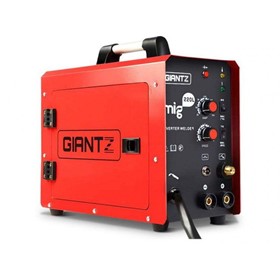
MIG Welder Buying Guide
Find and buy the MIG welder that’s right for you from verified suppliers on IndustrySearch. Among the huge line of welding machines & accessories found on IndustrySearch are some of the best MIG welders on the Australian market. Designed to handle the most
Things to consider when buying a MIG welding machine:
- Know your application - Important factors to know before getting started, are the types of materials you need to weld, material gauge (thickness), welding speed & productivity requirements, cost constraints, portability needs, environment conditions and specialized application requirements.
- Estimate your required current (Amp) range - Lowest and highest available MIG Amp settings are equally important for welding thin and thick materials respectively. A rule of thumb is roughly 30 Amps are required for every mm of material thickness. Choose a machine with an appropriate lowest Amp setting for thin materials, and for thick materials make sure the machine has at least 30% higher power output than estimated, to avoid overheating issues.
- Choose for appropriate duty cycle - Duty cycle indicates how many minutes out of 10, a MIG welding machine will continuously operate at full power. MIG welding machines for industrial use should have a duty cycle of at least 30%, to avoid overheating issues and welding downtimes.
- Consider specialised application equipment - Specialized MIG welding equipment is available for a variety of applications, such as attachments for welding pipelines and vessels, torches that reduce operator strain, MIG welding machines with a small form package for increased portability, machines that offer automation options and many more.
Contact our vendors for a free quote or expert advice on MIG Welders. Delivery available Australia wide.

- TIG Welder
- Keep the workspace clean and organized: Make sure there are no flammable materials or clutter in the area where you are welding. Keep a fire extinguisher nearby just in case.
- Ensure good ventilation: Welding produces toxic fumes, so make sure you are working in a well-ventilated area or wear a respirator.
- Check your equipment regularly: Make sure your MIG welder is in good working order by inspecting it before each use. Check for loose connections, frayed cables, or damaged parts.
- Use the correct settings: Follow the manufacturer's instructions when setting up your MIG welder. Using the wrong settings can be dangerous and result in poor weld quality.
- Be aware of your surroundings: Keep an eye on people and objects around you. Welding can be dangerous, and you don't want to accidentally injure someone or damage property.
- Duty cycle: The duty cycle is the amount of time a welder can operate at its maximum output before needing to cool down. Look for a welder with a high duty cycle to prevent downtime.
- Wire feed speed: The wire feed speed determines the rate at which the wire is fed into the weld. Look for a MIG welder with a variable wire feed speed to adjust to different materials.
- Gas type: MIG welding requires a shielding gas to protect the weld from contamination. Look for a MIG welder that can use a variety of gas types, such as argon or carbon dioxide.
- Portability: Consider the size and weight of the MIG welder if you need to move it from job site to job site.
- Power source: MIG welders can be powered by electricity or gas. Choose the power source that best fits your needs.
- The warranty typically covers repairs or replacement of parts that fail due to normal use or manufacturing defects. It may not cover damage caused by misuse, abuse, or improper maintenance.
MIG Welder Costs and Supplier Insights
Buy a MIG Welder Near Me

 Reach valuable industrial buyers in minutes
 Promote key products & content
 Drive cost effective & measurable sales