
Logistics System in Sydney

Join industrial buyers comparing supplier quotes and buying with confidence. Free, quick and easy.

How IndustrySearch works
Tell us what you need
Answer a few quick questions about the equipment you're looking for.
Get personalised quotes
Receive tailored quotes from relevant Australian suppliers.
Compare and choose
Compare quotes, ask questions and choose the best option for you.
 Save time
 Compare quotes
 Buy with confidence
Save time, compare quotes & buy with confidence
Logistics System Suppliers in Sydney

Adept Conveyor Technologies is an Logistics System supplier to Sydney
Adept Conveyor Technologies prides itself on its technical knowledge and innovative solutions to individual and diverse problems. Our comprehensive product range includes "Adept" modular conveyors, "Adeptaflex" flexible modular conveyors, "X-10der" telescopic conveyors, "Marx-rollentechnik GmbH" precision conveyor components and "Jihab" scissor lift tables. By utilising ...

Viscon Australia is an Logistics System supplier to Sydney
Viscon Australia is fully independent from Viscon the Netherlands. Our affiliation with Viscon the Netherlands is based on common interest in supplying the Australian markets with automation products. Viscon the Netherlands provides the technical know-how and products, whereas we deal with the organisation of the project and the maintenance of the processing lines. Installation ...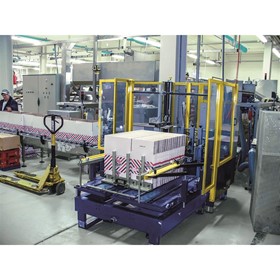
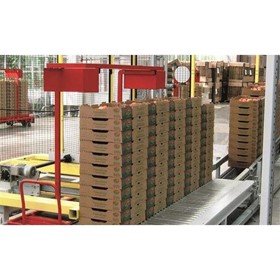

BEUMER Australia is an Logistics System supplier to Sydney
Bag filling, bag palletising and pallet hooding as well as bulk material handling systems are the core focus of BEUMER Group. Industries such as Cement production, Drymix, Fertilisers, Plastic pellets, Flour, Sugar and Salt as well as Bagged Petfood, Bagged Mulch or Potting mixes. All within BEUMER machine capabilities. With a rich history established in 1935, BEUMER Group ...
Automatic Parcel Singulator | BEUMER | Logistics Systems
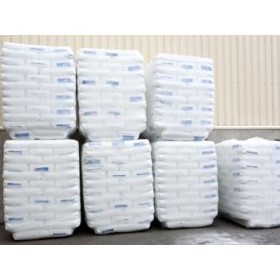
Palletless Transport Packaging | BEUMER | Logistics Systems

Industrial Conveying Australia is an Logistics System supplier to All
Industrial Conveying Australia Pty Ltd (ICA) specialises in materials handling, transporting raw materials, processed materials and finished products for a diverse range of manufacturing industries. Our designs and solutions have an enviable international reputation for innovation, cost effectiveness and competitive pricing and include: Process development, Process engineering, ...
ICA Truck and Trailer Systems

ICA Logistics Systems I Dock Loading and Unloading Systems

- The logistics system works by coordinating the different activities involved in the supply chain, such as procurement, transportation, warehousing, inventory management, and order fulfillment. This involves the use of advanced technologies and tools to track and monitor the movement of goods and services, optimize routes and delivery schedules, and ensure efficient utilization of resources.
- Improved efficiency: By streamlining the flow of goods and information, a logistics system can help reduce waste and improve the speed and accuracy of deliveries.
- Cost savings: An efficient logistics system can help reduce transportation and inventory costs, which can have a significant impact on a company's bottom line.
- Better customer service: A logistics system can help ensure that products are delivered on time and in good condition, which can lead to higher customer satisfaction.
- Increased visibility: By providing real-time data and analytics, a logistics system can help businesses make better decisions and identify areas for improvement.
- Real-time tracking and monitoring: A good logistics system should provide real-time tracking and monitoring of shipments, inventory, and delivery status.
- Automation: An effective logistics system should automate repetitive tasks, such as order processing, invoicing, and shipment scheduling, to save time and reduce errors.
- Integration: A robust logistics system should integrate with other business systems, such as accounting software, CRM, and e-commerce platforms, to streamline operations and enhance efficiency.
- Customization: A logistics system should offer customization options to meet the unique needs of your business, such as custom reporting, labeling, and packaging.
- Scalability: A logistics system should be scalable to accommodate changing business needs, such as increased volumes, new products, and new markets.
- Cost-effectiveness: A good logistics system should be cost-effective, with transparent pricing, minimal upfront costs, and no hidden fees.
- Software and hardware costs: The costs of purchasing and installing the software and hardware necessary for the logistics system can be significant. This includes the cost of purchasing hardware such as servers, computers, and mobile devices, as well as the cost of purchasing and licensing logistics software.
- Implementation costs: The costs associated with implementing the logistics system can also be significant. This includes the cost of training employees on how to use the system, as well as the cost of integrating the system with other existing systems and processes.
- Customization costs: Depending on the needs of the business, customization of the logistics system may be necessary. This can add to the overall cost of the system.
- Maintenance and support costs: The logistics system will need to be regularly maintained and updated, and the business may also require ongoing support from the vendor. These costs should be factored into the overall cost of the system.
- Integration costs: If the logistics system needs to be integrated with other systems, such as an ERP system, this can add to the overall cost of the system.
- Some common forms of training include initial onboarding sessions where users are introduced to the system and its features, as well as ongoing training opportunities to help users stay up-to-date with any changes or updates.
- Support options may include access to a help desk or customer support team, online resources such as FAQs and user guides, and sometimes even in-person support from a dedicated account manager.
- API integration: Application Programming Interface (API) integration is the most common method of integrating a logistics system with other software and systems. APIs allow different applications to communicate with each other, enabling data to be exchanged between them in a seamless manner.
- ERP integration: Enterprise Resource Planning (ERP) systems are often used by businesses to manage their operations. Integrating a logistics system with an ERP system can help to streamline processes and reduce the need for manual data entry.
- CRM integration: Customer Relationship Management (CRM) systems are used to manage customer interactions. Integrating a logistics system with a CRM system can help to provide customers with accurate delivery information and improve customer satisfaction.
- E-commerce integration: If your business has an e-commerce platform, integrating it with your logistics system can help to automate order fulfilment and provide customers with real-time tracking information.
- Warehouse management system (WMS) integration: A WMS is used to manage warehouse operations, including inventory tracking and order fulfilment. Integrating a logistics system with a WMS can help to improve inventory accuracy and reduce order fulfilment times.
- Industry experience: Look for a provider who has experience in your specific industry. They should understand the unique challenges and requirements of your business.
- Technology: Make sure the provider uses up-to-date technology that can integrate with your existing systems. This will help streamline your logistics processes and improve efficiency.
- Scalability: Choose a provider that can grow with your business. As your business expands, your logistics needs will change, and you want a provider that can adapt to those changes.
- Customer service: Look for a provider that offers excellent customer service. You want a partner who will be responsive and helpful when you need them.
- Cost: Of course, cost is always a factor. Look for a provider that offers competitive pricing, but don't sacrifice quality for a lower price.
Logistics System Costs and Supplier Insights
Why choose a supplier in Sydney for Logistics System Quotes?
If you are in Sydney and considering purchasing a Logistics System, it's worth considering Sydney-based suppliers. Doing so offers several benefits that are particularly relevant to businesses in the area. Here are the top reasons why opting for a local Sydney supplier can be the best decision for your Logistics System buying needs.
Streamlined Supply Chain with Sydney SuppliersStreamline your supply chain by choosing Logistics System suppliers in Sydney. Local sourcing simplifies logistics and speeds up your operations.
Continuous Learning with Sydney SuppliersPromote continuous learning for your Logistics System with ongoing training and updates from Sydney suppliers. Stay ahead with the latest operational knowledge.
Buying in Sydney and Strengthen Your NetworkStrengthen your local business network by buying Logistics System in Sydney. Connect with other businesses and foster community ties through local transactions.
Local Expertise for Logistics System RepairsUtilise local expertise for Logistics System repairs in Sydney. Expert technicians nearby mean less downtime and better maintenance.
Create More Jobs in SydneyCreate and keep jobs in Sydney by buying your Logistics System from local suppliers. You'll help the job market and support local families.
Streamlined Logistics with Sydney SuppliersStreamline your Logistics System logistics. Simplify your supply chain management with local sources.
Buy a Logistics System Near Me

 Reach valuable industrial buyers in minutes
 Promote key products & content
 Drive cost effective & measurable sales