
Food Metal Detector

Join industrial buyers comparing supplier quotes and buying with confidence. Free, quick and easy.


How IndustrySearch works
Tell us what you need
Answer a few quick questions about the equipment you're looking for.
Get personalised quotes
Receive tailored quotes from relevant Australian suppliers.
Compare and choose
Compare quotes, ask questions and choose the best option for you.
 Save time
 Compare quotes
 Buy with confidence
Save time, compare quotes & buy with confidence
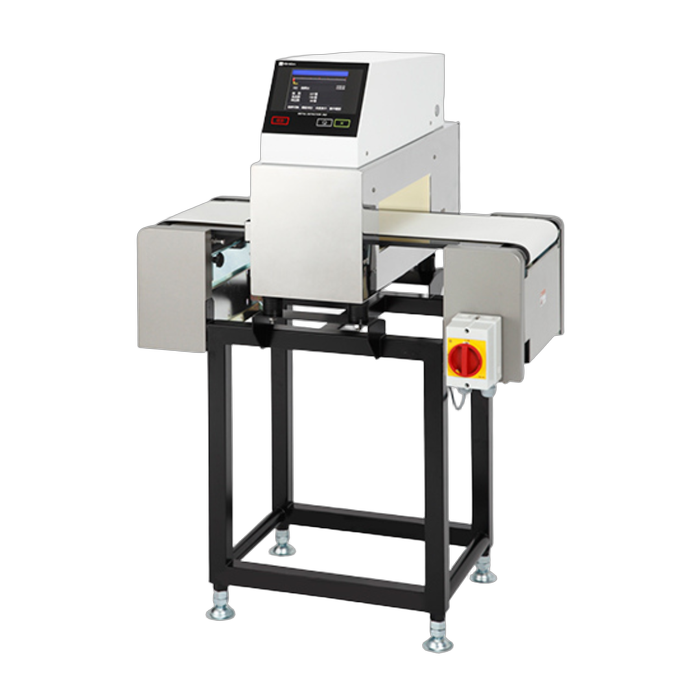
Metal Detector for Food and Pharmaceutical
A metal detector plays an important product safety role in the food and pharmaceutical industries. Other industries that benefit from the use of a metal detector include rubber, textile, plastics and chemical manufacturing. Metal is one of the most commonly found contaminants in these industries and can be introduced at any stage of the manufacturing process.
Identifying metal contaminants through the use of a metal detector ensures the safety of the products being manufactured by identifying and removing them from the production line during processing or packaging. Often metal detectors are required to be in compliance with safety standards and industry guidance.
There are three main groups of metal contaminants that can be detected by most metal detectors. They are:
- Ferrous metals such as steel and iron are easily detectable as they are both magnetic and highly conductive.
- Non-ferrous metals, such as copper, brass and aluminium are only conductive making them slightly more difficult to detect
- Stainless steel contaminates are non magnetic and poor conductors making them the most difficult to detect.
Regardless of the type of contaminant or position (exposed or embedded) within the product, the device will be able to detect and notify the user.

Established in 1997, Inspection Systems has developed a reputation for providing high performance systems, comprehensive support and specialist advice to the food and pharmaceutical manufacturing industry in Australia and New Zealand. Our customers include many of the world’s leading manufacturers, who choose Inspection Systems to help them comply with government regulations ...

For beginners, the best food metal detector would be one that is easy to use, lightweight, and has a good sensitivity to detect small metal objects in food. Some popular options for beginners include the Bounty Hunter TK4 Tracker IV Metal Detector, Garrett ACE 250 Metal Detector, and Fisher F22 Weatherproof Metal Detector. These models are user-friendly, affordable, and provide reliable performance for detecting metal contaminants in food products.
The maximum depth a food metal detector can detect depends on various factors such as the type of metal being detected, the size and shape of the metal object, and the sensitivity settings of the detector. In general, most food metal detectors can detect metal contaminants at depths ranging from a few millimeters to several inches. However, some high-end models may be able to detect metal objects at depths of up to 12 inches or more.
Australian Standard AS 5044-2007: This standard provides guidelines for metal detection in the food industry in Australia. It specifies the maximum allowable levels of metal contaminants in food products.
Limits for Metal Contaminants: According to AS 5044-2007, the limit for metal contaminants in food is typically set at 3.0 millimeters in size for ferrous metals, 3.0 millimeters for non-ferrous metals, and 3.0 to 4.0 millimeters for stainless steel. These limits are based on the potential health risks associated with ingesting metal contaminants.
Detection Sensitivity: Metal detectors used in the food industry must be capable of reliably detecting metal contaminants at or below these specified limits. The sensitivity of metal detectors is calibrated and validated regularly to ensure compliance with Australian standards.
Risk Assessment and Management: Food manufacturers are responsible for conducting risk assessments to identify potential sources of metal contamination in their production processes. They must implement appropriate control measures, including the use of metal detection equipment, to minimize the risk of metal contamination in food products.
Quality Assurance: Compliance with Australian standards is essential for food manufacturers to uphold the safety and quality of their products. Regular audits and inspections may be conducted by regulatory authorities to verify compliance with AS 5044-2007 and other relevant standards.
Continuous Improvement: Food manufacturers are encouraged to continually review and improve their metal detection processes to enhance detection sensitivity and minimize the risk of metal contamination in food products.
By adhering to Australian standards such as AS 5044-2007 and implementing robust metal detection systems and quality control measures, food manufacturers can ensure the safety and integrity of their products for consumers in Australia and beyond.
Please note that AS 5044-2007 is just one of the Australian standards relevant to metal detection in the food industry, and compliance with additional standards may be required depending on specific food products and manufacturing processes.
Purpose of Validation: Metal detector validation is a critical process in ensuring the accuracy and reliability of metal detection equipment in the food industry.
Initial Qualification: Begin by conducting an initial qualification of the metal detector to ensure it meets specifications and performance requirements.
Test Samples: Prepare test samples containing known metal contaminants of various sizes, types (ferrous, non-ferrous, stainless steel), and shapes.
Test Procedure: Pass the test samples through the metal detector at different conveyor speeds and positions to simulate real-world conditions.
Detection Sensitivity: Assess the metal detector's ability to detect each type of metal contaminant at different sizes and positions within the product.
Threshold Setting: Determine and set appropriate detection thresholds based on the smallest metal contaminant size that the metal detector must reliably detect.
Calibration Verification: Verify the calibration of the metal detector by comparing its performance against established standards or reference materials.
Documentation: Document all validation procedures, including test sample details, test results, calibration records, and any corrective actions taken.
Ongoing Monitoring: Implement ongoing monitoring and verification processes to ensure the continued effectiveness of the metal detector over time.
Regulatory Compliance: Ensure that metal detector validation procedures comply with relevant industry standards, regulations, and food safety guidelines.
By conducting thorough metal detector validation, food manufacturers can demonstrate their commitment to food safety and quality assurance while minimizing the risk of metal contamination in their products.
Please note that while this answer provides a general overview of metal detector validation procedures, specific validation protocols may vary depending on factors such as industry standards, regulatory requirements, and equipment specifications.
Definition of CCP: A Critical Control Point (CCP) is a step in the food production process where control can be applied to prevent, eliminate, or reduce food safety hazards to acceptable levels.
Role of Metal Detectors: Metal detectors are commonly used in the food industry as a preventive measure to detect and remove metal contaminants from food products.
Considerations for CCP Status: Whether a metal detector is designated as a CCP depends on various factors, including the specific food production process, the nature of the product, and the associated hazards.
Risk Assessment: Food manufacturers conduct a hazard analysis and risk assessment to determine if metal contamination poses a significant risk to food safety within their production process.
Control Measures: If metal contamination is identified as a significant hazard, control measures such as metal detectors may be implemented and designated as CCPs to mitigate the risk.
Alternative Control Measures: In some cases, alternative control measures such as sourcing metal-free raw materials or implementing metal detection at earlier stages of production may be sufficient to control metal contamination without designating the metal detector as a CCP.
Regulatory Requirements: Compliance with food safety regulations and industry standards may also influence the designation of metal detectors as CCPs in certain circumstances.
Ultimately, the decision to designate a metal detector as a CCP depends on the outcome of the hazard analysis, risk assessment, and the effectiveness of control measures implemented to ensure food safety.
Please note that specific considerations for CCP designation may vary depending on factors such as regulatory requirements, industry standards, and the specific characteristics of the food production process.
- A PI (Pulse Induction) metal detector operates by emitting short pulses of high-frequency electromagnetic energy into the ground. These pulses cause metal objects to reflect back a signal that the detector can pick up and analyze. PI detectors are particularly good at detecting deep, large metal objects and are often used for treasure hunting and archaeological excavation.
- Headphones: These help to block out external noise and allow you to hear the faintest signals from your detector.
- Digging tools: A digging tool such as a trowel or digging knife is essential for retrieving targets from the ground.
- Pinpointer: A pinpointer is a small handheld metal detector that helps to locate targets more precisely and quickly.
- Pouch or bag: A pouch or bag can be used to carry your digging tools, pinpointer, and other accessories.
- Batteries: Most metal detectors require batteries to operate. It is always a good idea to carry spare batteries with you.
- Coil cover: A coil cover protects the search coil from scratches and damage.
- Carrying case: A carrying case helps to protect your metal detector during transport and storage.
- Sand scoop: A sand scoop is useful for detecting in sandy areas such as beaches.
- Knee pads: Knee pads can be helpful when detecting in rocky or uneven terrain.
- Store it properly: Always store your metal detector in a dry place, away from moisture and extreme temperatures.
- Clean it regularly: Clean the coil and shaft of your metal detector regularly with a soft cloth or brush to remove dirt and debris.
- Check batteries: Check your metal detector's batteries regularly and replace them when necessary.
- Use protective covers: Use protective covers for your metal detector's control box and coil to prevent scratches and damage.
- Avoid harsh chemicals: Do not use harsh chemicals or solvents to clean your metal detector as they can damage the device.
- Handle with care: Avoid dropping or mishandling your metal detector as it can cause damage to the sensitive components.
Food Metal Detector Costs and Supplier Insights
Buy a Food Metal Detector Near Me
Food Metal Detector Articles & Reviews
-
![]() Buying guide
Food Metal Detector Price Guide Australia 2026: What You Pay and Why in Food-metal-detector
Read guide
-
![]() Buying guide
Food Metal Detector Buying Guide: How to Choose the Right System for Your Manufacturing or Packaging Line in Food-metal-detector
Read guide
-
![]() Buying guide
Conveyor vs Gravity Fall Food Metal Detectors: Which System Is Right for Your Production Line? in Food-metal-detector
Read guide
-
![]() Buying guide
Checkweighers with Metal Detection: Dual-Purpose Systems for Food Processing in Food-metal-detector
Read guide
-
![]() Buying guide
Industrial Scale: The Importance of Automated Checkweighers in Food Production in Food-metal-detector
Read guide
-
![]() Buying guide
Maximizing Metal Detection Efficiency and Accuracy with Metal Detectors in Food-metal-detector
Read guide



 Reach valuable industrial buyers in minutes
 Promote key products & content
 Drive cost effective & measurable sales