
Conveyor System

Join industrial buyers comparing supplier quotes and buying with confidence. Free, quick and easy.









How IndustrySearch works
Tell us what you need
Answer a few quick questions about the equipment you're looking for.
Get personalised quotes
Receive tailored quotes from relevant Australian suppliers.
Compare and choose
Compare quotes, ask questions and choose the best option for you.
 Save time
 Compare quotes
 Buy with confidence
Save time, compare quotes & buy with confidence
Conveyor System Suppliers
Established 1995, Esko Australia Pty Ltd works with its major European Food Processing, Packaging and Waste Management equipment suppliers to develop, promote & supply key quality solutions to our customer base. We provide a full service from initial concept to installation, & is complemented by selecting primary machine system suppliers that are world known & who are well ...
Customers: Kraft-Heinz, MARS, Unilever, Nestle', Froneri, PPG, Jalna, Chris Greek Dips, SAFCOL,
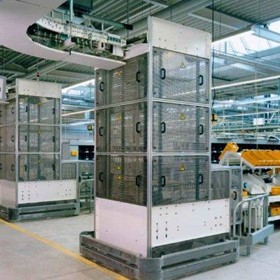
NERAK Vertical S Conveyor Systems
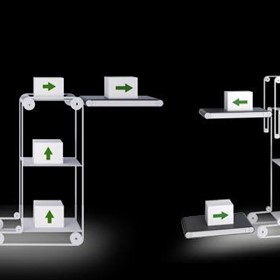
NERAK Vertical Conveying Equipment and Conveyor Systems
Conveyor System Buying Guide
Buy the best conveyor belts and conveying systems available from verified IndustrySearch suppliers. You’ll find quality brands perfect for bulk material or packaged product use including conveyor belts, chain conveyor, screw conveyor, spiral food conveyors and roller conveyor systems. Read our conveyor buying guide to help you choose your ideal conveyor system.

- Conveyor systems are an essential part of many industries, including manufacturing, warehousing, and transportation. They are used to move materials from one location to another quickly and efficiently, and can be customized to fit a variety of applications. Here are some factors to consider when selecting the best conveyor system for your industry or application:
- Material Type: The type of material being conveyed will determine the type of conveyor system needed. For example, heavy-duty materials may require a conveyor with a more robust design, while delicate materials may require a gentler conveyor system.
- Distance: The distance that the material must be transported will determine the length of the conveyor needed. Longer distances may require more power to move the materials, which may require a more robust conveyor system.
- Speed: The speed at which the materials need to be transported will also determine the type of conveyor system needed. For example, high-speed conveyors may require more power and a more robust design to ensure safe and efficient transportation.
- Space: The amount of space available in your facility will also impact the type of conveyor system you can use. For example, if space is limited, you may need to consider a vertical conveyor system or an overhead conveyor.
- Budget: Finally, your budget will also play a role in determining the best conveyor system for your application. Conveyor systems can range in price from a few thousand dollars to several hundred thousand dollars, depending on the complexity and size of the system.
- Site preparation: The site where the conveyor system will be installed needs to be cleared and leveled. Any obstructions or debris should be removed.
- Conveyor layout design: The layout design of the conveyor system should be finalized before installation begins. This includes determining the length, width, and height of the conveyor, as well as the location and size of any curves, inclines, or declines.
- Conveyor assembly: The conveyor system is assembled in sections or modules, which are then connected together. The assembly process may involve welding, bolting, or other methods of joining the sections.
- Conveyor installation: The assembled conveyor system is then installed on site. This involves positioning the conveyor sections in place and securing them to the floor or other support structures.
- Electrical and mechanical connections: Once the conveyor system is installed, electrical and mechanical connections are made to power and control the system. This includes connecting motors, sensors, and other components, as well as programming any control systems.
- Testing and commissioning: The conveyor system is then tested to ensure it is operating correctly and meets all safety and performance requirements. Any issues are addressed, and the system is commissioned for use.
- Emergency stop buttons: These are strategically placed along the conveyor system and can be used to immediately shut down the system in case of an emergency.
- Guarding: Physical barriers, fencing, or shielding can be installed to prevent employees from accessing dangerous areas of the conveyor system.
- Warning systems: Visual and audible warning systems can be installed to alert employees of potential hazards.
- Lockout/tagout procedures: These procedures ensure that the conveyor system is properly locked and tagged before maintenance or repair work is carried out.
- Automatic shut-off: Sensors or other technology can be used to automatically shut off the conveyor system if an object or person becomes trapped or stuck.
Conveyor System Costs and Supplier Insights
If you are looking to buy a Conveyor System for sale, suppliers on IndustrySearch include Esko Australia Pty Ltd
Buy a Conveyor System Near Me
Conveyor System Articles & Reviews
-
![]() Buying guide
Belt Conveyor vs Roller Conveyor: Which System Fits Your Operation in 2026 ? in Conveyor-system
Read guide
-
![]() Buying guide
The real ROI of basic warehouse automation for Australian businesses in Conveyor-system
Read guide
-
![]() Buying guide
Conveyor system buying guide Australia: Types, prices, maintenance, compliance and more in Conveyor-system
Read guide
-
![]() Buying guide
Spiral Conveyor Prices in Australia: Buying Guide for Types, Features, Installation & Compliance in Conveyor-system
Read guide
-
![]() Buying guide
Case Packer Price & Buying Guide in Conveyor-system
Read guide
-
![]() Buying guide
Checkweigher Buying Guide: Prices, Features, and Key Considerations in Conveyor-system
Read guide



 Reach valuable industrial buyers in minutes
 Promote key products & content
 Drive cost effective & measurable sales