
Gas Detector & Monitor

Join industrial buyers comparing supplier quotes and buying with confidence. Free, quick and easy.


How IndustrySearch works
Tell us what you need
Answer a few quick questions about the equipment you're looking for.
Get personalised quotes
Receive tailored quotes from relevant Australian suppliers.
Compare and choose
Compare quotes, ask questions and choose the best option for you.
 Save time
 Compare quotes
 Buy with confidence
Save time, compare quotes & buy with confidence
Single & Multi Gas Detector Suppliers
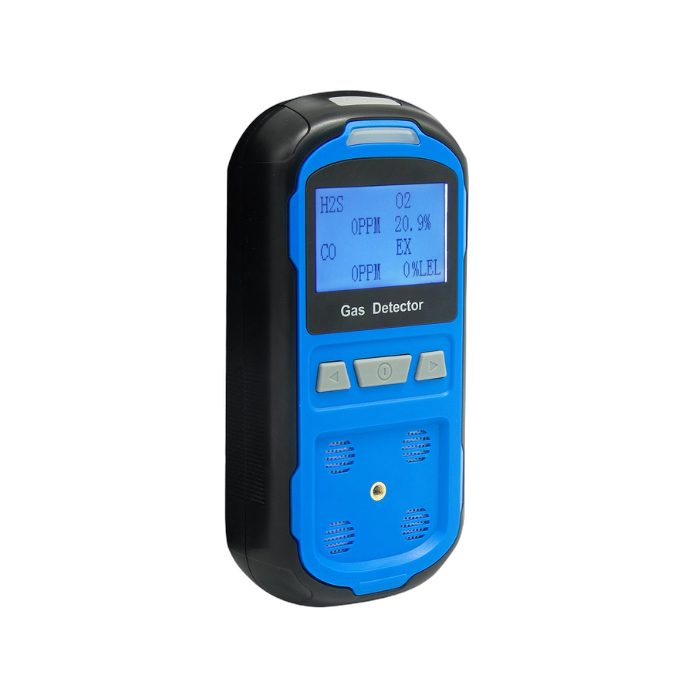
Gas detectors are compact, fast, smart, and reliable devices that can efficiently detect gasses in confined spaces like laboratories, chemical manufacturing plants, gas manufacturing plants, gas storage units, power plants, and even personal spaces like domestic and restaurant kitchens.
They work as a part of a safety system to monitor or measure the toxic, combustible, and oxygen gas in a space where they can be a health hazard. They can either measure and display or detect and alarm specific gasses like O2, CO, H2S, and LEL.
There are three basic types of gas detector technology:
- Electrochemical - A highly sensitive electrochemical gas is used to measure the presence of toxic gasses like CO. They have electrodes that sense the air around them. Any change in surroundings changes the electric current in the electrode sounding the alarm.
- Catalytic - Uses a platinum-treated wire coil. The wire oxidizes upon contact with hydrocarbons or combustible gasses setting off the alarm.
- Infrared - Infrared technology is used to analyze the surroundings. Any change in light gets instantly noted by a detector giving an accurate measurement of gas levels in the surrounding air.

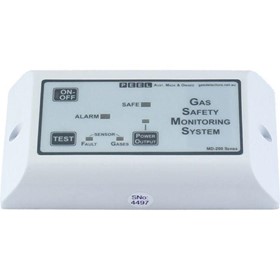
Peel Electronics has expanded, and diversified into a wide range of markets, all from its engineering, design and manufacturing platform. Some markets include, Cellar Gas Detectors for hotels, stadiums, service stations, restaurants, breweries for CO2 (Carbon Dioxide) detection. Car Parks and Marine Craft for CO (Carbon Monoxide) detection. Marine Craft, Caravans/Motorhomes, ...

- To ensure accurate readings, gas detectors should be calibrated regularly using a known gas concentration. Calibration should be performed under conditions that are similar to the intended use of the detector, such as temperature and humidity. Additionally, gas detectors should be maintained and serviced according to the manufacturer's recommendations to ensure proper operation and accuracy.
Gas Detector & Monitor Costs and Supplier Insights
Buy a Gas Detector & Monitor Near Me
Gas Detector & Monitor Articles & Reviews
-
![]() Buying guide
Reducing Manufacturing Downtime: The Impact of Inspection Scopes in Gas-detector-and-monitor
Read guide
-
![]() Buying guide
Borescope Inspection: Types, Uses, and Benefits Explained in Gas-detector-and-monitor
Read guide
-
![]() Buying guide
Inspection Camera Scope: Key to Quality Control Success in Gas-detector-and-monitor
Read guide



 Reach valuable industrial buyers in minutes
 Promote key products & content
 Drive cost effective & measurable sales