
Photoelectric Sensor in Darwin

Join industrial buyers comparing supplier quotes and buying with confidence. Free, quick and easy.


How IndustrySearch works
Tell us what you need
Answer a few quick questions about the equipment you're looking for.
Get personalised quotes
Receive tailored quotes from relevant Australian suppliers.
Compare and choose
Compare quotes, ask questions and choose the best option for you.
 Save time
 Compare quotes
 Buy with confidence
Save time, compare quotes & buy with confidence
Photoelectric Sensor | Diffuse & Distance Suppliers in Darwin
Automation now dominates most aspects of commercial and industrial life. Robots have become the people manning production lines and programmable logic controllers have become the supervisors masterminding the robots.
Where once a human used eyes and a clipboard to monitor the movement of products along a conveyor belt, beams of light from photoelectric sensors now perform the same function without the need for food, smoko breaks, or sleep.
Where once doors were opened for ladies by gentlemen, photoelectric sensors now do the deed long before chivalry can get close.
Such is the world we live in and businesses simply have to embrace this new technology to stay competitive. And while photoelectric sensors might be at the cheaper end of the technological revolution, they are, quite literally, a ray of light for all kinds of commercial and industrial operations.
Photoelectric sensors use light to detect objects or determine if they’re where they’re expected to be or are missing. Photoelectric sensors are used on production lines, automatic doors and also have a wide range of applications in the transport industry.
Connected IoT is an Photoelectric Sensor supplier to All
At Connected IoT we specialise in data acquisition and data logging. Our years of experience with data loggers from Eltek, Elpro, ClimaCheck and wireless M2M enable us to find the best product for your application. Our range start from single use data loggers to monitor temperature or humidity sensitive goods during manufacture, transport and storage. Simple report to PDF document ...Customers: Hospitals, Pharmacies, Government Departments.
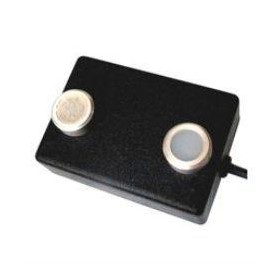

Profile Automation is an Photoelectric Sensor supplier to All
We supply an extensive range of Sensors, Valves, Encoders, Leak detectors & Pneumatic Cylinders. All products are high quality & economical. Our mission is to make Automation products more affordable with high value for money solutions. Our team of experianced staff come from a machine design and building backgound, our experiance has allowed our machinery to be exported ...

- There are two types of photoelectric sensors: through-beam and reflective. In a through-beam sensor, the emitter and receiver are placed opposite each other, and the beam of light passes through the object being detected. In a reflective sensor, the emitter and receiver are placed next to each other, and the beam of light is reflected off the object back to the receiver.
- Retro-reflective sensors: These sensors emit a beam of light and detect the reflection of that light from a target object. They are often used in applications where the target object is difficult to detect or where the sensor needs to be positioned at a distance from the object.
- Diffuse sensors: These sensors emit a beam of light that is reflected off the target object and back to the sensor. They are often used in applications where the target object is close to the sensor and the sensor needs to be mounted in a small space.
- Through-beam sensors: These sensors consist of two components – a transmitter and a receiver – that are positioned opposite each other. When an object passes between the two components, it interrupts the beam of light, triggering the sensor.
- Sensing mode: The first step in selecting a photoelectric sensor is to determine the sensing mode required for your application. The three most common sensing modes are through-beam, reflective, and diffuse.
- Range: The next consideration is the sensing range required for your application. This will depend on the distance between the sensor and the object it needs to detect.
- Sensitivity: The sensitivity of the sensor is also an important factor to consider. This will determine the minimum size or reflectivity of the object that can be detected.
- Response time: The response time of the sensor is another important consideration. This is the time it takes for the sensor to detect an object and send a signal to the control system.
- Environmental factors: The environment in which the sensor will be used is also an important consideration. Factors such as temperature, humidity, and ambient light levels can affect the performance of the sensor.
- Output: Finally, consider the output required for your application. Most photoelectric sensors provide a digital output, but some also offer analog outputs or other specialized outputs.
- Ambient light: Photoelectric sensors rely on detecting changes in light intensity, so the presence of ambient light can affect their operation. If the sensor is exposed to direct sunlight or other bright light sources, it may cause false readings or trigger the sensor unnecessarily. Therefore, it is essential to choose a sensor with a higher sensitivity or a filter to block out unwanted light.
- Distance and angle: The distance and angle between the sensor and the object can affect the sensor's accuracy and range. In general, the closer the sensor is to the object, the more accurate the measurements will be. The angle of incidence also affects the sensor's performance, as it changes the amount of light reflected back to the sensor.
- Temperature and humidity: Extreme temperatures and high humidity can affect the sensor's performance over time. Most photoelectric sensors have a temperature range in which they can operate, and exposure to temperatures outside this range can cause damage to the sensor. High humidity can also cause condensation on the sensor lens, which can affect the light transmission and cause false readings.
- Environmental conditions: The environment in which the sensor is used can also affect its performance. For example, the presence of dust, dirt, or other particles can obstruct the sensor's lens and cause false readings. Vibrations and shocks can also affect the sensor's accuracy by shifting its position or damaging its components.
Photoelectric Sensor Costs and Supplier Insights
If you are looking to buy a Photoelectric Sensor for sale, suppliers on IndustrySearch include Connected IoT
Buy a Photoelectric Sensor Near Me

 Reach valuable industrial buyers in minutes
 Promote key products & content
 Drive cost effective & measurable sales