
Dangerous Goods Cabinet

Join industrial buyers comparing supplier quotes and buying with confidence. Free, quick and easy.



How IndustrySearch works
Tell us what you need
Answer a few quick questions about the equipment you're looking for.
Get personalised quotes
Receive tailored quotes from relevant Australian suppliers.
Compare and choose
Compare quotes, ask questions and choose the best option for you.
 Save time
 Compare quotes
 Buy with confidence
Save time, compare quotes & buy with confidence
Dangerous Goods Cabinet Suppliers
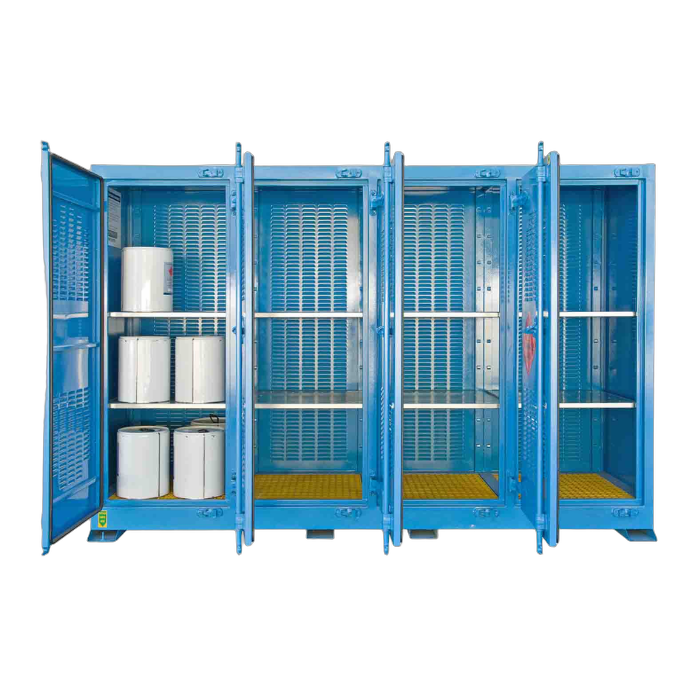
Dangerous goods storage cabinets, also known as chemical safety cabinets, are specifically designed to store hazardous materials as dictated by the Australian Standard (AS) code 1940:2017. The code requires hazardous materials to be securely stored in a compliant storage environment that reduces accidents causing harm and the risk of fires resulting in property damage from taking place.
Workplaces benefit from dangerous goods storage cabinets as they provide a safe and permanent location to store pesticides as well as flammable, corrosive and toxic substances while not in use. They are used across a range of settings and different industries including warehouses, manufacturing plants, laboratories, factories, medical facilities and building sites.
These specialised cabinets are made from heavy duty double walled steel that is built to withstand the corrosive and reactive nature of the chemicals stored inside of it. The cabinet is also designed to contain leaks and spills via a liquid tight sump and to protect workers from exposure to harmful fumes and vapours with a dedicated ventilation system. Additionally, the fire resistant construction coupled with a built in grounding wire and flash arrestors minimises flammable materials from combusting and spreading.

AJ Safety is your safety partner, and we strive to help customers provide a safe working environment for your employees and contractors by providing you with high quality, practical and affordable personal protective equipment including First aid, workwear and safety products. Many people rely on the AJ Safety’s range every day, to ensure they are operating as safely as possible ...

Our motto "Delivering more than Safety" sets us apart from any competitors because our staff are committed to go beyond your expectations everytime! We have large stock quantities available at our conveniently located warehouse for immediate and prompt despatch to your site. If your requirements do not fall into one of the above categories, why not put our sales team to the ...

- The purpose of a Dangerous Goods Cabinet is to provide a secure and controlled environment for hazardous materials, reducing the risk of fire, explosions, and environmental damage. These cabinets are built to withstand fire, impact, and corrosion, and they are equipped with ventilation systems and spill containment features to prevent leaks and spills.
- Regulations and standards require businesses to store hazardous materials in a safe and compliant manner. Failure to comply with these regulations can result in fines, legal liabilities, and safety hazards for employees and the environment.
- Flammable liquids – such as gasoline, diesel fuel, and solvents.
- Corrosive liquids – such as acids and alkalis.
- Toxic substances – such as pesticides, herbicides, and poisons.
- Oxidizing agents – such as hydrogen peroxide and potassium permanganate.
- Compressed gases – such as propane, butane, and acetylene.
- Radioactive materials – such as isotopes used in medical and scientific research.
- To determine the size of the Dangerous Goods Cabinet, you need to consider the volume of the hazardous chemicals you need to store, the size of the containers, and the quantity of each type of substance. You also need to factor in the potential risks associated with each substance, such as flammability, toxicity, and reactivity.
- It is recommended to consult with a safety expert or a hazardous materials storage specialist to determine the appropriate size of the Dangerous Goods Cabinet. They can assess your facility and provide guidance on the type of storage options available to meet your needs.
- Fire Resistance: The cabinet should be made of fire-resistant materials and have a fireproof seal around the doors to prevent any hazardous materials from igniting.
- Ventilation: The cabinet should have proper ventilation to prevent the buildup of toxic fumes or gases.
- Locking Mechanism: The cabinet should have a secure locking mechanism to prevent unauthorized access to hazardous materials.
- Capacity: The cabinet should have enough capacity to store all hazardous materials as per the guidelines.
- Labeling: The cabinet should be properly labeled with the type of hazardous materials it contains.
- Compliance: The cabinet should comply with all local and national regulations regarding the storage of hazardous materials.
- Durability: The cabinet should be strong and durable to withstand any accidental impact or damage.
- Regularly inspect the cabinet for damage or wear and tear. Replace any damaged parts immediately.
- Keep the cabinet clean and free from debris. Wipe down the surfaces with a damp cloth and mild detergent as needed.
- Ensure that the shelves are properly installed and adjusted to prevent any spills or leaks.
- Store the hazardous materials in their original containers and ensure that they are properly labeled.
- Check the expiration dates of the hazardous materials and dispose of any expired materials properly.
- Keep the cabinet locked at all times to prevent unauthorized access.
- Train employees on the proper use and handling of the cabinet and hazardous materials.
Dangerous Goods Cabinet Costs and Supplier Insights
Buy a Dangerous Goods Cabinet Near Me

 Reach valuable industrial buyers in minutes
 Promote key products & content
 Drive cost effective & measurable sales