
Self-Cleaning Filter in Sydney

Join industrial buyers comparing supplier quotes and buying with confidence. Free, quick and easy.
How IndustrySearch works
Tell us what you need
Answer a few quick questions about the equipment you're looking for.
Get personalised quotes
Receive tailored quotes from relevant Australian suppliers.
Compare and choose
Compare quotes, ask questions and choose the best option for you.
 Save time
 Compare quotes
 Buy with confidence
Save time, compare quotes & buy with confidence
Self-Cleaning Filter Suppliers in Sydney

Nupac Industries is an Self-Cleaning Filter supplier to All
Nupac is a wholly owned Australian company and our objective is to be recognised as a systems supplier to the industry with a proven ability to provide the right solution to each packaging, processing and materials handling requirement. Simply stated - the team at Nupac is committed to achieving positive recognition within our industry and for setting a standard of excellence ...Customers: Arnott's, Mondelez, McCain, Mars, Bega, Blackmores, Darrell Lea, Dimattina, Aspen Pharma


Culligan Australia is an Self-Cleaning Filter supplier to Sydney
Ultimate Water Systems Australia : Part of the Culligan’s Global Water Treatment Network With over 80 years of history and an installed base of over three million customers worldwide, Culligan is a leading provider of water treatment solutions globally. The Culligan brand is the most recognized in the industry, with a reputation based on quality, innovation, service and local ...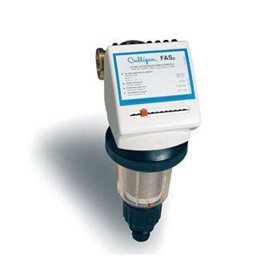

- Continuous filtration: A self-cleaning filter can continuously filter out particles and debris from a liquid without the need for manual cleaning or replacement.
- Reduced maintenance: With no need for manual cleaning, a self-cleaning filter reduces maintenance costs and downtime associated with cleaning a traditional filter.
- Longer service life: A self-cleaning filter has a longer service life than a traditional filter, as it does not require replacement as frequently.
- Improved efficiency: A self-cleaning filter can improve the efficiency of the filtration process by maintaining a consistent flow rate and reducing pressure drop.
- Environmentally friendly: A self-cleaning filter reduces the amount of waste generated by traditional filters, as it does not require replacement or disposal of filter media.
- Screen Filters: These filters use a mesh screen to trap debris and sediment, which is then removed through a cleaning process that involves flushing the screen with water.
- Disc Filters: These filters use a series of stacked discs to trap debris and sediment, which is then removed through a cleaning process that involves rotating the discs and spraying them with water.
- Cartridge Filters: These filters use a replaceable cartridge to trap debris and sediment, which is then removed by replacing the cartridge with a new one.
- Sand Filters: These filters use layers of sand and gravel to trap debris and sediment, which is then removed through a backwashing process that involves reversing the flow of water through the filter.
- Proper location: The filter should be installed in a location that is easily accessible for maintenance and cleaning.
- Adequate space: There should be enough space around the filter for easy installation, maintenance, and cleaning.
- Proper support: The filter should be securely mounted on a sturdy base or support structure.
- Correct plumbing: The filter should be correctly plumbed to the system to ensure proper flow and filtration.
- Electrical supply: The filter requires an electrical supply for the self-cleaning mechanism to operate.
- Proper drainage: The filter must be installed with proper drainage to prevent water from backing up and causing damage.
- Correct filtration element: The filter should be fitted with the correct filtration element for the intended application.
- Adequate pressure: The filter should be installed to withstand the required pressure for the application.
- Proper insulation: If the filter is installed in a cold environment, it should be properly insulated to prevent freezing.
- Determine your flow rate: Measure the maximum flow rate your system will need to handle. This will help you determine the appropriate size of the filter.
- Consider the particle size: Determine the size of the particles you need to remove from your system. This will help you select the appropriate filter mesh size.
- Decide on the filter type: There are several types of self-cleaning filters available, including backwash filters, scraper filters, and suction scanning filters. Consider the advantages and disadvantages of each type to select the best one for your application.
- Consider the operating conditions: Consider the temperature, pressure, and viscosity of your system. This will help you select a filter that can withstand the operating conditions.
- Determine the cleaning mechanism: Self-cleaning filters use different mechanisms to clean themselves, such as backwashing, scraping, and suction scanning. Choose a mechanism that is appropriate for your application.
- Firstly, it is important to follow the manufacturer's instructions for installation, operation, and maintenance of the filter. Failure to do so can result in damage to the equipment, injury to operators, or contamination of the product.
- Secondly, self-cleaning filters use high-pressure water or air to remove the accumulated solids from the filter element. This process can generate high noise levels and cause water or air splashing. Operators should wear appropriate personal protective equipment, such as ear protection and safety glasses, when working near the filter during the cleaning cycle.
- Thirdly, the cleaning process can generate aerosols and dust, which can pose a health hazard if inhaled. Operators should ensure that the filter is located in a well-ventilated area and that appropriate respiratory protection is worn if required.
- Finally, self-cleaning filters may contain hazardous materials, such as chemicals or heavy metals, if they are used in certain applications. Operators should be aware of the potential hazards associated with the materials being filtered and take appropriate precautions to protect themselves and the environment.
Self-Cleaning Filter Costs and Supplier Insights
If you are looking to buy a Self-Cleaning Filter for sale, suppliers on IndustrySearch include Nupac Industries
Why choose a supplier in Sydney for Self-Cleaning Filter Quotes?
If you are in Sydney and considering purchasing a Self-Cleaning Filter, it's worth considering Sydney-based suppliers. Doing so offers several benefits that are particularly relevant to businesses in the area. Here are the top reasons why opting for a local Sydney supplier can be the best decision for your Self-Cleaning Filter buying needs.
Ensuring Self-Cleaning Filter Quality with Sydney SuppliersEnsure your Self-Cleaning Filter meets the highest quality standards with the expert guidance of Sydney suppliers. Excellence in every detail.
Local Expertise for Self-Cleaning Filter Legal StandardsBenefit from local expertise in Self-Cleaning Filter legal standards in Sydney. Stay ahead of regulatory changes with suppliers who focus on compliance.
Reducing Lead TimesReduce lead times significantly by sourcing your Self-Cleaning Filter from Sydney, increasing your operational efficiency and responsiveness.
Sydney Providers Leading Innovation AdoptionChoose Sydney Self-Cleaning Filter providers leading in innovation adoption. They help you implement the latest industry trends swiftly, enhancing your operational capacity.
Local Suppliers are the Key to Supply Chain StrengthMake local Self-Cleaning Filter suppliers in Sydney key your supply chain strength. Depend on them for quick replenishments and steady supplies.
Benefit from Sydney Supplier ExpertiseEnhance your Self-Cleaning Filter's functionality with cutting-edge customisations. Tailored enhancements drive better business outcomes.
Buy a Self-Cleaning Filter Near Me
Self-Cleaning Filter Articles & Reviews


 Reach valuable industrial buyers in minutes
 Promote key products & content
 Drive cost effective & measurable sales