
Volumetric Filler

Join industrial buyers comparing supplier quotes and buying with confidence. Free, quick and easy.




How IndustrySearch works
Tell us what you need
Answer a few quick questions about the equipment you're looking for.
Get personalised quotes
Receive tailored quotes from relevant Australian suppliers.
Compare and choose
Compare quotes, ask questions and choose the best option for you.
 Save time
 Compare quotes
 Buy with confidence
Save time, compare quotes & buy with confidence
Volumetric Filler & Volumetric Filling Machine Suppliers
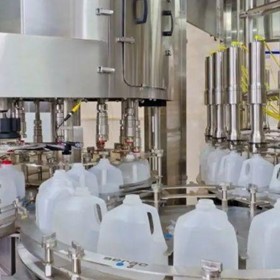
A volumetric filler machine is a type of packaging machinery that fills a liquid material into a container. The amount of liquid is based on volume rather than weight and is controlled by a predetermined quantity set by a machinist.
Volumetric filling machines can drastically increase production throughput rate by dispensing a precise amount of product at a high speed. These machines are suitable for liquid products of varying viscosity and consistency that are typically difficult to weigh accurately. They are ideal for large-scale productions, especially in applications where accurate product quantity is at the forefront of production.
The food and beverage, pharmaceutical, cosmetic and manufacturing industries benefit from the use of volumetric fillers when packing liquid products as they can be used to fill containers of various shapes and sizes. These products include liquids such as alcohol, oil, salad dressing, honey, medicine, makeup, sunscreen, beauty creams, dyes and paint.
Volumetric fillers range in automation from completely automated systems that use conveyor belts and sensor equipped fill nozzles. To semi automatic systems that automatically fill, but require containers to be manually placed. To manual machines that require containers to be manually placed and hand filled.

Icon Equipment International Pty Ltd manufactures and supplies the flowable liquid industry with equipment based on innovation, solid engineering and responsive customer service. Icon Equipment International has become a well known and respected name throughout many industries and companies not only in Australia and New Zealand, but also within South East Asia and the Middle ...

- Hyaluronic acid fillers: These fillers are made of a substance that occurs naturally in the body and can help restore volume to areas of the face. They are typically used to treat fine lines, wrinkles, and folds.
- Calcium hydroxylapatite fillers: These fillers are made of a substance that is similar to bone and can help restore volume to areas of the face. They are typically used to treat deeper wrinkles and folds.
- Poly-L-lactic acid fillers: These fillers are made of a synthetic substance that stimulates collagen production in the body. They are typically used to treat areas of the face that have lost volume due to aging.
- Fat transfer: This procedure involves harvesting fat from one area of the body and injecting it into another area to add volume. It is typically used to treat areas of the face that have lost volume due to aging.
- Volume range: The volumetric filler should be able to handle the volume range required for your product.
- Accuracy: The accuracy of the volumetric filler is crucial to ensure consistent and precise filling of containers.
- Speed: The speed of the volumetric filler should match the production speed of your facility.
- Product compatibility: The volumetric filler must be compatible with the type of product you are filling, whether it is liquid, semi-liquid, or viscous.
- Ease of use and maintenance: The volumetric filler should be easy to operate and maintain, with minimal downtime required for cleaning and maintenance.
- Durability: The volumetric filler should be made of high-quality materials and built to withstand the demands of continuous use in a production environment.
- Flexibility: The volumetric filler should be able to handle a variety of container sizes and shapes, as well as different types of products.
- Daily cleaning: The volumetric filler should be cleaned every day to remove any debris or residue that may have accumulated during the filling process.
- Lubrication: The moving parts of the machine should be lubricated regularly to prevent wear and tear and to ensure smooth operation.
- Inspection: The machine should be inspected regularly to identify any signs of wear and tear, damage, or malfunction. Any issues should be addressed immediately.
- Calibration: The machine should be calibrated regularly to ensure accurate filling. This involves checking the accuracy of the volume of the product being filled.
- Replacement of worn parts: Any worn or damaged parts should be replaced promptly to prevent further damage and ensure the machine operates at peak efficiency.
- Training: Personnel operating the machine should be trained in the proper use and maintenance of the volumetric filler to minimize the risk of damage and ensure optimum performance.
Volumetric Filler Costs and Supplier Insights
Buy a Volumetric Filler Near Me
Volumetric Filler Articles & Reviews


 Reach valuable industrial buyers in minutes
 Promote key products & content
 Drive cost effective & measurable sales