
Counterbalance Forklift

Join industrial buyers comparing supplier quotes and buying with confidence. Free, quick and easy.



How IndustrySearch works
Tell us what you need
Answer a few quick questions about the equipment you're looking for.
Get personalised quotes
Receive tailored quotes from relevant Australian suppliers.
Compare and choose
Compare quotes, ask questions and choose the best option for you.
 Save time
 Compare quotes
 Buy with confidence
Save time, compare quotes & buy with confidence
Top Counterbalance Forklift Suppliers

For eight years, Pickman has supported a growing and diverse customer base across construction, civil works, agriculture, warehousing, manufacturing, logistics and equipment hire. Our close, long-term collaboration with equipment manufacturers gives us direct product insight and the ability to influence specification, configuration and ongoing parts support. The result is ...


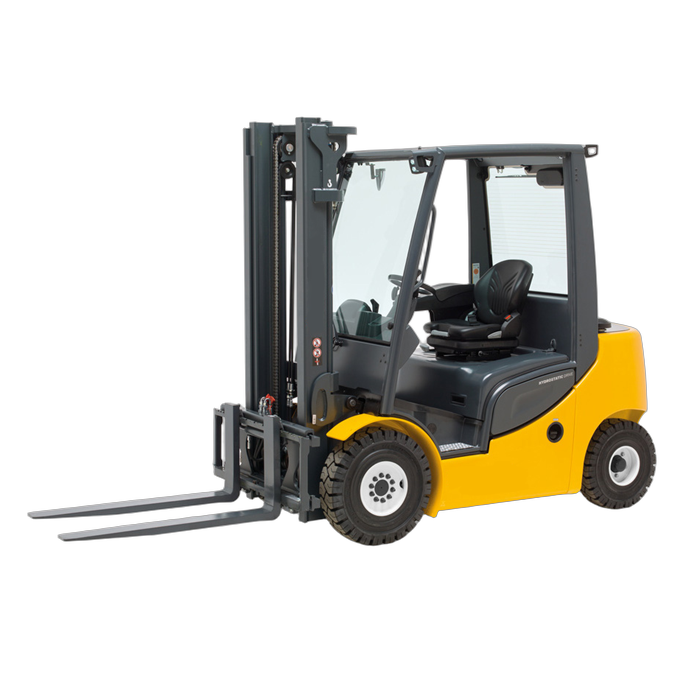
Counterbalance Forklifts: Counterbalance forklifts are the most common type of forklifts and are designed with a weight at the rear of the truck to counterbalance the weight of the load at the front. They have forks protruding from the front of the truck, allowing them to lift and transport loads without the need for additional support arms.
Reach Forklifts: Reach forklifts are designed with extending arms (known as reach arms) that can extend forward and retract, allowing the forklift to reach into racking or shelving to pick up or place loads. These forklifts are commonly used in warehouse settings with narrow aisles where space is limited.
Primary Differences: The primary difference between counterbalance and reach forklifts lies in their design and application. Counterbalance forklifts are suitable for lifting and transporting loads in open areas, while reach forklifts are ideal for accessing and maneuvering in narrow aisles and confined spaces.
Usage: Counterbalance forklifts are versatile and commonly used for general material handling tasks, including loading and unloading trucks, moving pallets, and transporting goods around warehouses or distribution centers. Reach forklifts are specialized forklifts designed specifically for use in narrow aisle applications, where they can reach high shelves or racks.
Maneuverability: Counterbalance forklifts typically have a higher degree of maneuverability and can operate in a variety of environments, including indoor and outdoor settings. Reach forklifts are designed for precise maneuvering in tight spaces, making them ideal for navigating narrow aisles and congested warehouse layouts.
Not Recommended: Increasing the counterweight on a forklift is generally not advised unless done under professional guidance or manufacturer specifications.
Safety Concerns: Counterweights are designed to balance the weight of loads being lifted, ensuring stability and safety during operation. Modifying the counterweight without proper expertise can compromise the forklift's stability and pose safety risks.
Manufacturer Guidelines: If modifications to the counterweight are necessary, it's essential to consult the forklift's manufacturer for guidance. Some forklift models may allow for adjustments to the counterweight within specified limits, but these modifications should only be made by trained professionals.
Qualified Professionals: Any modifications to a forklift, including changes to the counterweight, should be performed by qualified technicians or engineers who understand the forklift's design and safety requirements.
Safety First: Prioritize safety when operating a forklift. Always follow manufacturer recommendations, conduct regular maintenance checks, and ensure operators are properly trained in forklift operation and safety protocols.
In summary, while it may be possible to increase the counterweight on a forklift under certain circumstances, it's crucial to approach such modifications with caution and adhere to manufacturer guidelines and safety standards.
Electric Counterbalance Forklifts:
- Light-duty electric counterbalance forklifts typically have lifting capacities ranging from 1,361 to 2,268 kilograms.
- Medium-duty electric counterbalance forklifts can lift loads ranging from 2,268 to 4,536 kilograms.
- Heavy-duty electric counterbalance forklifts have higher lifting capacities, typically ranging from 4,536 to 9,072 kilograms.
Internal Combustion Engine Counterbalance Forklifts:
- Light-duty internal combustion engine counterbalance forklifts usually have lifting capacities between 1,361 and 2,722 kilograms.
- Medium-duty internal combustion engine counterbalance forklifts can lift loads ranging from 2,722 to 4,536 kilograms.
- Heavy-duty internal combustion engine counterbalance forklifts have lifting capacities exceeding 4,536 kilograms.
Load Center and Lift Height:
- The lifting capacity of a forklift is affected by the load center distance, typically 610 millimeters (24 inches) or 914 millimeters (36 inches), and the lift height.
- Forklifts are rated to lift loads based on specific load center distances, so it's crucial to consider these factors when determining lifting capacity.
Attachments: Any attachments or accessories added to the forklift, such as side shifters or fork positioners, can impact its lifting capacity. The weight of attachments should be accounted for when calculating the total load being lifted.
- Stability: The forklift's counterbalanced design helps keep it stable even when carrying heavy loads.
- Operator compartment: The operator compartment is designed to keep the operator safe from falling objects and other hazards.
- Seat belts: Seat belts are provided to keep the operator secure in the event of sudden stops or collisions.
- Horn: The forklift has a horn to warn pedestrians of its presence and prevent collisions.
- Lights: Lights are provided to improve visibility and prevent accidents in low-light conditions.
- Emergency stop button: An emergency stop button is provided to quickly stop the forklift in case of an emergency.
- Load capacity indicator: A load capacity indicator is provided to ensure that the forklift is not overloaded, which can lead to accidents.
- Reverse alarm: A reverse alarm is provided to warn pedestrians when the forklift is moving in reverse.
- Speed limit: Many forklifts have a speed limit to prevent them from going too fast, which can lead to accidents.
- Lease: A lease allows you to use the forklift for a set period of time in exchange for regular payments. At the end of the lease, you have the option to purchase the forklift or return it.
- Loan: A loan allows you to purchase the forklift outright and make regular payments until the loan is paid off.
- Rent-to-Own: A rent-to-own option allows you to rent the forklift for a set period of time with the option to purchase it at the end of the rental period.
- Line of Credit: A line of credit is a flexible financing option that allows you to borrow money as needed to purchase a forklift.
- Manufacturer Financing: Some forklift manufacturers offer financing options to customers purchasing their equipment.
Counterbalance Forklift Costs and Supplier Insights
Buy a Counterbalance Forklift Near Me
Counterbalance Forklift Articles & Reviews
-
![]() Buying guide
Counterbalance Forklift Prices in Australia (2026): Purchase, Running Costs and Total Cost of Ownership in Counterbalance-forklift
Read guide
-
![]() Buying guide
Counterbalance Forklift Buying Guide Australia: Configurations, Specs and What to Check Before You Buy in Counterbalance-forklift
Read guide
-
![]() Buying guide
Electric vs LPG Forklifts (Australia 2026): Price Comparison, Running Costs & Indoor Warehouse Performance in Counterbalance-forklift
Read guide
-
![]() Buying guide
How Long Can an Electric Forklift Run on Battery? in Counterbalance-forklift
Read guide
-
![]() Buying guide
6 Considerations Before Buying A New Electric Forklift Truck in Counterbalance-forklift
Read guide



 Reach valuable industrial buyers in minutes
 Promote key products & content
 Drive cost effective & measurable sales