
RTU - Remote Terminal Unit

Join industrial buyers comparing supplier quotes and buying with confidence. Free, quick and easy.



How IndustrySearch works
Tell us what you need
Answer a few quick questions about the equipment you're looking for.
Get personalised quotes
Receive tailored quotes from relevant Australian suppliers.
Compare and choose
Compare quotes, ask questions and choose the best option for you.
 Save time
 Compare quotes
 Buy with confidence
Save time, compare quotes & buy with confidence
RTU, Remote Terminal Unit Suppliers

Turtle Tough Pty Ltd develop and design liquid analysis systems for extreme applications. As an Australian based company our product development has been shaped by a world leading mining and chemical process industry. Our designs have benefited from years of experience in servicing Gold, Nickel, Cobalt, Copper, Zinc and Titanium Dioxide Refining processes which present some of ...
RTU - Remote Terminal Unit Buying Guide
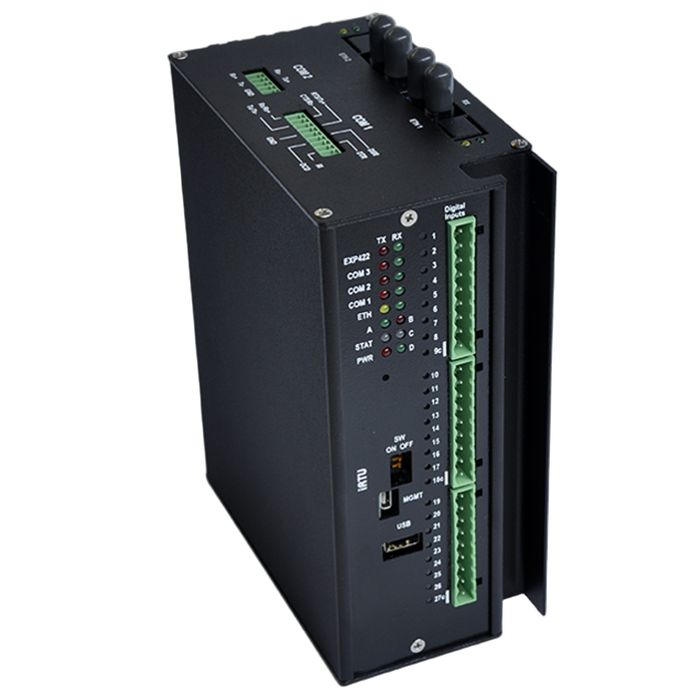
Find and buy remote terminal units from verified suppliers on IndustrySearch. A remote terminal unit is a microprocessor-based industrial control system that connects different types of hardware to other control systems such as DCS or SCADA.
Factors to consider when buying a remote terminal unit:
- Types – Choose the one best suited for the intended use.
- Small-sized RTUs – With 16 discrete and two analog alarms. Suitable for enclosed cabinets, remote huts and cell towers.
- Medium-sized RTUs – With 32 discrete and eight analog alarms and control relays. Suitable for remote switches.
- Large-sized RTUs – With 96-1,824 discrete alarms, 48-864 analog alarms and 32-576 control relays. Ideal for regional hubs and central offices.
- Technology – Should meet current and future network monitoring goals. Consider RTUs with intelligent remote monitoring, technology solutions for legacy equipment and integrated with high-end technologies.
- Durability – Should be rugged and durable to withstand conditions in remote locations.
- Customizability – Ensure perfect fit. Saves time and money without sacrificing coverage and efficiency.
- Ease of use – Consider suppliers with expert staff that offer free training and installation services.
- Other features to consider – Temperature control units, backup battery, power-increasing options, protection from the elements, alarm presentation and notification, sorting and analysis functions, device management functions.
Contact our vendors for a free quote or expert advice on remote terminal units. Delivery available Australia wide.

- Compatibility: Ensure that the RTU is compatible with the equipment and processes that you intend to monitor and control. This includes the communication protocols used by the RTU and the equipment, as well as the type of sensors and inputs that are supported.
- Connectivity: Look for an RTU that supports a variety of communication options, such as Ethernet, Wi-Fi, cellular, and serial connections. This will enable the RTU to communicate with various devices and systems in your facility.
- Reliability: Choose an RTU that is built to withstand harsh industrial environments and has a proven track record of reliability.
- Scalability: Select an RTU that can easily scale to accommodate additional equipment and processes as your facility grows or changes.
- Data logging and analysis: Look for an RTU that can collect and store data from various sensors and inputs, and has the ability to analyze and present this data in a meaningful way.
- Security: Choose an RTU that has robust security features to protect against cyber threats and unauthorized access.
- Power supply: Make sure that the RTU has a reliable power supply and backup options in case of power outages or other disruptions.
- Improved Efficiency: RTUs automate processes, reducing the need for manual intervention, which improves efficiency and reduces the risk of errors.
- Real-Time Monitoring: RTUs provide real-time monitoring of equipment and processes, allowing quick identification and resolution of issues.
- Remote Access: RTUs enable remote access to monitor and control equipment and processes, allowing operators to make decisions from anywhere.
- Cost Savings: RTUs can reduce energy consumption and maintenance costs by optimizing processes and reducing downtime.
- Scalability: RTUs are scalable and can be easily integrated with other systems, making them ideal for growing operations.
- Enhanced Safety: RTUs can be programmed to trigger alarms and shut down equipment in case of emergencies or safety incidents, reducing the risk of accidents.
- Communication protocol: The RTU should support the communication protocol used in your application. Common protocols include Modbus, DNP3, and IEC 61850.
- Input/output (I/O) points: The RTU should have enough I/O points to accommodate your application needs. Make sure to consider both the number and type of I/O points required.
- Environmental factors: Consider the environment in which the RTU will be installed. Factors such as temperature, humidity, and vibration can impact the performance of the RTU.
- Power supply: The RTU should be compatible with the power supply available at the installation site. Make sure to consider factors such as voltage, frequency, and power consumption.
- Reliability: Look for an RTU that has a proven track record of reliability in similar applications.
- Cost: Consider the cost of the RTU and any associated installation and maintenance costs when making your decision.
RTU - Remote Terminal Unit Costs and Supplier Insights
Buy a RTU - Remote Terminal Unit Near Me
RTU - Remote Terminal Unit Articles & Reviews


 Reach valuable industrial buyers in minutes
 Promote key products & content
 Drive cost effective & measurable sales