
Let us get you 3 quotes
Compare and select the best Voltage & Current Sensor
Compare Quotes

Find the right
Voltage & Current Sensor in Hobart
Voltage & Current Sensor in Hobart
Join industrial buyers comparing supplier quotes and buying with confidence. Free, quick and easy.
Compare quotes from expert Hobart Voltage & Current Sensor suppliers like:




How IndustrySearch works
Tell us what you need
Answer a few quick questions about the equipment you're looking for.
Get personalised quotes
Receive tailored quotes from relevant Australian suppliers.
Compare and choose
Compare quotes, ask questions and choose the best option for you.
Looking to buy the best Voltage & Current Sensor for sale in Hobart? Get Quotes sends your requirements to expert suppliers in Australia so you get personalised quotes to compare Voltage & Current Sensor prices, specifications, features and terms then choose the one that’s right for you. Also compare servicing, consumables and reviews, so you can buy with confidence.
 Save time
 Compare quotes
 Buy with confidence
Save time, compare quotes & buy with confidence
Voltage Sensor & Current Sensor Suppliers in Hobart
Supplier location
Brand
Evident Australia | Industrial Products
Evident Australia is an Voltage & Current Sensor supplier to All
Evident designs and manufactures a diverse range of industrial products, including nondestructive testing flaw detectors, X-ray fluorescence analyzers, and video borescopes. Evident’s industrial measurement solutions serve customers in a variety of sectors including electronics, metals, aerospace, automotive, power generation, rail, oil and gas, manufacturing, and mining. Designed ...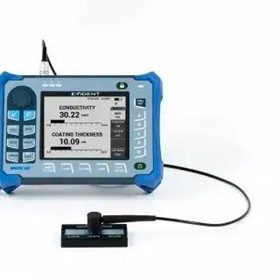
Evident Eddy Current Sensor 16-Pin | Conductivity Probes and Standard
Conductivity probes are designed for sorting nonferrous metals and determining heat treatment condition or damage.

Evident Eddy Current Sensor Stainless-steel | Bent Shaft Surface Probes
Bent shaft surface probes are general purpose stainless-steel probes used for surface or near-surface crack detection. They are available in ...

Evident Eddy Current Sensor Copper-shaft | Flexible Shaft Surface Probes
The flexible shaft of these surface probes can be shaped to perform inspections of areas that are very difficult to reach.

Evident Eddy Current Sensor Stainless-steel | Angle Shaft Surface Probe
The small coils and high frequency range of these detachable stainless-steel shaft probes make them ideal for the detection of surface breaking ...
Evident Eddy Current Sensor Stainless-steel | Straight Shaft Surface Probes
Detachable stainless steel straight shaft surface probes have a small-diameter housing and coils built for higher frequencies. They are usually ...
Evident Eddy Current Sensor Stainless-steel | Right Angle Surface Probes
The 90-degree design of Right Angle Surface probes enables inspection of areas with restricted access.
Connected IoT | CO2 sensors, Wireless, Temperature Data Loggers
Customers: Hospitals, Pharmacies, Government Departments.
Connected IoT is an Voltage & Current Sensor supplier to All
At Connected IoT we specialise in data acquisition and data logging. Our years of experience with data loggers from Eltek, Elpro, ClimaCheck and wireless M2M enable us to find the best product for your application. Our range start from single use data loggers to monitor temperature or humidity sensitive goods during manufacture, transport and storage. Simple report to PDF document ...Customers: Hospitals, Pharmacies, Government Departments.


Voltage & Current Sensor
Voltage & Current Sensor
What is a voltage and current sensor?
A voltage and current sensor is a device that measures the voltage and current levels in an electrical circuit. It is used to monitor and control the flow of electricity in various applications, such as power distribution, renewable energy systems, and industrial automation. The sensor typically consists of a sensing element, signal conditioning circuitry, and an output interface that provides a signal proportional to the measured voltage or current. It is an essential component in many electrical systems to ensure safe and efficient operation.
What are the different types of voltage and current sensors available in Australia?
There are several types of voltage and current sensors available in Australia, including:
- Current transformers (CTs): These sensors measure the current flowing through a conductor by inducing a secondary current in a coil wrapped around the conductor.
- Rogowski coils: Similar to CTs, Rogowski coils measure current by inducing a voltage in a coil wrapped around the conductor. They are often used in applications where the conductor cannot be easily accessed.
- Hall effect sensors: These sensors measure the magnetic field generated by a current-carrying conductor and convert it into a voltage signal.
- Shunt resistors: These sensors measure current by measuring the voltage drop across a known resistance in series with the conductor.
- Voltage transformers (VTs): These sensors measure the voltage of an AC power system by stepping down the voltage to a lower level that can be easily measured.
- Capacitive voltage sensors: These sensors measure the voltage of an AC power system by measuring the electric field between two conductors.
- Optical sensors: These sensors measure voltage or current by detecting changes in light intensity caused by the electric or magnetic fields generated by the conductor.
What are the applications of a voltage and current sensor?
A voltage and current sensor is a device that measures the voltage and current in an electrical circuit. It has various applications in different industries, including:
- Power monitoring: Voltage and current sensors are used to monitor the power consumption of electrical devices and systems. This helps in identifying energy wastage and optimizing energy usage.
- Industrial automation: Voltage and current sensors are used in industrial automation systems to monitor and control the performance of machines and equipment.
- Renewable energy systems: Voltage and current sensors are used in renewable energy systems, such as solar panels and wind turbines, to monitor the power output and ensure efficient energy conversion.
- Battery management: Voltage and current sensors are used in battery management systems to monitor the charging and discharging of batteries and prevent overcharging or undercharging.
- Automotive industry: Voltage and current sensors are used in the automotive industry to monitor the performance of electrical systems, such as the battery, alternator, and starter.
- Medical equipment: Voltage and current sensors are used in medical equipment, such as electrocardiograms and electroencephalograms, to measure the electrical activity of the body.
How do I choose the right voltage and current sensor for my application?
When choosing a voltage and current sensor for your application, consider the following factors:
- Voltage and current range: Choose a sensor that can measure the voltage and current range required for your application.
- Accuracy: Choose a sensor with high accuracy to ensure precise measurements.
- Resolution: Choose a sensor with high resolution to capture small changes in voltage and current.
- Response time: Choose a sensor with a fast response time to capture rapid changes in voltage and current.
- Output signal: Choose a sensor with an output signal that is compatible with your data acquisition system.
- Environmental factors: Consider the operating temperature range, humidity, and other environmental factors that may affect sensor performance.
- Cost: Choose a sensor that fits within your budget while still meeting your performance requirements.
What is the accuracy of a voltage and current sensor?
The accuracy of a voltage and current sensor depends on various factors such as the type of sensor, the quality of the components used, the calibration process, and the operating conditions. Generally, high-quality sensors can provide accuracy within 1% or less, while lower-quality sensors may have an accuracy of 5% or more. It is important to choose a sensor that meets the required accuracy for the specific application.
What is the maximum voltage and current that a sensor can measure?
The maximum voltage and current that a sensor can measure depends on the specific sensor and its specifications. It is important to refer to the sensor's datasheet or manual to determine its maximum voltage and current capabilities.
What is the output signal of a voltage and current sensor?
The output signal of a voltage and current sensor is typically an electrical signal that is proportional to the voltage or current being measured. This signal can be in the form of a voltage or current output, and may be analog or digital. The output signal can be used to monitor and control electrical systems, and can be processed by other electronic devices for further analysis or control.
Can I use a voltage and current sensor with different types of electrical systems?
Yes, voltage and current sensors can be used with different types of electrical systems as long as they are compatible with the voltage and current levels of the system. However, it is important to ensure that the sensors are calibrated and configured correctly for the specific system being monitored.
How do I install and calibrate a voltage and current sensor?
To install and calibrate a voltage and current sensor, follow these steps:
- Choose the appropriate sensor for your application and ensure it is compatible with your measuring device.
- Connect the sensor to the measuring device according to the manufacturer's instructions.
- Verify that the sensor is receiving power and that the output signal is being transmitted to the measuring device.
- Calibrate the sensor by applying a known voltage or current to the input and comparing the output reading to the expected value. Adjust the calibration settings as necessary.
- Test the sensor by measuring the voltage or current in your application and comparing it to the readings obtained with the sensor.
- Make any necessary adjustments to the sensor or measuring device to ensure accurate readings.
What is the price range of a voltage and current sensor in Australia?
However, the price range of a voltage and current sensor in Australia may vary depending on the brand, type, and features. Generally, the price range can be anywhere from $10 to $500 or more. It is recommended to check with local electronics stores or online retailers for current pricing information.
Get 3+ Quotes Now - Compare prices, availability and quality. It’s free, quick and secure.
Back to top
Voltage & Current Sensor Costs and Supplier Insights
The listed price of a Voltage & Current Sensor for sale ranges from $50 to $300, averaging $175.
If you are looking to buy a Voltage & Current Sensor for sale, suppliers on IndustrySearch include Evident Australia, Connected IoT
Use Get Quotes to receive personalised prices and proposals from trusted suppliers with top reviews and excellent service.
Buy a Voltage & Current Sensor Near Me
Save time and delivery costs while getting fast support, by contacting Voltage & Current Sensor suppliers near you.
Voltage & Current Sensor for sale in Sydney
Voltage & Current Sensor for sale in Melbourne
Voltage & Current Sensor for sale in Perth
Voltage & Current Sensor for sale in Hobart
Voltage & Current Sensor for sale in Brisbane
Voltage & Current Sensor for sale in Adelaide
Voltage & Current Sensor for sale in Darwin
Voltage & Current Sensor for sale in Melbourne
Voltage & Current Sensor for sale in Perth
Voltage & Current Sensor for sale in Hobart
Voltage & Current Sensor for sale in Brisbane
Voltage & Current Sensor for sale in Adelaide
Voltage & Current Sensor for sale in Darwin

Are you a Voltage & Current Sensor supplier?
 Reach valuable industrial buyers in minutes
 Promote key products & content
 Drive cost effective & measurable sales
learn more
Reach valuable industrial buyers in minutes
Promote key products & content
Drive cost effective & measurable sales