
Arc Welder

Join industrial buyers comparing supplier quotes and buying with confidence. Free, quick and easy.




How IndustrySearch works
Tell us what you need
Answer a few quick questions about the equipment you're looking for.
Get personalised quotes
Receive tailored quotes from relevant Australian suppliers.
Compare and choose
Compare quotes, ask questions and choose the best option for you.
 Save time
 Compare quotes
 Buy with confidence
Save time, compare quotes & buy with confidence
Arc Welder & Stick Welder Suppliers
Any business with welding among their core processes should consider adding arc welding to their metal-joining repertoire if they haven’t already done so.
Arc welding, also known as shield metal arc welding, manual metal arc welding and stick welding uses a fusion welding process whereby an electric arc melts and joins metals. This electric arc keeps a molten metal pool agitated and the metal that is being welded is thoroughly mixed with melted electrode metal, after that the metal pool cools down under a protective cover of slag left by the electrode. After cooling, a strong join is formed between the two metal pieces.
An arc welder can be used for erecting steel constructions, building pipelines, repairing heavy machinery and a host of equally heavy-duty processes requiring an unbreakable connection between metals. Arc welding is used in various industries including construction, automotive, shipbuilding and mechanical industries.

ATOM is a leading industrial hardware and safety equipment supplier with over 40 years experience providing expert knowledge and assistance to the Mining & Civil, Oil & Gas, Government, Electrical, Maintenance Repair & Operations, Commercial, Construction, Infrastructure and Engineering industries. At ATOM we aim to provide our customers with a complete range of facilities ...


STAFFORD WELDING PRODUCTS & TOOLS is a family owned and operated business that has been servicing regional Queensland for over 25 years. Stafford Welding Products and Tools was established in 1986. This business operates within the vast regions of Queensland and Northern New South Wales, servicing customers as far north as Townsville and west as Bourke.


A & A Industrial Supplies was established back in 1986. We initially started out in a small factory in London Drive, Bayswater, focusing on fasteners and a small range of engineering supplies. Since this time, as our business grew, we expanded into a larger factory just next door. We increased our range to include a complete offering of engineering supplies from welding equipment, ...


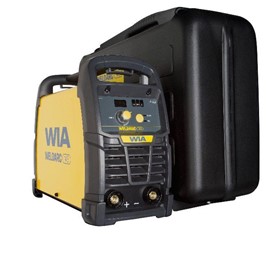
WIA is part of the global organisation ITW (Illinois Tool Works), a diversified manufacturing company driven by innovative thinking, customer needs and specialised expertise. Around the globe, ITW companies work side by side with customers to deliver products that contribute to delivering solutions and creating success. With a history spanning more than 100 years, ITW has ...

South Pacific Welding Group Pty Ltd was formed in early 2003 bringing together a number of Welding Supply warehouses that have a combined service history of over 60 years. We specialise in Welding which includes equipment, consumables, service, used trading and hire. The group includes Western Welding Services, Townsville Welding Supplies, Independent Welding Supplies, ...


Totalweld is a family owned and operated Territory business that strives to provide welding supplies to the Territory community. Whether you’re looking for that specific handy tool or needing expert advice, equipment or assistance with your welding projects at an affordable price, Totalweld have the lot! For more than 15 years Totalweld has been one of the leading Territory ...

Arc Welder Buying Guide
Find and buy arc welding (stick or arc welding) machines from verified suppliers on IndustrySearch. An arc welding machine welds metals by forming an electric arc between a consumable flux-coated metal electrode and the workpiece metals.
Things to consider when buying an arc welding machine:
- Choose AC, DC (inverter) or combined output - AC type stick welding machines are simple, less portable and cost less than inverter type arc welders. DC inverter type arc welders are very lightweight and portable, offer more options and typically cost more than their AC counterparts. Common nowadays are arc welding machines that offer both AC and DC combined output.
- Consider a multi-use machine - Inverter type arc welding machines offer multiple capabilities along with stick welding, such as TIG welding and plasma cutting options, significantly expanding the machine’s field of application.
Contact our vendors for a free quote or expert advice on arc welding machines. Delivery available Australia wide.

- MIG Welder: This type of welder is suitable for welding thin metal sheets and is ideal for automotive and home repair projects. MIG welders are more expensive than stick welders but offer better control and precision.
- TIG Welder: This type of welder is suitable for welding thin and delicate metals and is ideal for precision welding. TIG welders are the most expensive, but they offer the highest level of precision and control.
- AC arc welders are generally less expensive than DC arc welders and are better suited for welding thicker materials. They are also better for welding materials that have a higher resistance to electricity, such as aluminum.
- DC arc welders, on the other hand, are more versatile and can be used for a wider range of welding applications. They are better suited for welding thinner materials and are more efficient than AC arc welders. They also provide better control over the welding process and produce cleaner welds with less spatter.
- Welding helmet: A welding helmet is essential to protect your eyes and face from the intense light and heat generated by the welding arc. The helmet should have a shade level suitable for the type of welding you are doing.
- Welding gloves: Welding gloves are made of thick leather or other heat-resistant material to protect your hands from burns and sparks.
- Welding apron: A welding apron provides additional protection for your body from sparks and hot metal.
- Welding boots: Welding boots are designed to protect your feet and ankles from burns and other hazards.
- Respirator: A respirator is necessary to protect your lungs from fumes and chemicals generated by the welding process.
- Earplugs: Earplugs are recommended to protect your ears from the loud noise produced by the welding process.
- Fire extinguisher: A fire extinguisher should be kept nearby in case of an accidental fire.
- Amperage range: The amperage range of an arc welder determines the thickness of metal it can weld. Look for an arc welder with a wide amperage range to ensure it can handle a variety of welding tasks.
- Duty cycle: The duty cycle of an arc welder is the amount of time it can weld continuously before it needs to cool down. Look for an arc welder with a high duty cycle to ensure it can handle long welding sessions.
- Power source: Arc welders are available in both AC and DC power sources. DC-powered arc welders are more versatile and can weld a wider range of metals.
- Portability: If you need to move your arc welder around, look for one that is lightweight and easy to transport.
- Safety features: Look for an arc welder with safety features like overload protection and thermal overload protection to prevent damage to the tool and ensure safe operation.
- Keep the welder dry and clean: Moisture and dirt can damage the welder's electrical components. After use, wipe down the welder with a dry cloth and store it in a dry place.
- Inspect the cables and connectors: Check the cables and connectors for signs of wear and tear, such as frayed insulation or loose connections. Replace any damaged components.
- Check the grounding: Proper grounding is essential for safe and effective welding. Make sure the ground clamp is securely attached to the workpiece and that the ground cable is in good condition.
- Clean the electrode holder: The electrode holder can become dirty or coated with metal deposits, which can interfere with the welding process. Use a wire brush or sandpaper to clean the electrode holder regularly.
- Replace consumables: The electrodes and nozzles in your welder will wear out over time and need to be replaced. Check the manufacturer's recommendations for when to replace these items.
- Regular maintenance: Regular maintenance, such as checking and replacing filters, lubricating moving parts, and checking the cooling system, can help your welder last longer and perform better.
Arc Welder Costs and Supplier Insights
Buy a Arc Welder Near Me

 Reach valuable industrial buyers in minutes
 Promote key products & content
 Drive cost effective & measurable sales