
Let us get you 3 quotes
Compare and select the best Air Quality Monitor
Compare Quotes

Find the right
Air Quality Monitor in Hobart
Air Quality Monitor in Hobart
Join industrial buyers comparing supplier quotes and buying with confidence. Free, quick and easy.

Compare quotes from expert Hobart Air Quality Monitor suppliers like:



How IndustrySearch works
Tell us what you need
Answer a few quick questions about the equipment you're looking for.
Get personalised quotes
Receive tailored quotes from relevant Australian suppliers.
Compare and choose
Compare quotes, ask questions and choose the best option for you.
Looking to buy the best Air Quality Monitor for sale in Hobart? Get Quotes sends your requirements to expert suppliers in Australia so you get personalised quotes to compare Air Quality Monitor prices, specifications, features and terms then choose the one that’s right for you. Also compare servicing, consumables and reviews, so you can buy with confidence.
 Save time
 Compare quotes
 Buy with confidence
Save time, compare quotes & buy with confidence
Air Quality Monitor Suppliers in Hobart
Supplier location
Brand
ESIS | Industrial Electronic Equipment
Customers: NBN Co, ASC, Saab, Wormald, Datacom, Powerlink, Source Energy, Dept of Defence, L&H, MMEM
ESIS is an Air Quality Monitor supplier to All
Esis is an expert industrial electronic equipment supplier, based in Sydney, Australia since 1971. Need to spec or purchase industrial technology? Our engineers give you expert advice to find the best solution for your requirements. We have a deep knowledge across a huge range of products well and we're familiar with diverse industry applications. After purchase you can ...Customers: NBN Co, ASC, Saab, Wormald, Datacom, Powerlink, Source Energy, Dept of Defence, L&H, MMEM

Connected IoT | CO2 sensors, Wireless, Temperature Data Loggers
Customers: Hospitals, Pharmacies, Government Departments.
Connected IoT is an Air Quality Monitor supplier to All
At Connected IoT we specialise in data acquisition and data logging. Our years of experience with data loggers from Eltek, Elpro, ClimaCheck and wireless M2M enable us to find the best product for your application. Our range start from single use data loggers to monitor temperature or humidity sensitive goods during manufacture, transport and storage. Simple report to PDF document ...Customers: Hospitals, Pharmacies, Government Departments.
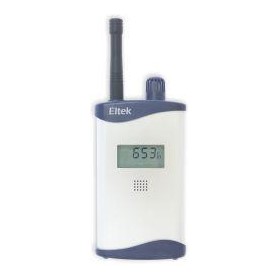
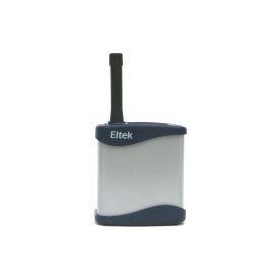

Pacific Data Systems Australia | Environmental Monitoring And Data Acquisition
Pacific Data Systems Australia is an Air Quality Monitor supplier to All
Since 1984, Pacific Data Systems Australia has been providing the tools to help our customers gather the critical information needed to make faster and smarter choices. Today that same focus continues but our range of products and services has expanded dramatically to include environmental monitoring solutions, data loggers and telemetry, rugged computers, breath alcohol and drug ...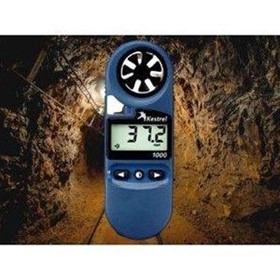

I-team Australia | Cleaning Equipment
I-team Australia is an Air Quality Monitor supplier to All
Our genuine desire to improve the commercial cleaning industry and change the entire cleaning process means that we don't just improve our models gradually. Instead, we sometimes prefer to start thinking in a completely different way. We try and challenge well-established norms to deliver revolutionary value for our users. All i-products should be faster, cleaner, safer, ...

Testrix | Inspection Systems
Testrix is an Air Quality Monitor supplier to All
Testrix Systems manufacture a range of sewer and drain pipe inspection camera systems to suit various applications. Along with these inspection systems, we have our precision digital underground cable and pipe locator, the U-Loc, the innovative Aqua-Loc water leak detection kit and a range of thermal imaging cameras offering excellent resolutions at a price point 40% below similar ...

Air Quality Monitor
Air Quality Monitor
What is an air quality monitor?
An air quality monitor is a device that measures the level of pollutants and other harmful particles in the air. It helps to keep a check on the air quality in a particular area, such as a home or office, and provides information on the levels of pollutants present in the air. Air quality monitors can measure a range of pollutants, including carbon monoxide, nitrogen dioxide, ozone, particulate matter, and volatile organic compounds. The data collected by these devices can be used to inform individuals about the air quality in their environment and help them take steps to improve it.
Why do I need an air quality monitor?
An air quality monitor is a device used to measure the level of pollutants and other harmful substances in the air. It is essential for monitoring indoor and outdoor air quality to ensure that the air we breathe is safe and healthy. The reasons why you need an air quality monitor include:
- Health concerns: Poor air quality can cause respiratory problems, allergies, and other health issues. An air quality monitor can help you identify the pollutants in the air and take necessary measures to reduce exposure.
- Environmental concerns: Air pollution has a significant impact on the environment, and an air quality monitor can help you identify the sources of pollution and reduce their impact.
- Building safety: Indoor air quality can affect the health and productivity of occupants, and an air quality monitor can help you maintain a safe and healthy environment.
- Compliance: Some industries are required to monitor air quality to comply with regulatory standards.
What pollutants does an air quality monitor measure?
An air quality monitor can measure various pollutants, including particulate matter (PM), nitrogen dioxide (NO2), sulfur dioxide (SO2), ozone (O3), carbon monoxide (CO), and volatile organic compounds (VOCs). Some advanced air quality monitors can also measure other pollutants such as formaldehyde and radon. The data collected by these monitors can be used to determine the overall air quality in a specific location and help identify potential health risks associated with exposure to various pollutants.
What is the accuracy of an air quality monitor?
The accuracy of an air quality monitor depends on several factors such as the type of sensor used, calibration, and the environment being monitored. Some air quality monitors may have a higher accuracy rating than others, but it is important to note that no air quality monitor can provide 100% accurate results. It is always recommended to check the specifications and reviews of the air quality monitor before purchasing it.
How do I interpret the readings from an air quality monitor?
An air quality monitor measures various pollutants in the air, such as particulate matter, ozone, carbon monoxide, and nitrogen dioxide. To interpret the readings from an air quality monitor, it is important to understand what each pollutant represents and what the recommended exposure levels are.
- Particulate matter (PM) is a complex mixture of microscopic particles that can be harmful to human health. PM5 refers to particles that are smaller than 5 microns in diameter, while PM10 refers to particles that are smaller than 10 microns in diameter. The recommended exposure levels for PM5 and PM10 are 12 and 50 micrograms per cubic meter, respectively.
- Ozone (O3) is a gas that is formed by the reaction of sunlight with pollutants such as nitrogen oxides and volatile organic compounds. High levels of ozone can cause respiratory problems and aggravate existing lung conditions. The recommended exposure level for ozone is 70 parts per billion.
- Carbon monoxide (CO) is a colorless, odorless gas that is produced by the incomplete combustion of fossil fuels. High levels of carbon monoxide can be deadly. The recommended exposure level for carbon monoxide is 9 parts per million.
- Nitrogen dioxide (NO2) is a gas that is produced by the burning of fossil fuels. High levels of nitrogen dioxide can cause respiratory problems and aggravate existing lung conditions. The recommended exposure level for nitrogen dioxide is 53 parts per billion.
What features should I look for in an air quality monitor?
An air quality monitor should have the following features:
- Accuracy: The monitor should have a high level of accuracy in measuring pollutants in the air.
- Range: The monitor should be able to measure a wide range of pollutants, including particulate matter, VOCs, and other harmful gases.
- Display: The monitor should have a clear and easy-to-read display that shows the current air quality level and the pollutant levels.
- Alerts: The monitor should have an alert system that notifies you when the air quality falls below a certain level.
- Connectivity: The monitor should have the ability to connect to a smartphone app or other devices for real-time monitoring and data analysis.
- Battery life: The monitor should have a long battery life so it can be used for extended periods of time.
- Portability: The monitor should be portable and easy to carry around so you can monitor air quality in different locations.
How do I maintain and calibrate an air quality monitor?
Read the manufacturer's instructions carefully to know how to maintain and calibrate your specific air quality monitor model.
- Clean the sensors regularly. Dust and dirt can accumulate on the sensors and affect the accuracy of the readings. Use a soft cloth or a brush to clean the sensors gently.
- Calibrate the monitor regularly. Calibration ensures that the readings are accurate and reliable. Follow the instructions provided by the manufacturer to calibrate the monitor properly.
- Replace the sensors if they are damaged or worn out. Check the manufacturer's instructions to know when to replace the sensors.
- Keep the monitor away from sources of heat, moisture, and direct sunlight. Extreme temperatures and humidity can affect the accuracy of the readings.
- Store the monitor in a safe and dry place when not in use.
- Use the monitor according to the manufacturer's instructions. Avoid exposing the monitor to harsh chemicals or gases that can damage the sensors.
Can an air quality monitor be used for outdoor air quality monitoring?
An air quality monitor can be used for outdoor air quality monitoring, but it is important to select a monitor that is specifically designed for outdoor use. Indoor air quality monitors are not designed to withstand outdoor environmental conditions such as temperature fluctuations, moisture, and exposure to direct sunlight. Outdoor air quality monitors, on the other hand, are designed to be more durable and weather-resistant. They can measure a range of pollutants such as particulate matter, ozone, and nitrogen dioxide, which are commonly found in outdoor air.
How much does an air quality monitor cost?
Air quality monitors can range in cost depending on their features and capabilities. Basic models can cost as little as $50, while more advanced models with multiple sensors and WIFI connectivity can cost upwards of $500. The cost also varies depending on the type of pollutants the monitor is designed to detect, such as particulate matter, VOCs, or CO It is important to consider the accuracy and reliability of a monitor before purchasing, as well as any ongoing costs for calibration or replacement parts.
Get 3+ Quotes Now - Compare prices, availability and quality. It’s free, quick and secure.
Back to top
Air Quality Monitor Costs and Supplier Insights
The listed price of an Air Quality Monitor for sale ranges from $100 to $1,500, averaging $800.
If you are looking to buy an Air Quality Monitor for sale, suppliers on IndustrySearch include ESIS, Connected IoT
Use Get Quotes to receive personalised prices and proposals from trusted suppliers with top reviews and excellent service.
Buy a Air Quality Monitor Near Me
Save time and delivery costs while getting fast support, by contacting Air Quality Monitor suppliers near you.

Are you an Air Quality Monitor supplier?
 Reach valuable industrial buyers in minutes
 Promote key products & content
 Drive cost effective & measurable sales
learn more
Reach valuable industrial buyers in minutes
Promote key products & content
Drive cost effective & measurable sales