
Draw Wire Sensor in Melbourne

Join industrial buyers comparing supplier quotes and buying with confidence. Free, quick and easy.
How IndustrySearch works
Tell us what you need
Answer a few quick questions about the equipment you're looking for.
Get personalised quotes
Receive tailored quotes from relevant Australian suppliers.
Compare and choose
Compare quotes, ask questions and choose the best option for you.
 Save time
 Compare quotes
 Buy with confidence
Save time, compare quotes & buy with confidence
Draw Wire Sensor Suppliers in Melbourne

Zone Safety Systems is an Draw Wire Sensor supplier to Melbourne
Zone Safety Systems has been developing and producing safety guarding systems for over 10 years and enjoys a reputation as an innovation leader in safety technology for factory automation. Our Safety Systems have been used in a widely diverse number of applications over the years. Our technical consultants work with you to develop the most effective and efficient solutions – ...

Bestech Australia is an Draw Wire Sensor supplier to Melbourne
Bestech Australia is a dynamic and customer-focused leader in technical training, test & measurement, and control & automation solutions. We bridge global technology with local expertise, offering a comprehensive range of high-quality equipment across multiple industries. Our product portfolio includes: • Technical teaching and training equipment for trade education and ...
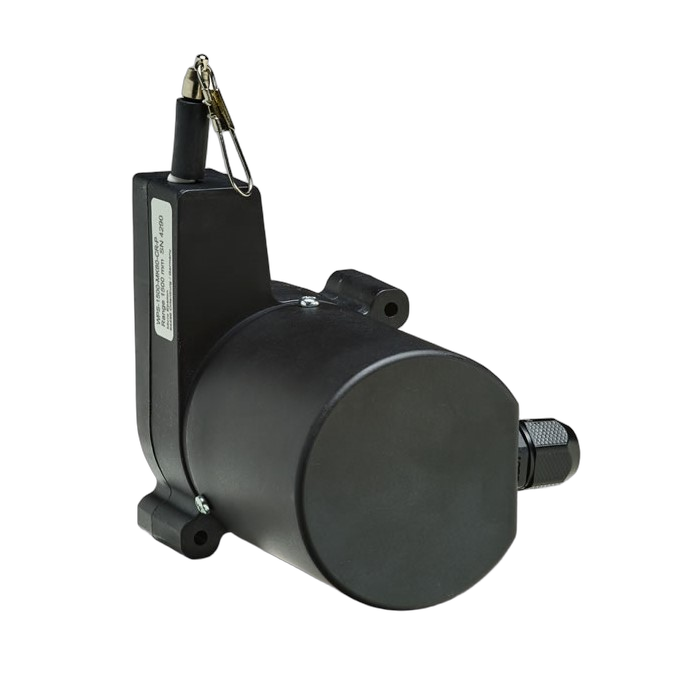
Micro-Epsilon Low Cost Long Range Draw wire sensor

Draw wire sensors - Sold by Bestech Australia

- Analog draw wire sensors: These sensors provide an analog output signal proportional to the linear displacement or position of the object being measured. They are commonly used in industrial applications and can measure distances up to several meters.
- Digital draw wire sensors: These sensors provide a digital output signal and are often used in applications where high accuracy and resolution are required. They can measure distances up to several hundred millimeters.
- High-temperature draw wire sensors: These sensors are designed to operate in high-temperature environments, up to 200°C. They are commonly used in industrial applications where high-temperature measurement is required.
- Miniature draw wire sensors: These sensors are small in size and can measure linear displacement or position in tight spaces. They are commonly used in robotics and automation applications.
- Wireless draw wire sensors: These sensors transmit measurement data wirelessly to a receiver, eliminating the need for cables. They are commonly used in applications where cables are inconvenient or impractical.
- Measurement Range: The measurement range of the sensor should be appropriate for the application. It is important to choose a sensor that can accurately measure the full range of motion required.
- Accuracy: The accuracy of the sensor is crucial for achieving precise measurements. The accuracy of the sensor should be within the required tolerance for the application.
- Linearity: The linearity of the sensor is important for ensuring that the output signal is proportional to the input displacement. A non-linear sensor can result in inaccurate or inconsistent measurements.
- Resolution: The resolution of the sensor determines the smallest change in displacement that can be detected. A higher resolution sensor can provide more precise measurements.
- Durability: The sensor should be able to withstand the environmental conditions and mechanical stresses of the application. Factors such as temperature, humidity, and vibration should be considered.
- Output Signal: The output signal of the sensor should be compatible with the data acquisition system used in the application. Common output signals include voltage, current, and digital signals.
- Installation: The installation of the sensor should be easy and straightforward. It is important to consider factors such as mounting options, cable length, and connector types.
- Industrial automation: Draw wire sensors are used in automated machinery to measure the position of moving parts or the level of fluid in tanks.
- Automotive testing: Draw wire sensors are used to measure the displacement of suspension systems, steering systems, and other components in vehicles during testing.
- Aerospace: Draw wire sensors are used in aerospace applications to measure the movement of control surfaces, landing gear, and other components.
- Medical devices: Draw wire sensors are used in medical devices to measure the movement of surgical tools, prosthetic limbs, and other devices.
- Robotics: Draw wire sensors are used in robotics to measure the movement of robotic arms, grippers, and other components.
- Construction: Draw-wire sensors are used to measure the movement of concrete forms, bridge decks, and other structures during construction.
- The output options for a draw wire sensor depend on the type of sensor and the application requirements. Some common output options include:
- Analog voltage output: The sensor produces a voltage signal proportional to the displacement, typically in the range of 0-10V or 4-20mA. This output is suitable for applications that require a continuous and accurate measurement of the position.
- Digital output: The sensor produces a digital signal, such as pulse or frequency, that represents the position. This output is suitable for applications that require a simple and low-cost measurement.
- Serial output: The sensor produces a serial data stream, such as RS-232 or RS-485, that can be used to communicate with a computer or other device. This output is suitable for applications that require remote monitoring or control.
- Wireless output: The sensor produces a wireless signal, such as Bluetooth or Wi-Fi, that can be transmitted to a remote device. This output is suitable for applications that require mobility or remote monitoring.
- Custom output: The sensor can be customized to produce a specific output, such as a specific voltage range or frequency. This option is suitable for applications that have unique requirements.
- Determine the installation location: The first step is to determine the location where the draw wire sensor will be installed. The sensor should be mounted in a location where it can easily measure the distance or displacement of the object being measured.
- Mount the sensor: Once the location is determined, the sensor can be mounted using screws or bolts. The sensor should be mounted securely to prevent any movement during operation.
- Connect the sensor to the system: The draw wire sensor should be connected to the system being monitored. This can be done using cables or wires that are compatible with the sensor.
- Attach the wire: The wire should be attached to the object being measured. This can be done using a clamp or other attachment method. The wire should be securely attached to prevent any movement during operation.
- Calibrate the sensor: The draw wire sensor should be calibrated to ensure accurate measurements. This can be done using calibration software or by manually adjusting the settings on the sensor.
- The maintenance required for a draw wire sensor depends on the specific model and manufacturer's recommendations. However, some general tips for maintaining the sensor include:
- Keep the wire or cable clean and free from debris or contaminants that could affect its accuracy.
- Regularly inspect the wire or cable for signs of wear or damage, such as fraying or kinks. Replace the wire or cable if necessary.
- Check the mounting and alignment of the sensor to ensure that it is properly installed and functioning correctly.
- Calibrate the sensor periodically to ensure that it is providing accurate measurements.
- The cost of a draw wire sensor is influenced by different factors such as the measurement range, accuracy, resolution, and features. Some sensors are designed for specific applications such as industrial automation, robotics, and automotive testing, among others. Therefore, the cost may vary depending on the intended use.
- Regarding warranty and support, most manufacturers offer warranties and support for their products. The warranty period may vary depending on the manufacturer, but it typically ranges from one to three years. Some manufacturers offer extended warranties or maintenance contracts for an additional fee.
Draw Wire Sensor Costs and Supplier Insights
Why choose a supplier in Melbourne for Draw Wire Sensor Quotes?
If you are in Melbourne and considering purchasing a Draw Wire Sensor, it's worth considering Melbourne-based suppliers. Doing so offers several benefits that are particularly relevant to businesses in the area. Here are the top reasons why opting for a local Melbourne supplier can be the best decision for your Draw Wire Sensor buying needs.
Streamlined ComplianceStreamline your compliance efforts by purchasing Draw Wire Sensor from Melbourne. Local suppliers understand local legal landscapes, making compliance straightforward.
Relationships with Melbourne Draw Wire Sensor SuppliersBuild strong business relationships with Draw Wire Sensor suppliers. Local interactions promote trust and collaborative opportunities.
Reducing Lead TimesReduce lead times significantly by sourcing your Draw Wire Sensor from Melbourne, increasing your operational efficiency and responsiveness.
Access the Local Draw Wire Sensor InnovationsAccess the latest Draw Wire Sensor innovations quickly by partnering with suppliers. Access the latest technologies faster with your local supplier.
Better Operations with Training ProgramsEnhance your operations with specialised Draw Wire Sensor training programs offered by Melbourne suppliers. Educate your staff on the latest techniques and safety protocols.
Building a Resilient Economy with Draw Wire Sensor PurchasesContribute to building a resilient economy by sourcing locally. Enhance economic stability and community well-being.
Buy a Draw Wire Sensor Near Me

 Reach valuable industrial buyers in minutes
 Promote key products & content
 Drive cost effective & measurable sales