
Let us get you 3 quotes
Compare and select the best Laser Sensor
Compare Quotes

Find the right
Laser Sensor in Hobart
Laser Sensor in Hobart
Join industrial buyers comparing supplier quotes and buying with confidence. Free, quick and easy.

Compare quotes from expert Hobart Laser Sensor suppliers like:




How IndustrySearch works
Tell us what you need
Answer a few quick questions about the equipment you're looking for.
Get personalised quotes
Receive tailored quotes from relevant Australian suppliers.
Compare and choose
Compare quotes, ask questions and choose the best option for you.
Looking to buy the best Laser Sensor for sale in Hobart? Get Quotes sends your requirements to expert suppliers in Australia so you get personalised quotes to compare Laser Sensor prices, specifications, features and terms then choose the one that’s right for you. Also compare servicing, consumables and reviews, so you can buy with confidence.
 Save time
 Compare quotes
 Buy with confidence
Save time, compare quotes & buy with confidence
Laser Sensor | Level, Distance & Position Suppliers in Hobart
Supplier location

Omron Automation & Robotics | Sensing Solutions & Industrial Automation
Omron Automation & Robotics is an Laser Sensor supplier to All
At Omron, we deal with our customers on the basis of a trusting relationship. As a world leader in automation control we have a broad capacity to provide systems and solutions using a diverse range of products and components. The Oceania region covers a vast distance incorporating Australia, New Zealand, Papua New Guinea and the islands of the South Pacific. From micro-relays ...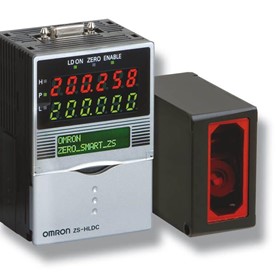

Laser Sensor
Laser Sensor
What is a laser sensor, and how does it work?
A laser sensor is a device that uses a laser beam to detect and measure objects or distances. It works by emitting a laser beam and then measuring the time it takes for the beam to reflect back to the sensor. The sensor calculates the distance based on the time it takes for the beam to return. Laser sensors are used in a variety of applications, including manufacturing, robotics, and security systems. They are known for their accuracy and reliability, making them a popular choice for many industries.
What are the different types of laser sensors available in the market?
There are several types of laser sensors available in the market, including:
- Time-of-flight (TOF) sensors: These sensors measure the time it takes for a laser pulse to travel to an object and back to the sensor, allowing for distance measurement.
- Triangulation sensors: These sensors use a laser beam to create a triangle between the sensor, the object, and a reference point, allowing for distance measurement.
- Doppler sensors: These sensors use laser light to measure the velocity of an object by measuring the frequency shift of the reflected light.
- Confocal sensors: These sensors use a laser beam to create a small focal point on an object, allowing for precise distance measurement and surface profiling.
- Interferometric sensors: These sensors use laser light to measure changes in the distance between two surfaces, allowing for precise measurement of small changes in position or vibration.
What are the applications of laser sensors in various industries?
Laser sensors have a wide range of applications in various industries, including:
- Manufacturing: Laser sensors are used for precision measurement, quality control, and inspection in manufacturing processes. They can measure dimensions, detect defects, and monitor the position and movement of objects.
- Automotive: Laser sensors are used in automotive manufacturing for quality control, inspection, and assembly. They can detect defects in parts, measure distances, and monitor the position and movement of objects.
- Aerospace: Laser sensors are used in aerospace manufacturing for precision measurement, quality control, and inspection. They can measure dimensions, detect defects, and monitor the position and movement of objects.
- Robotics: Laser sensors are used in robotics for navigation, obstacle detection, and object recognition. They can help robots navigate through complex environments and avoid obstacles.
- Medical: Laser sensors are used in medical applications for precision measurement, imaging, and diagnosis. They can be used in imaging systems, surgical instruments, and diagnostic tools.
- Agriculture: Laser sensors are used in agriculture for precision farming, crop monitoring, and yield optimization. They can measure soil moisture, plant growth, and crop health.
What are the key factors to consider while selecting a laser sensor for my application?
When selecting a laser sensor for your application, there are several key factors to consider:
- Range: The measurement range of the laser sensor should be appropriate for the distance you need to measure.
- Accuracy: The accuracy of the laser sensor should be sufficient for your application. This will depend on the precision required for your measurements.
- Resolution: The resolution of the laser sensor should be high enough to provide the level of detail required for your application.
- Speed: The speed of the laser sensor should be appropriate for the speed of the object you are measuring.
- Environment: The laser sensor should be able to operate in the environment where it will be used. This includes factors such as temperature, humidity, and ambient light.
- Output: The output of the laser sensor should be compatible with the data acquisition system you are using.
- Cost: The cost of the laser sensor should be within your budget.
What is the range and accuracy of laser sensors, and how do they vary between different models?
Laser sensors have a wide range and high accuracy, with some models capable of detecting objects up to several hundred meters away with sub-millimeter precision. The range and accuracy of laser sensors can vary depending on the type of laser used, the wavelength of the laser, the power output, and the design of the sensor. Some laser sensors are designed for short-range applications, such as obstacle detection in autonomous vehicles or proximity sensing in industrial automation, while others are designed for long-range applications, such as lidar systems used in mapping and surveying. The accuracy of laser sensors can also be affected by environmental factors such as temperature, humidity, and atmospheric conditions. Overall, the range and accuracy of laser sensors can vary widely depending on the specific model and application.
What are the environmental conditions that can affect the performance of laser sensors?
The environmental conditions that can affect the performance of laser sensors include temperature, humidity, dust, smoke, and other airborne particles. High temperatures can cause thermal drift and affect the accuracy of the sensor, while high humidity can cause condensation on the sensor's optics and reduce its range. Dust, smoke, and other airborne particles can scatter the laser beam and reduce its intensity, leading to inaccurate readings. Additionally, vibrations and electromagnetic interference can also affect the performance of laser sensors.
How do I install and calibrate a laser sensor for my specific application?
To install and calibrate a laser sensor for a specific application, follow these steps:
- Choose the right type of laser sensor for your application, based on the measurement range, accuracy, and other requirements.
- Install the laser sensor in the correct position and orientation, ensuring that it is securely mounted and aligned with the target.
- Connect the laser sensor to a power source and any necessary signal conditioning or data acquisition equipment.
- Set up the laser sensor according to the manufacturer's instructions, including any configuration settings or calibration procedures.
- Calibrate the laser sensor using a known reference object or standard, adjusting the sensor's output to match the expected values.
- Test the laser sensor in your specific application, making any necessary adjustments to the installation, calibration, or settings.
What are the maintenance requirements for laser sensors, and how often do they need to be serviced?
Laser sensors require regular maintenance to ensure their accuracy and longevity. The maintenance requirements vary depending on the type of sensor and its application. However, some general maintenance requirements include:
- Cleaning: Laser sensors must be kept clean to ensure accurate readings. Dust, dirt, and other contaminants can interfere with the laser beam and cause errors. The sensor should be cleaned regularly using a soft, lint-free cloth.
- Calibration: Laser sensors must be calibrated periodically to ensure accurate readings. The frequency of calibration depends on the application and the manufacturer's recommendations.
- Inspection: Laser sensors should be inspected regularly for signs of wear and damage. Any damaged or worn parts should be replaced immediately.
- Power supply: Laser sensors require a stable power supply to operate correctly. The power supply should be checked regularly to ensure it is functioning correctly.
What is the warranty and support offered by the manufacturer for their laser sensors?
It is best to check the manufacturer's website or contact their customer support for more information.
What is the cost of a laser sensor, and how does it compare to other types of sensors in the market?
However, the cost of a laser sensor can vary depending on the type and application. Generally, laser sensors are more expensive than other types of sensors such as ultrasonic or infrared sensors. However, they offer higher accuracy and precision, making them ideal for certain applications such as distance measurement and object detection. The cost of a sensor also depends on the brand, quality, and features.
Get 3+ Quotes Now - Compare prices, availability and quality. It’s free, quick and secure.
Back to top
Laser Sensor Costs and Supplier Insights
The listed price of a Laser Sensor for sale ranges from $100 to $5,000, averaging $2,550.
Use Get Quotes to receive personalised prices and proposals from trusted suppliers with top reviews and excellent service.
Buy a Laser Sensor Near Me
Save time and delivery costs while getting fast support, by contacting Laser Sensor suppliers near you.

Are you a Laser Sensor supplier?
 Reach valuable industrial buyers in minutes
 Promote key products & content
 Drive cost effective & measurable sales
learn more
Reach valuable industrial buyers in minutes
Promote key products & content
Drive cost effective & measurable sales