
Let us get you 3 quotes
Compare and select the best Machine Vision Camera
Compare Quotes

Find the right
Machine Vision Camera
Machine Vision Camera
Join industrial buyers comparing supplier quotes and buying with confidence. Free, quick and easy.
Get quotes from top Australian suppliers


How IndustrySearch works
Tell us what you need
Answer a few quick questions about the equipment you're looking for.
Get personalised quotes
Receive tailored quotes from relevant Australian suppliers.
Compare and choose
Compare quotes, ask questions and choose the best option for you.
Looking to buy the best Machine Vision Camera for sale? Get Quotes sends your requirements to expert suppliers in Australia so you get personalised quotes to compare Machine Vision Camera prices, specifications, features and terms then choose the one that’s right for you. Also compare servicing, consumables and reviews, so you can buy with confidence.
 Save time
 Compare quotes
 Buy with confidence
Save time, compare quotes & buy with confidence
Machine Vision Camera Suppliers
Updated Feb 27, 2026
Supplier Location
Brand
Filter by brand:
PCO Tech (3)
KPM (2)
Filter by location:
Melbourne (15)
Sydney (6)
Adelaide (6)
Perth (5)
Hobart (5)
Brisbane (5)
Darwin (5)

Inspection Systems | X-ray Inspection Systems
Established in 1997, Inspection Systems has developed a reputation for providing high performance systems, comprehensive support and specialist advice to the food and pharmaceutical manufacturing industry in Australia and New Zealand. Our customers include many of the world’s leading manufacturers, who choose Inspection Systems to help them comply with government regulations ...
Established in 1997, Inspection Systems has developed a reputation for providing high performance systems, comprehensive support and specialist advice to the food and pharmaceutical manufacturing industry in Australia and New Zealand. Our customers include many of the world’s leading manufacturers, who choose Inspection Systems to help them comply with government regulations ...

KPM TheiaVu™ Benchtop Vision System
The TheiaVu™ Benchtop Vision System streamlines quality control by providing fast, automated, and highly accurate vision-based measurement of ...

KPM EyePro Vision System
EyePro Vision System is designed for comprehensive vision inspection in the food industry, ensuring quality control by detecting and rejecting ...

Machine Vision Camera
Machine Vision Camera
What is a machine vision camera, and what are its primary applications?
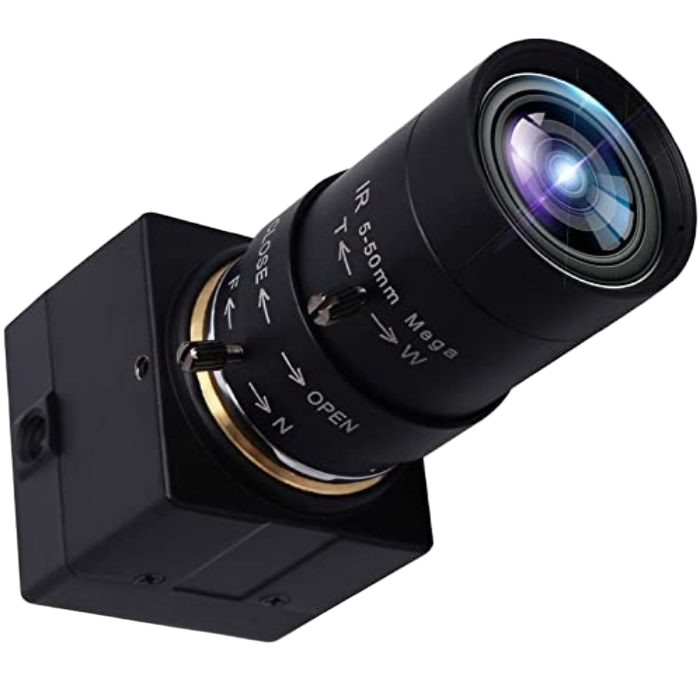
A machine vision camera is a type of camera that is designed specifically for use in automated systems, where it is used to capture images or video of objects and processes. These cameras are typically used in industrial applications, where they are used to monitor production lines, inspect products for defects, and perform other tasks that require high-speed, high-resolution imaging.
What are the key factors to consider when selecting a machine vision camera, such as resolution, frame rate, and sensor size?
When selecting a machine vision camera, there are several key factors to consider, including:
- Resolution: The camera resolution determines the level of detail in the image. A higher resolution camera will provide more detail, but may also require more processing power and storage space.
- Frame rate: The frame rate of the camera determines how many images can be captured per second. A higher frame rate is important for applications where motion needs to be captured accurately.
- Sensor size: The size of the camera's sensor affects the field of view and light sensitivity of the camera. Larger sensors generally provide better image quality and low-light performance.
- Pixel size: The size of the camera's pixels affects the camera's sensitivity to light and noise. Smaller pixels provide higher resolution, but may suffer from increased noise levels.
- Lens compatibility: The camera should be compatible with a range of lenses to provide flexibility in capturing images at various distances and angles.
- Connectivity: The camera should have a range of connectivity options to allow for easy integration with other hardware and software systems.
What types of interfaces are available for connecting a machine vision camera to a computer or other device?
Interfaces include USB, Ethernet, Camera Link, CoaXPress, and GigE Vision. These interfaces allow for high-speed data transfer, control of camera settings, and synchronization with other devices. The choice of interface will depend on the specific application requirements and the compatibility of the camera and computer or device.
What are the differences between CCD and CMOS sensors, and which is better for my application?
CCD (charge-coupled device) and CMOS (complementary metal-oxide-semiconductor) sensors are two types of image sensors used in machine vision cameras. Both sensors have their own unique features and benefits.
- CCD sensors typically have better image quality, lower noise, and higher sensitivity than CMOS sensors. They also have a global shutter, which means that all pixels are read out simultaneously, resulting in less distortion of moving objects.
- CMOS sensors, on the other hand, are generally less expensive and consume less power than CCD sensors. They also have a rolling shutter, which means that each row of pixels is read out sequentially, resulting in potential distortion of moving objects. However, newer CMOS sensors are being developed with a global shutter, which can improve their performance.
What are the most common lens types used with machine vision cameras, and how do I select the right one for my needs?
Lenses are an essential component of machine vision systems, and selecting the right type of lens is crucial for achieving accurate and reliable results. The most common lens types used with machine vision cameras include fixed focal length lenses, zoom lenses, telecentric lenses, and wide-angle lenses.
- Fixed focal length lenses are the most basic type of lens and provide a fixed magnification and field of view. They are suitable for applications where the object distance and size are consistent. Zoom lenses, on the other hand, offer variable magnification and field of view, making them ideal for applications where the object distance and size vary.
- Telecentric lenses are designed to minimize perspective errors by ensuring that the rays of light entering the lens are parallel to the optical axis. They are commonly used in applications where accurate measurements are critical. Wide-angle lenses, as the name suggests, provide a wider field of view and are typically used in applications where a large area needs to be captured.
How do I choose the right lighting for my machine vision system, and what factors should I consider?
Lighting is a critical component of any machine vision system. It can significantly impact the accuracy and reliability of the system. When choosing the right lighting for your machine vision system, there are several factors to consider, including the type of application, the object being inspected, the camera being used, and the environment in which the system will operate.
- Some of the key factors that should be considered when selecting lighting for a machine vision system include:
- Type of application: Different applications may require different types of lighting, such as diffuse or direct lighting. For instance, if the application involves inspecting reflective surfaces, diffuse lighting may be the best option.
- Object being inspected: The object being inspected will also influence the choice of lighting. For example, if the object has a complex shape, shadowless lighting may be the best option.
- Camera being used: The camera being used will also play a role in selecting the right lighting. Different cameras may require different types of lighting to achieve optimal results.
- Environment: The environment in which the system operates will also influence the choice of lighting. For instance, if the system is operating in a dusty or humid environment, sealed lighting may be required.
- Color temperature: The color temperature of the lighting can also have an impact on the accuracy of the system. It is important to choose lighting with the appropriate color temperature for the application.
What are the most important software features to look for in a machine vision camera, such as image processing and analysis tools?
Machine vision cameras are used in a wide range of industrial applications and are designed to perform automated inspection and analysis tasks. The most important software features to look for in a machine vision camera include:
- Image Processing: The camera should be equipped with powerful image processing capabilities to analyze the images captured by the camera. This includes features such as image filtering, edge detection, and image enhancement.
- Image Analysis: The camera should be able to perform complex image analysis tasks such as object recognition, pattern matching, and defect detection. This requires advanced algorithms and machine learning capabilities.
- Calibration: The camera should be capable of accurate calibration to ensure precise measurements and consistent results.
- Integration: The camera should be easy to integrate with other software and hardware systems, such as industrial automation systems and programmable logic controllers (PLCs).
- User Interface: The camera should have an intuitive user interface that allows users to easily set up and configure the camera, as well as monitor and analyze the images captured by the camera.
- Connectivity: The camera should be designed to work with a variety of communication protocols such as Ethernet, USB, and GigE, to allow for easy data transfer and connectivity with other devices.
What are the most common challenges when setting up a machine vision system, and how can I overcome them?
Setting up a machine vision system can be a complex and challenging process. Some of the most common challenges include selecting the right camera, choosing the right lighting, dealing with reflections and shadows, and managing data.
What are the most important factors to consider when selecting a machine vision camera supplier, such as technical support and warranty coverage?
A machine vision camera supplier should be selected based on several important factors, including technical support, warranty coverage, image quality, compatibility, and price. Technical support is critical because it ensures that the camera system is properly installed and integrated into the production line, and any technical issues can be resolved quickly. Warranty coverage is important to protect against any defects or malfunctions that may occur during the camera's lifespan. Image quality is also crucial, as it affects the accuracy and reliability of the inspection process. Compatibility with existing systems and software is also important to ensure seamless integration. Finally, price is a major consideration, as it can affect the overall cost-effectiveness of the solution.
How can I ensure that my machine vision system is optimized for accuracy, reliability, and efficiency?
Machine vision systems are used in a wide range of applications, from quality control in manufacturing to autonomous vehicles. One of the critical factors is the selection of the right machine vision camera. The camera's resolution, frame rate, and dynamic range must be matched to the requirements of the application. Additionally, proper lighting and lens selection are critical for achieving accurate results. Image processing algorithms and software must also be optimized to ensure that the system can handle the required workload efficiently. Finally, regular maintenance and calibration of the system are essential to ensure that it continues to perform optimally over time. By considering these factors, machine vision system designers can create systems that provide accurate, reliable, and efficient performance for their intended application.
Get 3+ Quotes Now - Compare prices, availability and quality. It’s free, quick and secure.
Back to top
Machine Vision Camera Costs and Supplier Insights
The listed price of a Machine Vision Camera for sale ranges from $500 to $5,000, averaging $2,750.
If you are looking to buy a Machine Vision Camera for sale, suppliers on IndustrySearch include Diverseco, Omron Automation & Robotics, Micromax, Lastek, Portable Analytical Solutions Pty Ltd
Use Get Quotes to receive personalised prices and proposals from trusted suppliers with top reviews and excellent service.
Buy a Machine Vision Camera Near Me
Save time and delivery costs while getting fast support, by contacting Machine Vision Camera suppliers near you.

Are you a Machine Vision Camera supplier?
 Reach valuable industrial buyers in minutes
 Promote key products & content
 Drive cost effective & measurable sales
learn more
Reach valuable industrial buyers in minutes
Promote key products & content
Drive cost effective & measurable sales