
Pressure Calibrator in Darwin

Join industrial buyers comparing supplier quotes and buying with confidence. Free, quick and easy.





How IndustrySearch works
Tell us what you need
Answer a few quick questions about the equipment you're looking for.
Get personalised quotes
Receive tailored quotes from relevant Australian suppliers.
Compare and choose
Compare quotes, ask questions and choose the best option for you.
 Save time
 Compare quotes
 Buy with confidence
Save time, compare quotes & buy with confidence
Pressure Calibrator | Automatic & Gauge Suppliers in Darwin
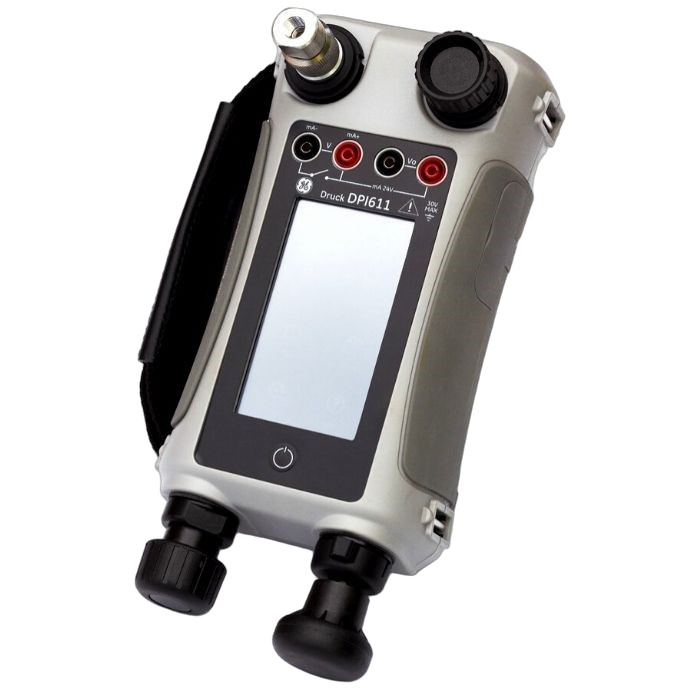
A pressure calibrator is a highly accurate measuring device that’s used for calibrating the pressure in different instruments. These high-precision devices are usually more accurate than the instrument, with the conventional calibration ratio being 4:1.
They are used in laboratories, the automotive industry and in manufacturing.
Apart from calibrating pressure, they can also be used to measure the pressure output of specific instruments. Pressure calibrators often use a precision regulator that controls the pressure supply.
This leads to a highly accurate reading. Pressure calibrators can be custom-designed for specific purposes and accuracy of calibration. Portable units are commonly preferred, as they are easier to move around.
Handheld units are also available, though they aren’t as accurate as deadweight testers, which generate pressure by exerting force over a specified area. Deadweight testers don’t need to be connected to an external power supply either.
Such units are generally bulky and must be operated by a qualified professional. They are capable of calibrating pressure from as low as -15 psi to 75,000+ psi. Unlike a pressure gauge, a display indicator on the device often denotes the pressure reading.

Fluke Australia is an Pressure Calibrator supplier to Sydney
Our customers count on us for rugged, reliable and accurate test instruments. We offer test, measurement and monitoring products and software that are used in electronic design, manufacturing, and network troubleshooting, as well as in electrical, industrial, medical, process and calibration applications.
Fluke 719Pro Electric Pressure Calibrator

Fluke 729 Automatic Pressure Calibrator

Transtek is an Pressure Calibrator supplier to Perth
Transtek was formed in 1988, as a Western Australian business specialising in process calibration equipment, at a time when many clients were negotiating the requirements of implementing ISO 9000 quality systems. A unique feature of the company was that it did not rely on any 'parent company' or affiliate on the east coast of the country, as was prevalent at the time. Instead, ...

Queensland Calibrations is an Pressure Calibrator supplier to Brisbane
Queensland Calibrations is a privately owned, Brisbane based company providing sales, calibration services and repairs for a comprehensive range of test and measurement equipment. In this location, we maintain an organised and responsive local warehouse, and specialised calibration facilities where all repairs, tests and calibrations are performed in a purpose built and controlled ...

- Digital pressure calibrators - These are handheld devices that offer high accuracy and stability. They can measure pressure, vacuum, and differential pressure.
- Pressure gauge calibrators - These devices are used to calibrate pressure gauges and transducers. They can generate and measure pressure with high accuracy.
- Deadweight testers - These are precision instruments that use weights and a piston-cylinder assembly to generate and measure pressure. They offer high accuracy and stability.
- Hydraulic pressure calibrators - These devices use hydraulic pressure to calibrate pressure sensors and gauges. They can generate pressure up to 10,000 psi.
- Pneumatic pressure calibrators - These devices use compressed air to generate and measure pressure. They can generate pressure up to 300 psi.
- Pressure transducer calibrators - These devices are used to calibrate pressure transducers. They can measure and generate pressure with high accuracy.
- The accuracy specification is typically expressed as a percentage of the reading or as an absolute value. Higher accuracy specifications are desirable for applications that require precise measurements, such as laboratory or calibration work. It is important to note that the accuracy of the pressure calibrator should be better than the accuracy of the pressure instrument being calibrated.
- The range specification indicates the minimum and maximum pressures that can be measured by the pressure calibrator. It is important to choose a pressure calibrator with a range that covers the range of the pressure instrument being calibrated. Some pressure calibrators have multiple ranges, which can increase their versatility.
- Check the manufacturer's instructions for specific calibration procedures and requirements.
- Connect the pressure calibrator to a reference pressure source, such as a deadweight tester or a pressure standard.
- Apply pressure to the calibrator and compare the readings to the reference pressure source.
- Adjust the calibrator to match the reference pressure source readings.
- Repeat the process for different pressure ranges.
- Wear proper PPE (personal protective equipment) such as gloves, safety glasses, and earplugs to protect yourself from any potential hazards.
- Make sure to use the correct pressure range for the instrument being calibrated. Using a range outside the specified limits can damage the instrument or cause injury.
- Always use the appropriate fittings and connections to avoid leaks or blowouts.
- Before starting the calibration process, make sure to inspect the instrument and calibrator for any damage or defects.
- When using a pressure source, ensure that it is properly grounded to prevent electrical shocks.
- Do not attempt to disassemble or modify the calibrator, as this can be dangerous and void any warranties.
- Store the pressure calibrator in a safe and secure place when not in use.
Frequently Asked Pressure Calibrator Questions
Various kinds of pressure calibrators are used in different environments. Among all types, multifunction calibrators and deadweight testers are the most popular.
Handheld models are also available. The configuration, accuracy, and sensitivity of pressure often vary. High-end deadweight testers are equipped with highly precise sensors, which give a more accurate reading.
- Pressure Range: Pressure range is the most important consideration. Handheld units, for instance, have a much lower range than deadweight testers, which are bulky and can’t be moved. Most models are capable of calibrating the pressure from -15 psi to 75,000+ psi. Custom pressure calibrators, which are designed for specific applications, are also available.
- Size: Pressure calibrators are available in a variety of sizes. If you are to take your pressure calibrator to the field, it would be a good idea to choose a portable unit. However, if you will be using it in the facility, a bulkier, deadweight tester might be a good choice.
Pressure calibrators are available at different price points. Its price depends on many features, such as pressure range, type, brand, and accuracy. Some models retail for a higher price, especially those equipped with high-precision sensors.
- Display: pressure calibrators feature a display to show the readings. The display can sustain damage, and care must be taken to prevent knocks and bumps.
- Pump: The pressure pump plays an important role in the calibration process, as it generates the pressure. It needs to be properly maintained, including checking the mechanical seal and regularly cleaning the unit.
A pressure calibrator is used in industries and research facilities to determine the accuracy of any device that includes a pressure gauge. They are used in laboratories, the automotive industry and manufacturing.
- Failing Pressure Pump: If the pressure pump is faulty, it won’t create any pressure. This can happen due to the mechanical seal sustaining damage, or a problem with the internal components.
- Leakage: This problem usually arises when the connections are not sealed. It could prevent the pressure calibrator from working properly.
Some level of training is required for users to understand how to read and interpret the output signal from the sensor. Other licences or certifications might be required depending on the industry where it’s being used.
Pressure Calibrator Costs and Supplier Insights
If you are looking to buy a Pressure Calibrator for sale, suppliers on IndustrySearch include AMS Instrumentation & Calibration, Pyrosales, Instrotech Australia, Zedflo Australia, HK Calibration Technologies
Buy a Pressure Calibrator Near Me

 Reach valuable industrial buyers in minutes
 Promote key products & content
 Drive cost effective & measurable sales