
Process Indicator & Meter in Melbourne

Join industrial buyers comparing supplier quotes and buying with confidence. Free, quick and easy.


How IndustrySearch works
Tell us what you need
Answer a few quick questions about the equipment you're looking for.
Get personalised quotes
Receive tailored quotes from relevant Australian suppliers.
Compare and choose
Compare quotes, ask questions and choose the best option for you.
 Save time
 Compare quotes
 Buy with confidence
Save time, compare quotes & buy with confidence
Process Indicator & Meter Suppliers in Melbourne
Autech Control Group is an Process Indicator & Meter supplier to Melbourne
Autech Control Group Pty Ltd is a product distributor specialising in industrial/commercial automation, energy management and motor control solutions. We offer Australia wide sales and support from our head office based in Melbourne's southeastern suburbs. We're dedicated to supplying only quality products, at competitive prices, whilst providing exceptional pre and post sales ...Customers: Automation, Electrical, Solar and Instrumentation


Zone Safety Systems is an Process Indicator & Meter supplier to Melbourne
Zone Safety Systems has been developing and producing safety guarding systems for over 10 years and enjoys a reputation as an innovation leader in safety technology for factory automation. Our Safety Systems have been used in a widely diverse number of applications over the years. Our technical consultants work with you to develop the most effective and efficient solutions – ...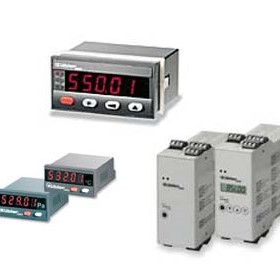

Bestech Australia is an Process Indicator & Meter supplier to Melbourne
Bestech Australia is a dynamic and customer-focused leader in technical training, test & measurement, and control & automation solutions. We bridge global technology with local expertise, offering a comprehensive range of high-quality equipment across multiple industries. Our product portfolio includes: • Technical teaching and training equipment for trade education and ...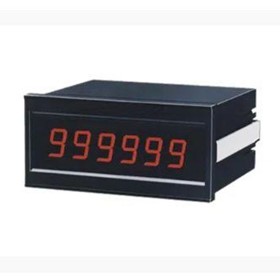

ADM Instrument Engineering is an Process Indicator & Meter supplier to Melbourne
The ADM Systems group of companies stocks products such as LED drivers, power supplies and thyristors, UPS power supplies, sensors and transducers, encoders, process controllers, test & measurement equipment, and radiation detection systems and nuclear technologies, which are used by many different industries right across Australia. We carry stock, so you don’t have to. Plus, ...

- Analog indicators: These are simple instruments that use analog dials to display readings. They are commonly used for temperature, pressure, and flow rate measurements.
- Digital indicators: These instruments use digital displays to show readings. They offer greater accuracy and precision than analog indicators and are used for various applications such as pH measurement, conductivity measurement, and turbidity measurement.
- Process controllers: These instruments not only display process variables but also provide control signals to regulate the process. They are used in automated systems to maintain process variables within a set range.
- Panel meters: These are compact instruments that can be mounted on a control panel. They are used for displaying multiple process variables simultaneously.
- Totalizers: These instruments measure and display accumulated values such as total flow rate, total volume, or total energy consumption.
- Batch controllers: These instruments are used to control and monitor batch processes. They can be set to start and stop a process automatically and can display batch size, batch time, and other relevant information.
- Level indicators: These instruments are used to measure and display the level of liquids or solids in tanks, silos, and other containers.
- Type of measurement: What parameter(s) do you need to measure? Common options include temperature, pressure, flow rate, and level. Make sure the indicator and meter you choose are capable of measuring the parameter(s) you need.
- Accuracy: How precise do your measurements need to be? This will depend on the requirements of your process. Some applications may require high accuracy, while others may be more forgiving.
- Range: What range of values do you need to measure? Make sure the indicator and meter you choose are capable of measuring the full range of values you need.
- Display: How do you need to view your measurements? Some indicators and meters have digital displays, while others have analog displays. Some have multiple displays, allowing you to view multiple parameters at once.
- Output: Do you need the indicator and meter to output data to another system? Some options allow for analog or digital outputs, while others may have communication capabilities such as Modbus or Ethernet.
- Environment: What is the environment in which the indicator and meter will be used? Consider factors such as temperature, humidity, and potential exposure to chemicals or other hazards.
- Budget: How much are you willing to spend on an indicator and meter? There are options available at a range of price points, so consider your budget when making your selection.
- Display type: The display type is an important consideration when choosing a process indicator and meter. There are different types of displays available, including LED, LCD, and analog displays. LED displays are easy to read, while LCD displays are more versatile and can display more information. Analog displays are suitable for applications where precise readings are required.
- Accuracy: The accuracy of the process indicator and meter is another important consideration. The accuracy of the device is determined by the number of digits displayed and the resolution of the display. The higher the accuracy, the more precise the readings will be.
- Range: The range of the process indicator and meter refers to the minimum and maximum values that can be measured. It is important to choose a device with a range that is suitable for the application.
- Input type: The input type refers to the type of signal that the device can accept. There are different types of input signals, including analog and digital signals. It is important to choose a device that can accept the input signal that is used in the application.
- Output type: The output type refers to the type of signal that the device can output. The device may have different output options, including analog and digital outputs. It is important to choose a device with the appropriate output type for the application.
- Environmental conditions: The environmental conditions in which the process indicator and meter will be used should also be considered. The device should be able to operate in the temperature, humidity, and other environmental conditions that are present in the application.
- Power supply: The power supply for the process indicator and meter is another important consideration. Some devices may require external power, while others may be powered by batteries or other sources. It is important to choose a device with a power supply that is suitable for the application.
- Choose the right equipment: Ensure that the process indicator and meter are the right size, type, and range for the application.
- Check the wiring: Ensure that the wiring is correct and that all connections are tight and secure.
- Calibrate the meter: Calibrate the meter using a calibrated source, ensuring that the readings are accurate and within the specified range.
- Test the meter: Test the meter in the actual process environment to ensure that it is functioning correctly.
- Verify the calibration: Verify the calibration periodically to ensure that the meter is still accurate and within the specified range.
- Cleaning: Dust and dirt can accumulate on the device and affect its accuracy. Regular cleaning with a soft cloth or brush is recommended.
- Inspection: Regular inspection of the device is necessary to detect any physical damage or wear and tear. Any damaged parts should be replaced immediately.
- Power source: Many process indicators and meters require a power source, such as batteries or AC power. Regularly checking the power source and replacing batteries or ensuring proper electrical connections is important.
- Software updates: Some process indicators and meters require software updates to fix bugs or add new features. Checking for updates and installing them as necessary is important to ensure the device is functioning properly.
- The service support provided by manufacturers or suppliers may include technical support, repair or replacement of defective products, and maintenance services. Some manufacturers or suppliers may also offer training or educational resources to help customers better understand their products or services.
- Identify the requirements: The first step is to identify the requirements of the process indicator or meter. This includes the type of signal or input, the measurement range, accuracy, resolution, display type, and output options.
- Research different brands and models: Research different brands and models that meet the identified requirements. Look for product specifications, features, and customer reviews.
- Compare features and specifications: Compare the features and specifications of each product. This includes the accuracy, resolution, signal compatibility, display type, and output options.
- Evaluate performance metrics: Evaluate the performance metrics of the product. This includes the response time, stability, repeatability, and linearity.
- Consider the price: Consider the price of each product along with the features and performance metrics.
- Choose the best product: After evaluating all the above factors, choose the product that best meets the requirements and offers the best value for money.
Process Indicator & Meter Costs and Supplier Insights
If you are looking to buy a Process Indicator & Meter for sale, suppliers on IndustrySearch include Autech Control Group
Why choose a supplier in Melbourne for Process Indicator & Meter Quotes?
If you are in Melbourne and considering purchasing a Process Indicator & Meter, it's worth considering Melbourne-based suppliers. Doing so offers several benefits that are particularly relevant to businesses in the area. Here are the top reasons why opting for a local Melbourne supplier can be the best decision for your Process Indicator & Meter buying needs.
Partner with Melbourne Suppliers for ComplianceChoose local suppliers as your compliance partners. Their expertise ensures that all products meet local regulations, giving you peace of mind.
Melbourne Providers Leading Innovation AdoptionChoose Melbourne Process Indicator & Meter providers leading in innovation adoption. They help you implement the latest industry trends swiftly, enhancing your operational capacity.
Reliable Process Indicator & Meter Supply from MelbourneEnsure a reliable Process Indicator & Meter supply from Melbourne. Local suppliers provide consistent, dependable delivery schedules.
On-Site Process Indicator & Meter Support and TrainingBenefit from on-site support and training in Melbourne. Having access to immediate help and expertise ensures your team uses the equipment effectively.
Economical Purchasing in MelbourneMake economical decisions by purchasing your Process Indicator & Meter from Melbourne. Save on transport and import duties, reducing overall procurement costs.
Building a Resilient Economy with Process Indicator & Meter PurchasesContribute to building a resilient economy by sourcing locally. Enhance economic stability and community well-being.
Buy a Process Indicator & Meter Near Me
Process Indicator & Meter Articles & Reviews


 Reach valuable industrial buyers in minutes
 Promote key products & content
 Drive cost effective & measurable sales